The Boston Globe crunched the numbers in a recent Massachusetts Department of Transportation report.


"As more people in Massachusetts take to the road on bicycles, the number of reported bike accidents has risen in recent years, and fatalities in Greater Boston’s suburbs have more than tripled," report Steven A. Rosenberg and Catherine Cloutier.
"Collisions involving bicycles in the Greater Boston suburban area increased by 9 percent from 2010 to 2012, while statewide the number jumped 13 percent during the same three-year period, according to a Globe analysis of accident data provided by the Massachusetts Department of Transportation. Nearly 70 percent of the crashes resulted in injuries."
The coverage includes an infographic showing where in the state bikers were involved in more collisions from 2010 to 2012. Of note is that the MDOT report does not include data from the city of Boston, because the city does not report crashes of any kind to the state.
Read the full story: Bike fatalities spike in Greater Boston’s suburbs
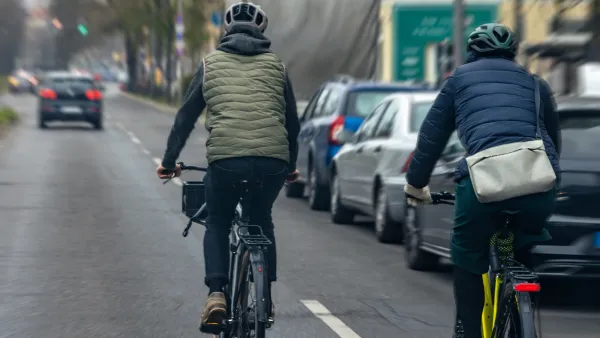
Op-ed: True bike safety requires more than the 'Dutch reach'
Making roads safe for all users takes policy and cultural changes that go beyond small behavioral interventions.
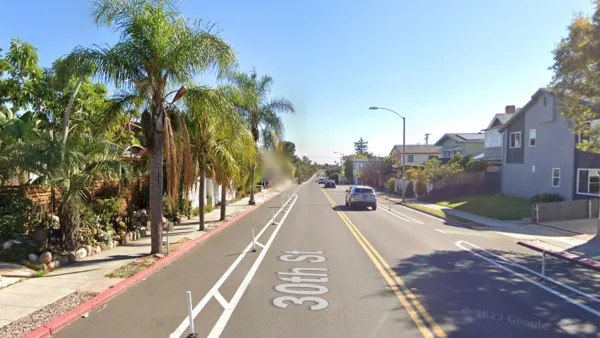
After San Diego Installed a Protected Bike Lane, Ridership More Than Doubled — and Hasn’t Stopped Growing.
“When people feel safe, they ride.”
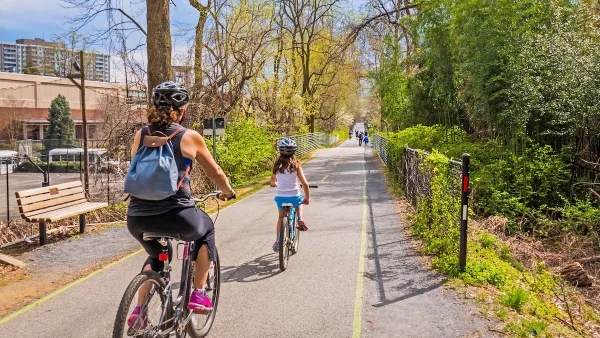
Proposed Bill Would Direct Funds to Road Safety
The Sarah Debbink Langenkamp Active Transportation Safety Act was spurred by the death of a U.S. diplomat who was killed on her bicycle.

Planetizen Federal Action Tracker
A weekly monitor of how Trump’s orders and actions are impacting planners and planning in America.

California plans to bury El Niño’s downpour
If the state plays its cards right, it may be able to store a billion acre-feet of El Niño’s water in aquifers.

Desperate measures: Advocates weigh draining Lake Powell to fill Colorado River
Draining the reservoir could reduce evaporation losses by a couple hundred thousand acre-feet.

Los Angeles just elected an urban planner as its mayor
Transportation analysts are optimistic that Raman will be more aggressive in addressing transit issues than Bass.

Mamdani’s pied-à-terre tax survives legal challenge
A panel of judges found that the plaintiffs failed to demonstrate injury as a result of New York City's implementation of the tax.

Eastern Nebraska is running out of electricity
Data centers and electrification are straining eastern Nebraska’s grid, throttling economic development.

FREE Course: Walkable City 1: Why Walkability?
After describing his path towards focusing on walkability as the essence of good planning, Jeff Speck marches through his five principal reasons for making more walkable places.
Reinventing Malls: Planning Alchemy—Turning Gray Fields Into Gold
The course focuses on the opportunities and imperatives that shape reinvention of mall sites.

City of Rosemead
Rutgers University, Edward J. Bloustein School of Planning and Public Policy
One Hundred Miles
University of Michigan School for Environment and Sustainability (SEAS)
Hunter College, City University of New York (CUNY)
The Architects Foundation
City of Cambridge
Montrose County
The Pocatello Development Authority