Exactly how does a student take on an open data political stance and transform it into "the largest crowd-sourced mapping project on the internet"?


"It’s been exactly ten years since the launch of OpenStreetMap," reports Frederic Lardinois.
To commemorate the anniversary, Lardinois interviewed OpenStreetMap founder Steve Coast, who provides insight into how the project started, gained traction, and evolved into the popular and useful resource it is today.
As a sample, here's Coast's answer to a question about the community around OpenStreeMap has changed:
"The raw numbers have gone up, but it’s also — in the beginning it was very much around open source ideology. 'Data wants to be free' and so on. But as the project grew, it’s got much more diverse. There are lots of companies involved now that want to improve the mapping experience. There is a huge variety of people now involved that wasn’t there in the beginning — and that’s a good thing."
Read the full story: For The Love Of Open Mapping Data
Visualizing the Spread of the OpenStreetMap Project
OpenStreetMap has released an animated map to illustrate the impressive growth of the project over the first ten years of its existence.
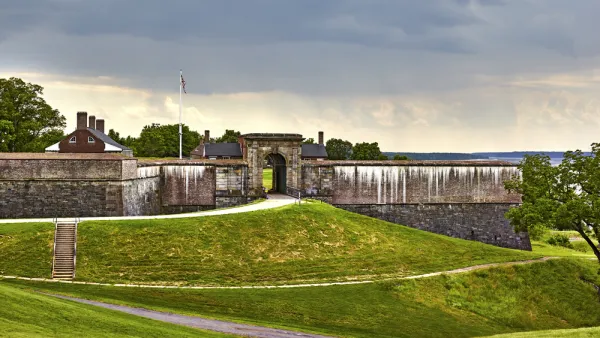
Take an Online Tour of Historic Prince George's County, Maryland
You don't have to be a fan of Prince George's County to be a fan of the historical maps and geographic insight on the online Prince George's Atlas.
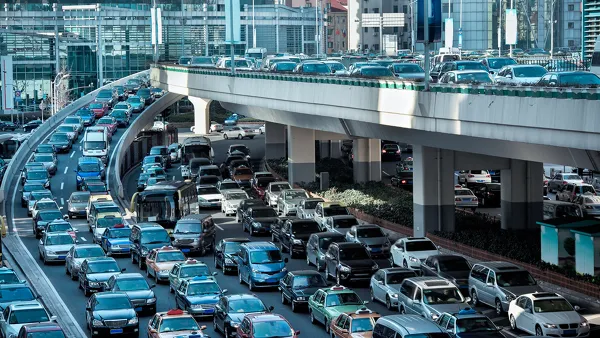
Mapping U.S. Highway Intensity
A new map from Mapbox visualizes traffic on all roads eligible for highway safety funds by combining data available through the Highway Performance Monitoring System on OpenStreetMap.

Planetizen Federal Action Tracker
A weekly monitor of how Trump’s orders and actions are impacting planners and planning in America.

Washington state to charge fee to drivers with fuel-efficient cars
Revenue from the fee will go towards supporting the state’s highways.

Illinois considers spending $1 billion in taxpayer money on data center
A quantum computing campus and data center are currently under construction in Chicago.

Corpus Christi drilled wells at 'lightning speed,' leaving neighbors fearing for their water supply
Underground water became a critical fix through the worst of Corpus Christi’s drought. But experts warn against depending on wells for too long.

Nearly billion-dollar budget deficit looms over MTA
Metropolitan Transit Authority officials say the cost of healthcare, wages, electricity and fuel is outpacing revenue from tolls, taxes and fares.

Senate passes bill overhauling permitting
The bill still needs to pass the House.

FREE Course: Walkable City 1: Why Walkability?
After describing his path towards focusing on walkability as the essence of good planning, Jeff Speck marches through his five principal reasons for making more walkable places.
Reinventing Malls: Planning Alchemy—Turning Gray Fields Into Gold
The course focuses on the opportunities and imperatives that shape reinvention of mall sites.

City of Charlotte
City of Rosemead
Rutgers University, Edward J. Bloustein School of Planning and Public Policy
University of Michigan School for Environment and Sustainability (SEAS)
Hunter College, City University of New York (CUNY)
The Architects Foundation
University District Partnership