The city of Berkeley is undergoing a pilot installation of permeable pavement for a road calming project by Berkeley High School. The pilot has better storm water drainage, a smaller carbon footprint, and less maintenance than traditional asphalt.



Construction for the new pavement continues on Allston Way along a 0.1 mile stretch adjacent to Berkeley High School and Berkeley City Hall. According to Charles Siler at Berkeleyside, "the new permeable interlocking concrete pavement will absorb water, rather than redirecting it to a storm drain the way traditional asphalt does... [and includes] better heat dispersal and cleaner runoff water." The new permeable pavement also decreases the city's storm drain system load during heavy rains.
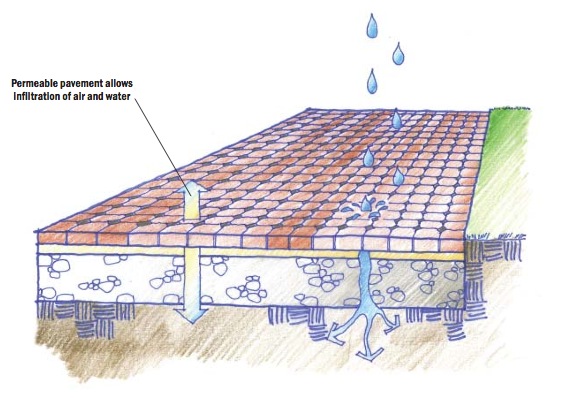
Permeable paving explanation. Photo: SF Streets Blog
In addition, permeable pavement "has a lifespan 3-5 times longer than that of traditional pavement, which is expected in the long run to offset the 50% to 60% greater cost of construction", and a reduced carbon footprint than traditional paving materials. Due to the colors and material used, there is also less solar heat gain associated with permeable pavement.
According to Siler, "a city spokesman stressed that the project is a test run for the new paving material." However, permeable pavement projects have already been constructed in other parts of the Bay Area such as San Francisco and Oakland.
Read the full story: Berkeley installs first permeable pavers downtown

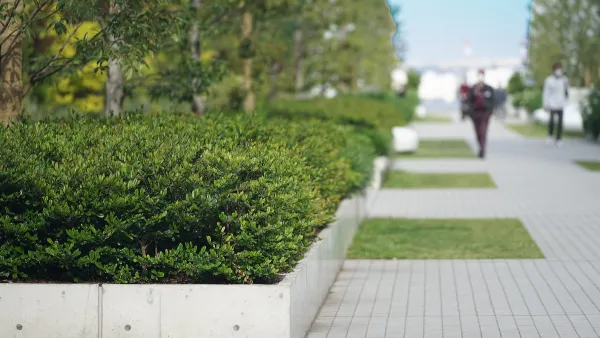
Grassroots Dutch Movement Replaces Pavement With Green Space
Neighbors engage in a practice known as “tegelwippen,” picking up paving stones and replacing them with permeable surfaces, often with the support of local governments.
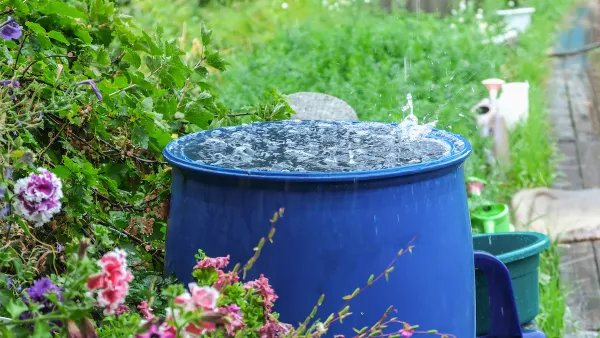
Flood Resilience Through Green Infrastructure
Cities like New York and Los Angeles are moving to build green infrastructure as the need for spongier urban spaces becomes more apparent.
Designing Permeable Cities for Drought Resilience
Take a kayak trip on the Los Angeles River with KQED science reporter Amy Standen to understand why cities were built on the premise of endless potable water and how we can build cities sustainably in regions that receive low rainfall.

Planetizen Federal Action Tracker
A weekly monitor of how Trump’s orders and actions are impacting planners and planning in America.

California plans to bury El Niño’s downpour
If the state plays its cards right, it may be able to store a billion acre-feet of El Niño’s water in aquifers.

Chicago breaks ground on $3 billion megadevelopment
The new neighborhood, titled Foundry Park, will one day host 3,700 residences.

California High-Speed Rail Authority CEO resigns after $600,000 scandal
Under Ian Choudri, the authority used taxpayer dollars to fund first class flights and trips to nightclubs.

Want to study the Missouri River? Soon, you may need unanimous approval from 10 states
Legislation would require 10 governors’ permission to study or build projects moving water outside the basin.

Desperate measures: Advocates weigh draining Lake Powell to fill Colorado River
Draining the reservoir could reduce evaporation losses by a couple hundred thousand acre-feet.

FREE Course: Walkable City 1: Why Walkability?
After describing his path towards focusing on walkability as the essence of good planning, Jeff Speck marches through his five principal reasons for making more walkable places.
Reinventing Malls: Planning Alchemy—Turning Gray Fields Into Gold
The course focuses on the opportunities and imperatives that shape reinvention of mall sites.

City of Rosemead
Rutgers University, Edward J. Bloustein School of Planning and Public Policy
One Hundred Miles
Hunter College, City University of New York (CUNY)
The Architects Foundation
University of Cincinnati Online
City of Cambridge
Montrose County
The Pocatello Development Authority