An article by Adam Frank argues that a discussion of quality of life in cities, as an emerging of "science of cities" claims to improve, must include a discussion of public art.


Adam Frank pushes back on the emerging ideas of the "science of cities" by identifying an urban manifestation that might escape scientific inquiry: "Cities clearly are more than a new kind of physics problem. They are also creations of the human imagination and, as such, they live or die by the quality of the imagination we bring to them."
"Thats [sic] why no discussion of the health of cities can be complete without thinking about the role of art — public art," adds Frank.
As an example of the power of inspiration available through the best public art, Frank examines WALL/THERAPY, "a week-long celebration of street art and its power to transform urban spaces" founded by Dr. Ian Wilson, a radiologist at the University of Rochester's Strong Medical Center.
Read the full story: When Cities Become Science, Where Does Art Fit In?

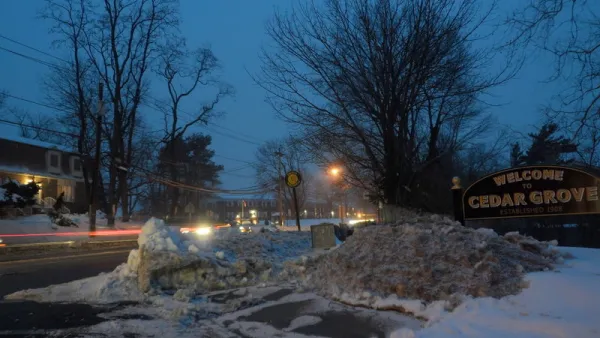
Should Murals Fall Under Sign Ordinances?
A local controversy in New Jersey has residents debating whether a city should interfere with artistic expression on private property.
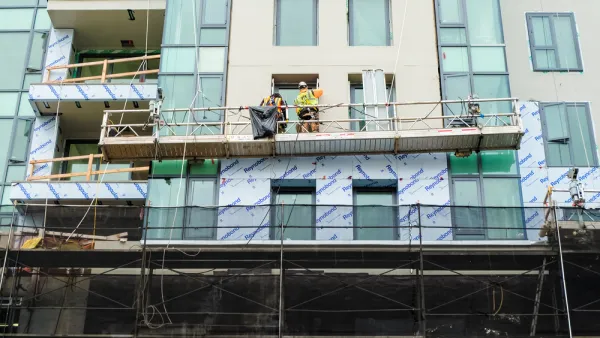
Art May Be Coming to New York City Sidewalk Sheds
Scaffolding and sidewalk sheds being a fixture of life in NYC, the city has decided to let artists do their thing with all that blank canvas.
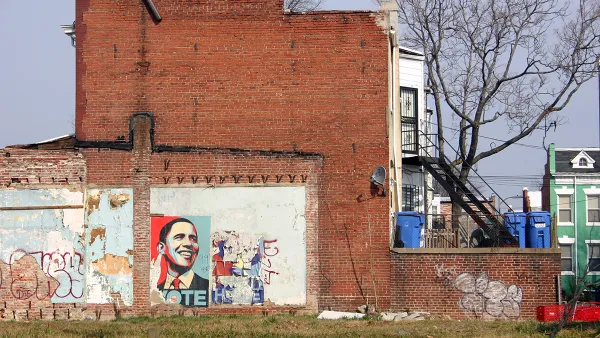
Street Artist Shepard Fairey Tackles Detroit
After billionaire landlord Dan Gilbert commissioned a mural, less-legal works in Fairey's style began showing up around the city. Detroit's case against the artist brings gentrification's ironies into focus.

Planetizen Federal Action Tracker
A weekly monitor of how Trump’s orders and actions are impacting planners and planning in America.

‘Going backwards:’ Baltimore mayor, students rally against state's transit funding plan
Maryland's proposed six-year plan provides no funding for Baltimore’s BMORE bus program and reduces its road maintenance funding.

Detroit to transform waterfront with $2.2 billion investment
Developers will convert about 18 acres of unused parking lot space into civic spaces.

U.S.-Iran war may have ‘devastating’ impact on cost to warm homes
Vermont and Maine residents may see a 76% increase in the cost of warming their homes this winter.

Senate bill would ‘overhaul’ environmental permitting laws
Under the proposed act, government agencies would also not be able to suspend or rescind permits after granting them.

Exemption applications for NYC’s pied-à-terre tax see 55% success rate
The city sent nearly 40% of its initial pied-à-terre tax warnings erroneously.

FREE Course: Walkable City 1: Why Walkability?
After describing his path towards focusing on walkability as the essence of good planning, Jeff Speck marches through his five principal reasons for making more walkable places.
Reinventing Malls: Planning Alchemy—Turning Gray Fields Into Gold
The course focuses on the opportunities and imperatives that shape reinvention of mall sites.

One Hundred Miles
County of Mendocino
planning NEXT
The Architects Foundation
University of Cincinnati Online
Montrose County
Northern Illinois Transit Authority (NITA)
The Pocatello Development Authority