The city of Baltimore, led by Mayor Stephanie Rawlings-Blake, has launched "The Baltimore City Anchor Plan"—a plan that prioritizes strategic partnerships with the city's "eds and meds" sector.


The Baltimore Sun published an editorial by the presidents of several of the education institutions named in the plan—Joan Develin Coley, Ronald Daniels, Fred Lazarus IV and Brian Linnane—voicing support for "The Baltimore City Anchor Plan."
According to the authors of the editorial, "[we] welcome Mayor Stephanie Rawlings-Blake's Anchor strategy initiative, to be announced Wednesday. It includes partnership agreements between major Baltimore higher education and medical institutions and the city government to advance economic development in various communities through increased cooperation relating to the four priority areas of public safety, local hiring, local purchasing, and quality of life issues that affect us all."
The editorial cites examples of potential for the program from investments and work already underway by Johns Hopkins University, Loyola University Maryland, and Maryland Institute of College Art.
Read the full story: 'Anchor' collaboration will move city forward [Commentary]

Learning loss and urban schools, part 2
Did test scores in progressive cities drop more post-COVID than test scores in moderate ones?
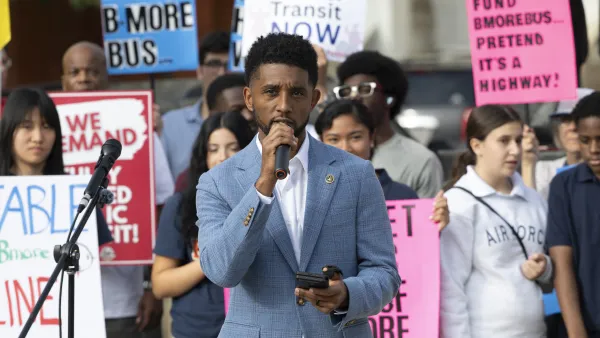
‘Going backwards:’ Baltimore mayor, students rally against state's transit funding plan
Maryland's proposed six-year plan provides no funding for Baltimore’s BMORE bus program and reduces its road maintenance funding.
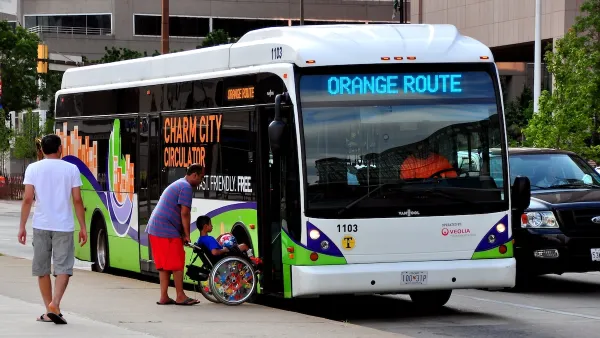
Baltimore to break ground on $50 million Transit Priority Project
The project will bring faster bus trips, safer streets and better bike connections to Baltimore.

Planetizen Federal Action Tracker
A weekly monitor of how Trump’s orders and actions are impacting planners and planning in America.

California plans to bury El Niño’s downpour
If the state plays its cards right, it may be able to store a billion acre-feet of El Niño’s water in aquifers.

Desperate measures: Advocates weigh draining Lake Powell to fill Colorado River
Draining the reservoir could reduce evaporation losses by a couple hundred thousand acre-feet.

Housing is the top priority of Seattle’s sole new councilmember
Jenks campaigned on building 1,000 new units of affordable housing.

New tax cuts may slash $1.5 billion in funding for Miami transit, public parks
Amendment 3 will save Miami-Dade homeowners $2,700 in 2028.

Arizona, Wisconsin, Pennsylvania hope to finally advance climate goals post-midterms
The three states have spent years under Republican or divided control.

FREE Course: Walkable City 1: Why Walkability?
After describing his path towards focusing on walkability as the essence of good planning, Jeff Speck marches through his five principal reasons for making more walkable places.
Reinventing Malls: Planning Alchemy—Turning Gray Fields Into Gold
The course focuses on the opportunities and imperatives that shape reinvention of mall sites.

City of Rosemead
Rutgers University, Edward J. Bloustein School of Planning and Public Policy
One Hundred Miles
University of Michigan School for Environment and Sustainability (SEAS)
Hunter College, City University of New York (CUNY)
The Architects Foundation
City of Cambridge
Montrose County
The Pocatello Development Authority