A new report, the first of its kind, documents the pervasive harassment experienced by women, and many men, of all races, income levels, sexual orientations, and geographic locations. The report identifies the situation as an issue of human rights.



"Stop Street Harassment, a nonprofit working to end sexual harassment in public spaces, just released the first national study on street harassment. Titled 'Unsafe and Harassed in Public Spaces: A National Street Harassment Report,' it consists of data reported by 2,000 people surveyed by market research company Gfk, and information from 10 focus groups SSH held across the United States between February and March 2014," according to an article by Lauren McEwen.
"According to the study, 65 percent of women and 25 percent of men in the United States have experienced street harassment."
The article details many varieties of sad and disappointing findings, but also this glimmer of hope for the future of civility and respect: 91 percent of survey participants believe there are ways to end street harassment.
Read the full story: New study suggests street harassment is widespread

Women Bikers Ride to 'Take Back the Streets'
Even Andrews reports on the unsafe environment that women encounter while on their bikes—and the organizations and people who are working to make the roads safer from harassment.
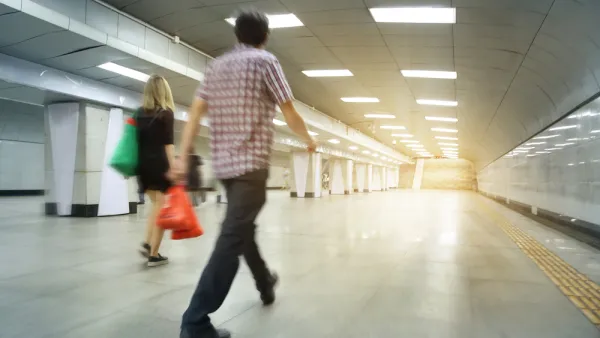
Street Harassment: An Issue for Planners?
Women and men experience public spaces differently. It is all too common for women to experience street harassment when in public spaces. Nina Flores explores the ways that this issue is being combatted in the online public realm.
Tools to Protect Cyclists from Street Harassment
Moving vehicles and open doors aren't the only threats to the safety of cyclists. Gay men, women and transgender bikers often contend with harassment and threats of assault. Nonprofit groups in D.C. and elsewhere are working to empower them.

Planetizen Federal Action Tracker
A weekly monitor of how Trump’s orders and actions are impacting planners and planning in America.

Amtrak, CN end decades-long dispute with eight-year agreement
The new operating agreement establishes an updated framework for the companies to work together, including processes to resolve disputes.

Judges permit Denver to divert 77,000 acre feet from the Colorado River for reservoir expansion
Overuse and climate change have caused the Colorado River’s water levels to plummet.

NYC DOT wants faster, more permanent street upgrades
The city is examining ways to build more concrete infrastructure without getting entangled in 'decades-long' projects.

'Something we’ve never seen before:' rising utility rates could strain city finances nationwide
Data centers, climate change and other factors have caused utility rates in the United States to increase by 38% since 2020.

Trump to overrule local leaders, lease millions of acres of America’s Pacific Island territories’ seafloors to mining companies
International law says that the Indigenous people of America’s territories have a right to prior and informed consent regarding projects that impact their countries.

FREE Course: Walkable City 1: Why Walkability?
After describing his path towards focusing on walkability as the essence of good planning, Jeff Speck marches through his five principal reasons for making more walkable places.
Reinventing Malls: Planning Alchemy—Turning Gray Fields Into Gold
The course focuses on the opportunities and imperatives that shape reinvention of mall sites.

Harvard University Graduate School of Design
KFH Group Inc.
Greater Baltimore Committee
The Architects Foundation
University of Cincinnati Online
The Pocatello Development Authority
The Urban Renewal Agency of the City of Pocatello