Moving vehicles and open doors aren't the only threats to the safety of cyclists. Gay men, women and transgender bikers often contend with harassment and threats of assault. Nonprofit groups in D.C. and elsewhere are working to empower them.


"For Kate, a 28-year-old cycling enthusiast, summer is always the worst," write Lauren McEwen and Michael Livingston II. "Pedestrians feel free to yell what they perceive as compliments: 'Yeah, you look good!' or 'Can I ride with you?'”
“'As a woman, I’m constantly operating with the low-level fear that any man might attack me,' said Kate, a resident of the Brookland neighborhood in Northeast Washington, who asked that her last name not be used because of safety concerns."
McEwen and Livingston look at the tools that groups such as Stop Street Harassment and the Collective Action for Safe Spaces (CASS) are providing to targeted individuals such as Kate to help them report and respond to street harassment.
Read the full story: How should bicyclists handle harassment? D.C. area groups teach empowerment tactics.

Women Bikers Ride to 'Take Back the Streets'
Even Andrews reports on the unsafe environment that women encounter while on their bikes—and the organizations and people who are working to make the roads safer from harassment.

Unsafe Streets: Report Finds Pervasive Harassment on U.S. Streets
A new report, the first of its kind, documents the pervasive harassment experienced by women, and many men, of all races, income levels, sexual orientations, and geographic locations. The report identifies the situation as an issue of human rights.
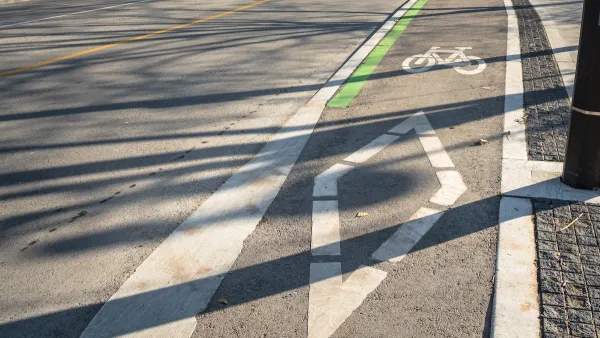
A Troubling Trend of Backlash to Bike Lanes
Some cities are going so far as to rip out protected bike infrastructure that took years of advocacy to build.

Planetizen Federal Action Tracker
A weekly monitor of how Trump’s orders and actions are impacting planners and planning in America.

HUD modernizes 50-year-old manufactured housing framework
The Next Generation Manufactured Housing Action Plan establishes new energy-efficiency standards for manufactured homes, and new guidelines for anchoring them.

Data reveals that NYC’s bet on congestion pricing has paid off
After almost two years of the program, reports show positive impacts on traffic and air quality and no disruptions to parking.

How Chicago, New York and Seattle are funding transit projects amid tough times
Notes from the American Public Transportation Association's TransForm conference in Chicago.

Transport for London tackles hate crime spike with free bystander training
Recorded hate crime offences on the London's transport network have increased by 36 per cent.

Denver is solving homelessness. Why aren't the rest of us?
Since 2023, Denver's street homeless population has decreased by 64%, proving that effective tools exist to support those in need of housing.

FREE Course: Walkable City 1: Why Walkability?
After describing his path towards focusing on walkability as the essence of good planning, Jeff Speck marches through his five principal reasons for making more walkable places.
Reinventing Malls: Planning Alchemy—Turning Gray Fields Into Gold
The course focuses on the opportunities and imperatives that shape reinvention of mall sites.

One Hundred Miles
County of Mendocino
planning NEXT
The Architects Foundation
University of Cincinnati Online
Montrose County
Northern Illinois Transit Authority (NITA)
The Pocatello Development Authority