A controversy over the "million-dollar bus stop" in Arlington prompted one writer to examine the size and scale of bus stops. It's a cost consideration that can determine the choice, in some cases, between bus rapid transit and streetcars.


According to Canaan Merchant, "the general idea that 'a bus stop is a bus stop is a bus stop' is wrong." In fact, " there are several different kinds, appropriate in different times and places."
The article launches from a debate last year in Arlington over the expense of a proposed "million-dollar bus stop" along Columbia Pike. Merchant asks the question of what kind of transit facilities are appropriate—especially given the 16,000 daily bus riders the corridor gets. That total makes it the busiest bus corridor in Virginia.
"What's odd about the debate in Arlington is that everyone seems to agree Columbia Pike needs vastly improved transit, but people are outraged about the costs anyway."
Read the full story: Bus stop or transit station? It's not all the same thing

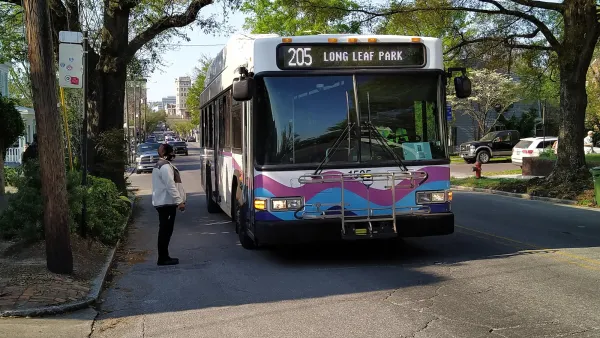
North Carolina removes bus benches installed by Democratic Socialists
NCDOT says the benches, installed without the department's permission, do not meet state standards for safety and accessibility.
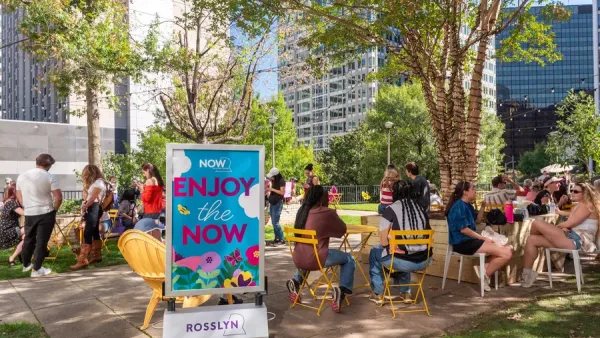
Arlington's 'pop-up park' activates a vacant plaza
Third spaces don't have to be permanent.
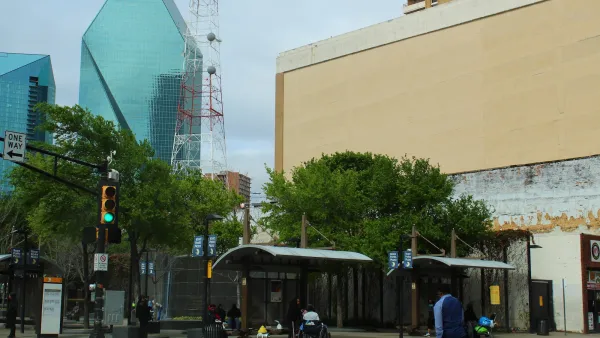
Dallas transit to invest up to $71.5M in upgraded bus shelters
The new shelters will feature solar-powered lighting and materials designed to protect riders from extreme weather.

Planetizen Federal Action Tracker
A weekly monitor of how Trump’s orders and actions are impacting planners and planning in America.

Amtrak, CN end decades-long dispute with eight-year agreement
The new operating agreement establishes an updated framework for the companies to work together, including processes to resolve disputes.

Judges permit Denver to divert 77,000 acre feet from the Colorado River for reservoir expansion
Overuse and climate change have caused the Colorado River’s water levels to plummet.

Northwest rail fans eager for Sept. 30 debut of Amtrak’s Airo fleet
Get ready for that new train smell and more seats. But they won’t go faster or run more frequently on the Cascades route in Washington and Oregon.

NYC DOT wants faster, more permanent street upgrades
The city is examining ways to build more concrete infrastructure without getting entangled in 'decades-long' projects.

'Something we’ve never seen before:' rising utility rates could strain city finances nationwide
Data centers, climate change and other factors have caused utility rates in the United States to increase by 38% since 2020.

FREE Course: Walkable City 1: Why Walkability?
After describing his path towards focusing on walkability as the essence of good planning, Jeff Speck marches through his five principal reasons for making more walkable places.
Reinventing Malls: Planning Alchemy—Turning Gray Fields Into Gold
The course focuses on the opportunities and imperatives that shape reinvention of mall sites.

Harvard University Graduate School of Design
KFH Group Inc.
Greater Baltimore Committee
The Architects Foundation
University of Cincinnati Online
The Pocatello Development Authority
The Urban Renewal Agency of the City of Pocatello