We were told to look both ways before crossing the street—not walk two miles, uphill both ways, in the snow before crossing the street.


"In most American cities you can find streets that turn what should be short, easy walking trips into excursions so long and humiliating that you might as well drive. Or, if you don’t have that option, you can take your chances playing a high-stakes game of Frogger," writes Angie Schmitt.
To dole out some public shame to the places that allows such anti-pedestrian conditions to exist, Schmitt and Streetsblog called on readers to crowdsource a set of examples of these "monster roads" from around the country. There is still time to vote on the list, which includes streets in Maryland, Tennessee, Idaho, and Arizona, among others.
Read the full story: A Crosswalk Too Far: Vote for the Least Crossable Street in America
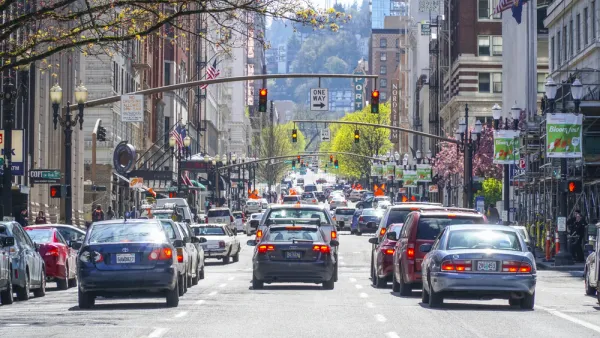
'No Crossing' Signs in Portland Limit the Public Way, Say Critics
In Portland, Oregon, transportation advocates are questioning the justifications for crosswalk closures in the city.
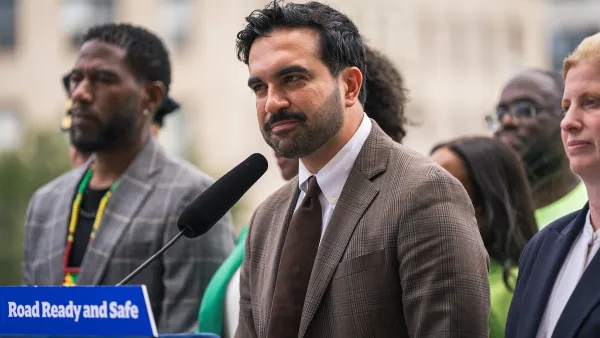
NYC votes to cut outdoor dining red tape, speed up permitting
New York City also voted to allow the Department of Transportation to begin work on urgent projects before notifying elected officials.
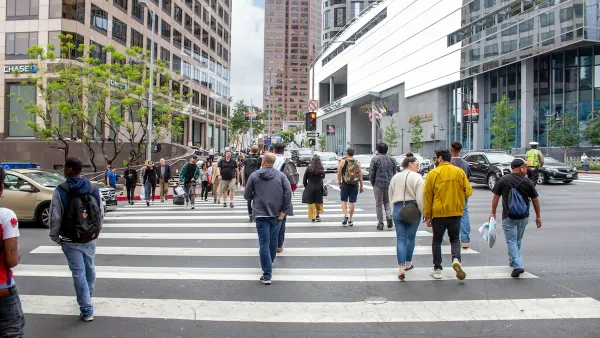
LA residents may be allowed to paint their own crosswalks
Councilwoman Katy Yaroslavsky put out a motion instructing the Los Angeles Department of Public Transportation to study the feasibility of allowing volunteers to paint crosswalks.

Planetizen Federal Action Tracker
A weekly monitor of how Trump’s orders and actions are impacting planners and planning in America.

Washington state to charge fee to drivers with fuel-efficient cars
Revenue from the fee will go towards supporting the state’s highways.

Illinois considers spending $1 billion in taxpayer money on data center
A quantum computing campus and data center are currently under construction in Chicago.

People Mover delayed again, LAX and contractor trade barbs
The automated train was last slated to open in January 2027.

Trump to blast ‘hydrocarbon highway’ through ‘world’s longest art gallery’
Environmental and historic preservation groups are suing to stop the project.

25 states cast bids to be the home of U.S. Space Academy
The academy will train scientists, officers and astronauts for the U.S. Space Force.

FREE Course: Walkable City 1: Why Walkability?
After describing his path towards focusing on walkability as the essence of good planning, Jeff Speck marches through his five principal reasons for making more walkable places.
Reinventing Malls: Planning Alchemy—Turning Gray Fields Into Gold
The course focuses on the opportunities and imperatives that shape reinvention of mall sites.

City of Charlotte
City of Rosemead
Rutgers University, Edward J. Bloustein School of Planning and Public Policy
University of Michigan School for Environment and Sustainability (SEAS)
Hunter College, City University of New York (CUNY)
The Architects Foundation
University District Partnership