The Dallas Boneyard is a mecca for those with architectural salvage inclinations—not to mention a delightful collection of curiosities from the city's architectural past.


Marc Ramirez brings readers inside the Boneyard, the city's "pantry of hoarded history"—a collection of almost-discarded remnants of renovated or demolished buildings.
The warehouse is located near Military Parkway east of Fair Park in Dallas, and the work in stashing away the site's artifacts is credited to Willis Winters and his predecessors and colleagues at Dallas Parks and Recreation.
"The whole thing started humbly. A set of Corinthian column capitals came first, salvaged in the 1990s from Tenison Memorial Park on Samuell Boulevard. The ornate column crowns built in 1918 had gone neglected for too long to be restored; they were dumped in a facility corner."
"Eventually, a few pieces would turn into many: Stone parapets, chunks of smooth terra cotta, blocks lined with sculpted orbs reflecting Prairie School-style architecture. There’s even two rows of seats salvaged from the Cotton Bowl when it converted to bleacher seating in 2009."
The article by Ramirez also details some of the collection's most treasured objects, including one with a connection to the assassination of John F. Kennedy.
Read the full story: Here lies what was almost lost from Dallas’ architectural past

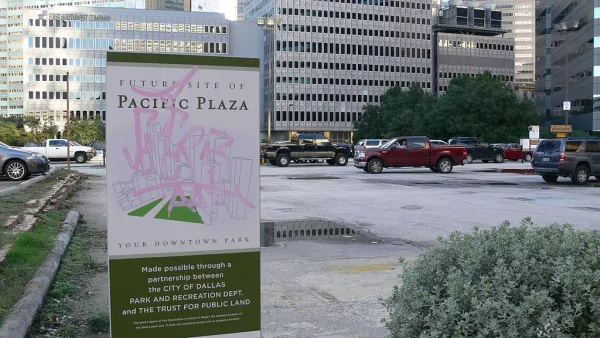
From Parking Lot to Urban Green Space
The first of four new parks opening in Dallas in the next few years opened earlier this month—Pacific Plaza park.
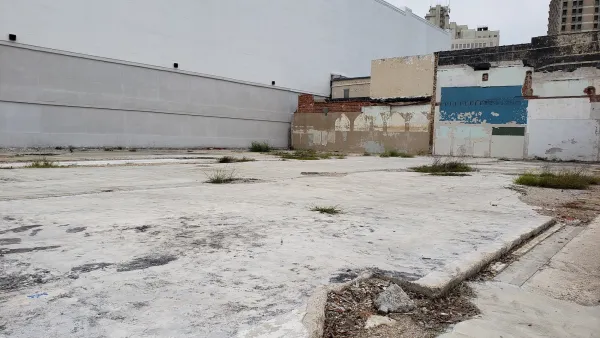
Vacant lots in south Dallas are giving way to affordable housing
A land use analysis found that Dallas could increase tax revenue and close resource gaps if it invests in vacant lot redevelopment.

Dallas area transit prepares for World Cup, asks locals to drive
DART is adding a special shuttle service and creating back-up mechanisms to ensure it can serve all of this summer's World Cup attendees.

Planetizen Federal Action Tracker
A weekly monitor of how Trump’s orders and actions are impacting planners and planning in America.

‘Going backwards:’ Baltimore mayor, students rally against state's transit funding plan
Maryland's proposed six-year plan provides no funding for Baltimore’s BMORE bus program and reduces its road maintenance funding.

Detroit to transform waterfront with $2.2 billion investment
Developers will convert about 18 acres of unused parking lot space into civic spaces.

U.S.-Iran war may have ‘devastating’ impact on cost to warm homes
Vermont and Maine residents may see a 76% increase in the cost of warming their homes this winter.

Senate bill would ‘overhaul’ environmental permitting laws
Under the proposed act, government agencies would also not be able to suspend or rescind permits after granting them.

Exemption applications for NYC’s pied-à-terre tax see 55% success rate
The city sent nearly 40% of its initial pied-à-terre tax warnings erroneously.

FREE Course: Walkable City 1: Why Walkability?
After describing his path towards focusing on walkability as the essence of good planning, Jeff Speck marches through his five principal reasons for making more walkable places.
Reinventing Malls: Planning Alchemy—Turning Gray Fields Into Gold
The course focuses on the opportunities and imperatives that shape reinvention of mall sites.

One Hundred Miles
County of Mendocino
planning NEXT
The Architects Foundation
University of Cincinnati Online
Montrose County
Northern Illinois Transit Authority (NITA)
The Pocatello Development Authority