After clearing two lawsuits in February, and weathering a contentious mayoral election, the Honolulu light rail project is under construction.


"On a rural expanse of Oahu’s leeward coast, a line of concrete pillars snakes through fields of corn stalks and pumpkins toward downtown Honolulu where distant high rises jut into the sky through a muggy haze," reports Sophie Cocke. The pillars are a conspicuous sign of a game-changing light rail project. At a price of $5.2 billion, "the rail project is the largest public works project in Hawaii’s history," and the plan has been in the works since the 1960s.
Cocke's coverage of the current state of the route also looks forward, detailing some of the development plans for the corridor. "A plan, recently approved by Mayor Kirk Caldwell and the Honolulu City Council, dubbed, 'Live, Work, Play, Aiea,' includes up to 1,500 residential units in five new high-rises, as well as retail space and a possible hotel. The development is slated to be built around the planned Pearlridge Transit Station."
Read the full story: Honolulu Rail Takes Shape, City Prepares for Development Boom

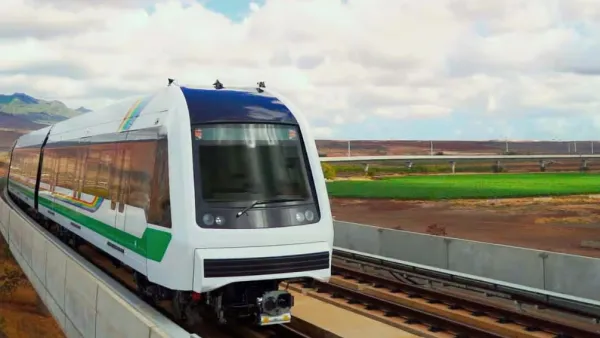
Honolulu Light Rail to Open in June
The city’s first light rail line will finally begin service after more than a half century of planning.
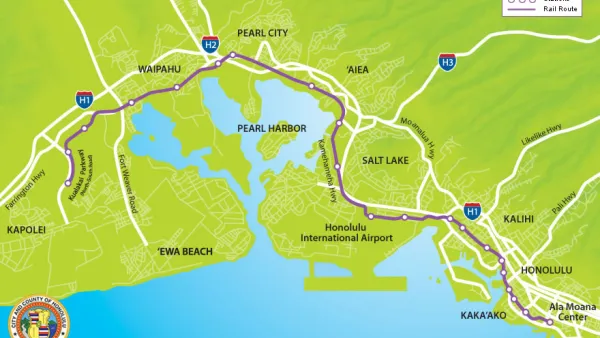
Honolulu Rail Cost Overruns Now Exceed $1 Billion
Add another $200 million to the $910 million shortfall already facing Honolulu's rail project. The changing circumstances surrounding the project won't make it any easier to create a viable funding plan to make up the difference.
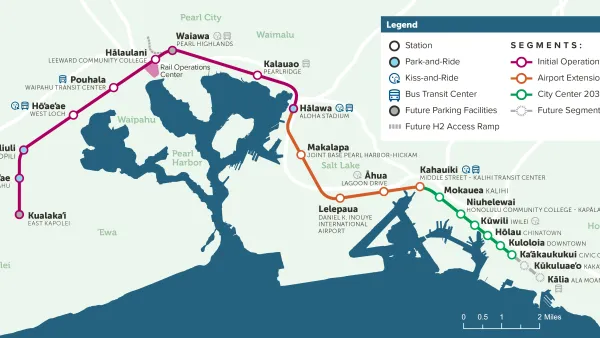
Skyline Rail, Now Serving Honolulu
In a historic day for public transit, Skyline Rail, a project once deemed the worst transit project in the United States due to extreme cost overruns and construction delays, finally opened to the public at the end of June.

Planetizen Federal Action Tracker
A weekly monitor of how Trump’s orders and actions are impacting planners and planning in America.

‘Going backwards:’ Baltimore mayor, students rally against state's transit funding plan
Maryland's proposed six-year plan provides no funding for Baltimore’s BMORE bus program and reduces its road maintenance funding.

Detroit to transform waterfront with $2.2 billion investment
Developers will convert about 18 acres of unused parking lot space into civic spaces.

U.S.-Iran war may have ‘devastating’ impact on cost to warm homes
Vermont and Maine residents may see a 76% increase in the cost of warming their homes this winter.

Senate bill would ‘overhaul’ environmental permitting laws
Under the proposed act, government agencies would also not be able to suspend or rescind permits after granting them.

Exemption applications for NYC’s pied-à-terre tax see 55% success rate
The city sent nearly 40% of its initial pied-à-terre tax warnings erroneously.

FREE Course: Walkable City 1: Why Walkability?
After describing his path towards focusing on walkability as the essence of good planning, Jeff Speck marches through his five principal reasons for making more walkable places.
Reinventing Malls: Planning Alchemy—Turning Gray Fields Into Gold
The course focuses on the opportunities and imperatives that shape reinvention of mall sites.

One Hundred Miles
County of Mendocino
planning NEXT
The Architects Foundation
University of Cincinnati Online
Montrose County
Northern Illinois Transit Authority (NITA)
The Pocatello Development Authority