Downtown Dallas provides another example of the redemptive power of adaptive reuse. With the number of empty buildings declining every year and more ambitious projects on the way, is it safe to say Downtown Dallas is all the way back?


A Dallas Morning News editorial describes the ongoing revival of the southeastern corner of Downtown Dallas: "Just think of the change that has occurred in the southeastern corner of downtown. The Lone Star Gas Lofts, the Continental Building, the opening of Main Street Garden, the redesign of the University of North Texas’ downtown campus, the plan to convert the old Dallas Municipal Courts building into UNT Law School." The editorial credits a "commitment from city leadership to invest in bold public-private partnerships to restore aging buildings" for the turnaround.
The story follows an earlier article by Steve Brown with a headline that reads: "Downtown Dallas is running out of empty buildings." Brown was writing specifically of the recently announced redevelopment of two of Dallas' largest empty buildings: the 52-story former First National Bank tower at 1401 Elm Street and Statler-Hilton Hotel on Commerce Street.
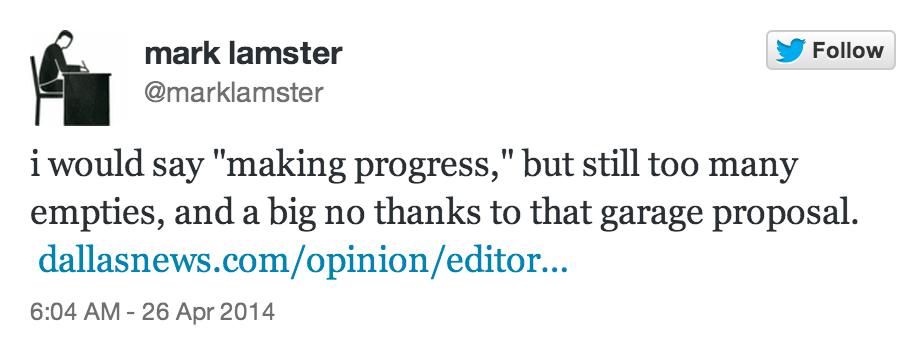
Dallas Morning News Architecture Critic Mark Lamster tweeted his response to the Downtown Dallas comeback narrative, citing the area's momentum but also mentioning the remaining empty buildings and providing a negative review for a proposed parking garage at Pacific Plaza.
Read the full story: Editorial: Southeastern edge of downtown is alive again
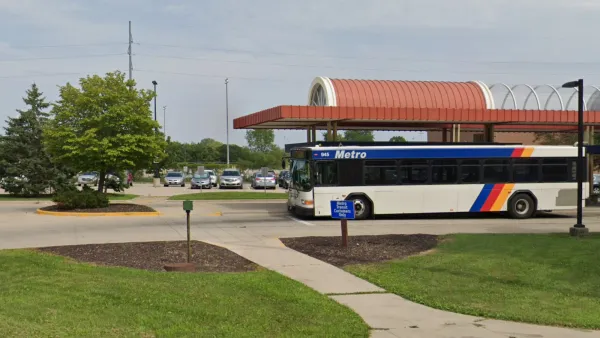
Madison approves hundreds of affordable apartments as deadline for federal funding looms
A recently approved project will bring 163 affordable units to the north side.
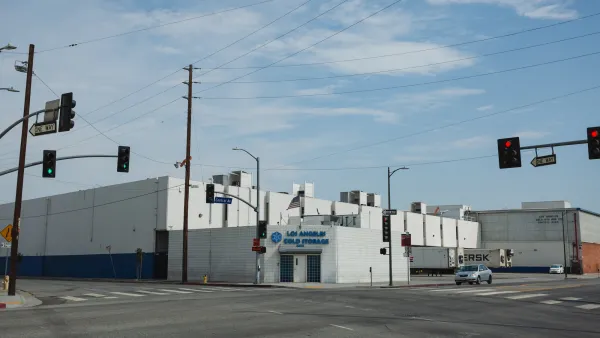
LA approves $2B 'urban village' plan for former cold storage facilities
The project promises an interconnected neighborhood with a focus on public space.
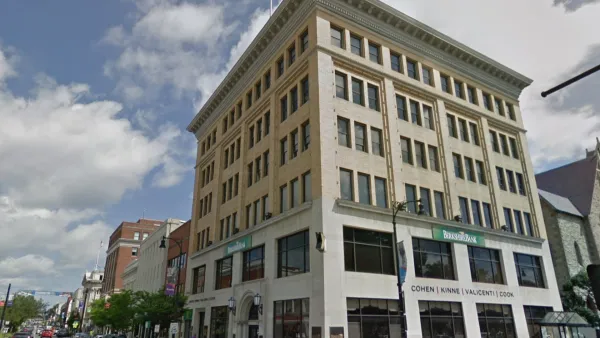
Historic Bank in Pittsfield, Massachusetts to Become Mixed-income Housing
The bank redevelopment project is part of a $140 million state affordable housing initiative.

Planetizen Federal Action Tracker
A weekly monitor of how Trump’s orders and actions are impacting planners and planning in America.

California plans to bury El Niño’s downpour
If the state plays its cards right, it may be able to store a billion acre-feet of El Niño’s water in aquifers.

Desperate measures: Advocates weigh draining Lake Powell to fill Colorado River
Draining the reservoir could reduce evaporation losses by a couple hundred thousand acre-feet.

Housing is the top priority of Seattle’s sole new councilmember
Jenks campaigned on building 1,000 new units of affordable housing.

New tax cuts may slash $1.5 billion in funding for Miami transit, public parks
Amendment 3 will save Miami-Dade homeowners $2,700 in 2028.

Arizona, Wisconsin, Pennsylvania hope to finally advance climate goals post-midterms
The three states have spent years under Republican or divided control.

FREE Course: Walkable City 1: Why Walkability?
After describing his path towards focusing on walkability as the essence of good planning, Jeff Speck marches through his five principal reasons for making more walkable places.
Reinventing Malls: Planning Alchemy—Turning Gray Fields Into Gold
The course focuses on the opportunities and imperatives that shape reinvention of mall sites.

City of Rosemead
Rutgers University, Edward J. Bloustein School of Planning and Public Policy
One Hundred Miles
University of Michigan School for Environment and Sustainability (SEAS)
Hunter College, City University of New York (CUNY)
The Architects Foundation
City of Cambridge
Montrose County
The Pocatello Development Authority