After a decade of incredible growth, a tightening job market has finally slowed the domestic migration into Washington D.C.


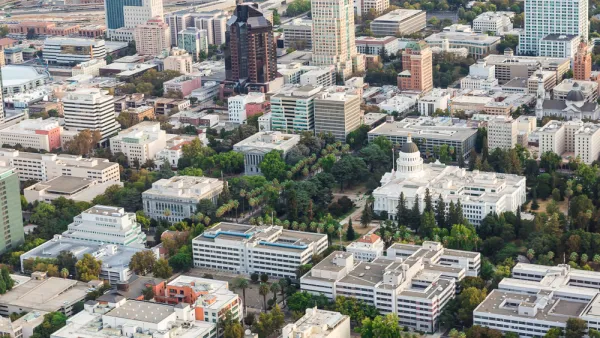
Carol Morello reports on recent demographic figures released by the Brookings Insitution that show a dramatic deceleration of growth in Washington D.C. Between July 2012 and July 2013, according to census figures, the nation’s capital experienced a next influx of just 4,500 people—one fifth of the city’s rate of growth two years earlier.
“The census figures reflect a region whose growth is decelerating after high growth in most of the previous decade, driven by federal spending after the terrorist attacks of Sept. 11, 2001, and fueled further during the recession when few other places in the country had jobs,” writes Morello. Among the region’s employment base, “federal jobs, which account for a third of all employment in the Washington region and carry some of the highest salaries, actually shrank…”
The article also makes several observations about dichotomy of experience between the city and its suburbs. "Six jurisdictions, including the region’s biggest counties of Montgomery, Fairfax and Prince George’s, showed net declines in what demographers call domestic migration, or the influx of residents from elsewhere within the country." And much of the growth of D.C. resulted from residents of nearby suburbs moving into the city.
Read the full story: Washington’s population growth slows

Explained: D.C. Gains '1,000 New Residents Every Month'
Officials and residents in Washington, D.C. are often heard saying that the District is gaining 1,000 new residents every month. But what does it mean?
California Halts Three Years of Population Loss
The Golden State grew by 67,000 people, or 0.17%, last year, to just over 39.1 million on Jan. 1, 2024, according to a demographic report released April 30 by the California Department of Finance.

Population Losers
California's population dipped below 39 million as of July, according to the Census Bureau, after seeing its net domestic migration loss this year exceed last year's. Only New York has seen a greater loss as a percentage of population.

Planetizen Federal Action Tracker
A weekly monitor of how Trump’s orders and actions are impacting planners and planning in America.

California plans to bury El Niño’s downpour
If the state plays its cards right, it may be able to store a billion acre-feet of El Niño’s water in aquifers.

Desperate measures: Advocates weigh draining Lake Powell to fill Colorado River
Draining the reservoir could reduce evaporation losses by a couple hundred thousand acre-feet.

Housing is the top priority of Seattle’s sole new councilmember
Jenks campaigned on building 1,000 new units of affordable housing.

New tax cuts may slash $1.5 billion in funding for Miami transit, public parks
Amendment 3 will save Miami-Dade homeowners $2,700 in 2028.

Arizona, Wisconsin, Pennsylvania hope to finally advance climate goals post-midterms
The three states have spent years under Republican or divided control.

FREE Course: Walkable City 1: Why Walkability?
After describing his path towards focusing on walkability as the essence of good planning, Jeff Speck marches through his five principal reasons for making more walkable places.
Reinventing Malls: Planning Alchemy—Turning Gray Fields Into Gold
The course focuses on the opportunities and imperatives that shape reinvention of mall sites.

City of Rosemead
Rutgers University, Edward J. Bloustein School of Planning and Public Policy
One Hundred Miles
University of Michigan School for Environment and Sustainability (SEAS)
Hunter College, City University of New York (CUNY)
The Architects Foundation
City of Cambridge
Montrose County
The Pocatello Development Authority