The 2014 Pritzker Architecture Prize had been awarded to Shigeru Ban. Ban is best known for his innovative use of paper as a construction material and for relief work in disaster areas.


The architecture profession’s highest honor, the Pritzker Prize, has been awarded to Shigeru Ban. Like many of the previous Pritzker laureates, Ban is a celebrated innovator of building structure. Unlike previous laureates, however, Ban is also well known for his social work, designing shelters after natural disasters in places like Rwanda, Turkey, India, China, Haiti, and Japan.
Writing for The Architect’s Newspaper, Alan Brake scooped the formal announcement of the 2014 Pritzker Prize by 30 minutes. Headlined, “A Humble Master, here is how Brake describes Ban’s accomplishments:
“The jury citation notes his innovative use of materials and structure. His satellite museum for the Centre Pompidou in Metz, France, is one such example. A basket-like super structure, made of woven timber covered in a lightweight translucent membrane, caps the complex, creating sheltered indoor/outdoor spaces that help dissolve the physical boundaries of the museum.”
“Ban is widely known for using paper tubes and disused shipping containers to create temporary and permanent structures. Projects like the Paper Church in Kobe, Japan, and Cardboard Cathedral in Christchurch, New Zealand, have brought dignified places of assembly and reflection to areas after earthquakes and other natural calamities.”
Ban is currently engaged in a couple of major cultural projects: the Aspen Art museum in Colorado and a new concert hall in Paris.
The announcement comes after a tough year for the Pritzker Prize, which has been criticized for a lack of women among its roster. The criticism peaked with a high-profile campaign to include Denise Scott Brown as a 1991 laureate.
Ban is the second consecutive Japanese architect to win the prize, after Toyo Ito won the prize in 2013.
Read the full story: A Humble Master

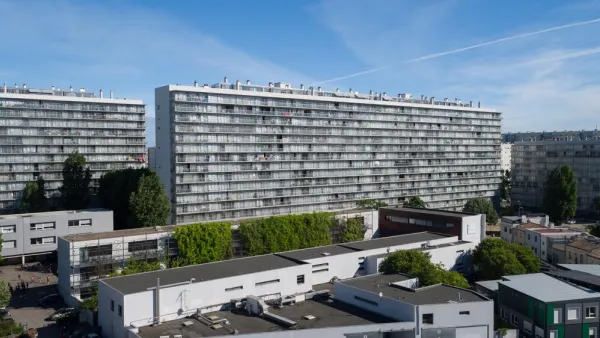
2021 Pritzker Prize Awarded for French Duo's Social Focus
The 2021 Pritzker Prize, considered the highest annual honor in architecture, has been awarded to a French couple who prioritize kindness in their designs.

A Rare Choice for the Pritzker Prize: Two Female Winners
Yvonne Farrell and Shelley McNamara, cofounders of Grafton Architects, take home the top award in the field of architecture in 2020.
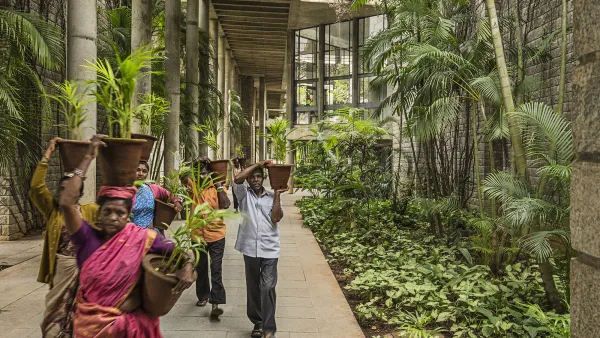
Balkrishna Doshi: First Indian to Receive Architecture's Highest Honor
The 2018 Pritzker Prize has been awarded to a 90-year-old from India. Balkrishna Doshi is known for his commitment to social causes.

Planetizen Federal Action Tracker
A weekly monitor of how Trump’s orders and actions are impacting planners and planning in America.

Amtrak, CN end decades-long dispute with eight-year agreement
The new operating agreement establishes an updated framework for the companies to work together, including processes to resolve disputes.

Judges permit Denver to divert 77,000 acre feet from the Colorado River for reservoir expansion
Overuse and climate change have caused the Colorado River’s water levels to plummet.

South Chicago development proposal would 'upzone' neighborhoods to increase density
The South Chicago Land Use Framework plan also aims to promote pedestrian and transit-oriented developments.

Boston has spent millions making the Green Line more accessible — and there’s no end in sight
While the city has invested millions into expanding and adding platforms to the Green Line to make it more accessible, new train cars set to arrive next year will be too tall for disabled passengers to board without raising the current platforms.

Idaho may see an 18% drop in federal surface transit funding — the largest estimated cut in the US
Transit systems in rural communities are much more reliant on federal funding to provide their services.

FREE Course: Walkable City 1: Why Walkability?
After describing his path towards focusing on walkability as the essence of good planning, Jeff Speck marches through his five principal reasons for making more walkable places.
Reinventing Malls: Planning Alchemy—Turning Gray Fields Into Gold
The course focuses on the opportunities and imperatives that shape reinvention of mall sites.

City of Wisconsin Rapids
Harvard University Graduate School of Design
KFH Group Inc.
The Architects Foundation
University of Cincinnati Online
The Pocatello Development Authority
The Urban Renewal Agency of the City of Pocatello