The 2021 Pritzker Prize, considered the highest annual honor in architecture, has been awarded to a French couple who prioritize kindness in their designs.



The 2021 Pritzker Prize, an annual award considered the highest honor in the architecture profession, has been awarded to Anne Lacaton and Jean-Philippe Vassal.
According to an article by Neda Ulaby, there's an element of surprise to this year's selection. Even Lacaton and Vassal say they are surprised as anyone else.
Lacaton and Vassal could not be more different from an earlier generation of Pritzker "starchitects," known for their signature styles, statement skyscrapers and flamboyant follies. Instead, the two apply a credo: "Never demolish, never remove or replace, always add, transform, and reuse!" to their work on old urban buildings. That includes dilapidated public housing (or "social housing" as it is known in France). Designs by Lacaton and Vassal have focused on replenishing low-income housing complexes, aesthetically and functionally, while respecting — rather than displacing — the tenants who live there.
Lacaton described some of the couple's philosophy in a 2017 lecture delivered to the Architectural League of New York. "Buildings are beautiful when people feel well in them," said Lacaton in the lecture. "When the light inside is beautiful and the air is pleasant. When the exchange with the outside seems easy and gentle, and when uses and sensations are unexpected." Lacaton also added this bombshell: "There's a lot of violence in architecture and urbanism. We try to be precise. We try to work with kindness."
Ulaby offers that the couple's approach to architecture could provide a model for urban planning in the United States. With a focus on cost-effective and creative adaption, the work of Lacaton and Vassal certainly stands in contrast to the influence of Robert Moses and Le Corbusier and the urban renewal programs of U.S. planning history.


FULL STORY: 2021 Pritzker Prize Goes To French Architects Who 'Work With Kindness'

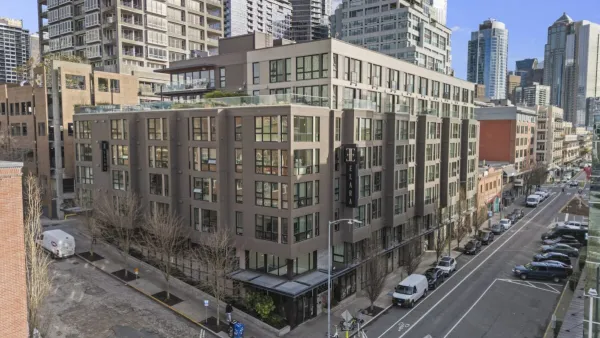
Seattle social housing agency can now issue bonds
The new Seattle Social Housing Developer funds affordable housing through a tax on the city's highest-paying companies.
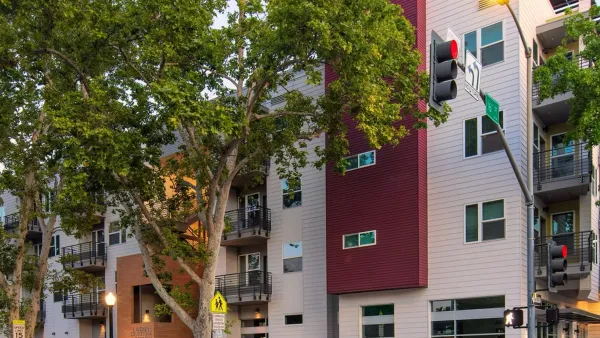
New Washington State Law Lets Cities Give Social Housing Developers City-owned Land
In its current form, HB 1687, which authorizes local governments to assist social housing agencies with land or other resources, only applies to Seattle.
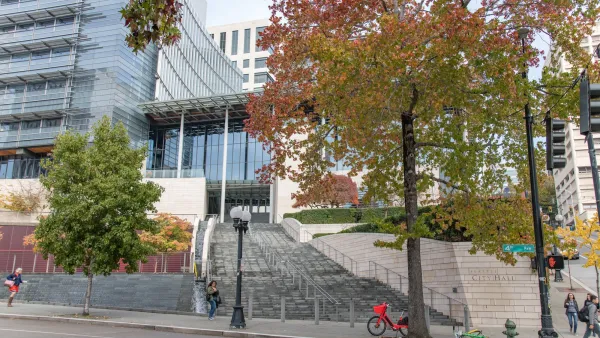
Seattle Social Housing Tax on Highest-paid Jobs Will Bring in Close to $115 Million in First Year
A 5 percent tax on the highest-paying jobs has brought in twice as much new revenue for social housing as originally predicted.

Planetizen Federal Action Tracker
A weekly monitor of how Trump’s orders and actions are impacting planners and planning in America.

The state-sanctioned urbicide of Austin
People don’t kill cities. Freeways do.

US to reduce Colorado River water deliveries to Mexico
A new Colorado Treaty amendment reduces Mexico’s Colorado River water allocation by 250,000 acre feet.

LA Metro’s ultimatum: no extra buses for LA28 if federal funding isn’t imminently secured
If Metro does not provide additional buses, LA28 organizers will have to find a new way to manage Olympic traffic. LA28’s budget does not include a line item for transit.

Colorado’s Largest Data Center Could Rise Next to Homes — Without a Public Hearing
The proposed campus would consume 11 times the power of Denver International Airport; as it has across the country, opposition mounts.

5 New England states march closer to 800 megawatt wind energy project
Securing federal approval for the project may be complicated under the Trump administration, which has historically been hostile towards domestic wind power.

FREE Course: Walkable City 1: Why Walkability?
After describing his path towards focusing on walkability as the essence of good planning, Jeff Speck marches through his five principal reasons for making more walkable places.
Reinventing Malls: Planning Alchemy—Turning Gray Fields Into Gold
The course focuses on the opportunities and imperatives that shape reinvention of mall sites.

Eagle County Government
Harvard University Graduate School of Design
Nashville Planning Department
The Architects Foundation
University of Cincinnati Online
The Pocatello Development Authority
The Urban Renewal Agency of the City of Pocatello
Journal of the American Planning Association