Though it may be too soon to say for sure, it looks like the United States has reached peak driving. So shouldn’t we cut back on new road construction?


So asks Eric Jaffe, who suggests that a fix-it-first road funding policy is most appropriate for an era in which Americans drive less. Jaffe’s argument is bolstered by evidence that some transportation authorities have already begun to adapt to the change in transportation habit. The Maryland DOT, for instance, recently acknowledged that “a return to strong annual VMT growth is unlikely.
“For sure, we need a new source of funding, with the busted gas tax nearing its demise,” writes Jaffe. “It’s also high time to challenge the idea that the amount of road funding we’ll need in the future is the same as what we’ve needed in the past.”
Read the full story: We're Driving Less, So Should We Stop Building New Roads?

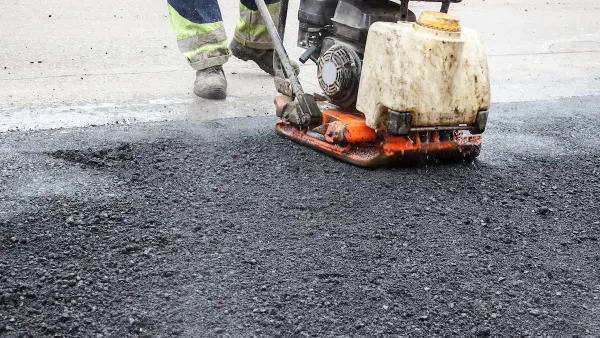
State Transportation Leaders Call for Maintenance Over New Projects
Experts suggest departments facing budget gaps should prioritize basic repairs and maintenance over road-building and highway expansion projects.
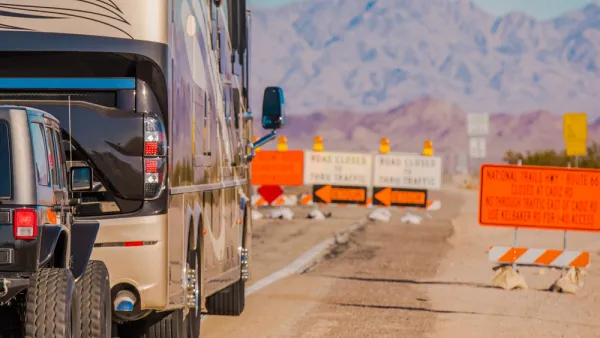
Constitutional Amendment Would Shift Some Gas Tax Revenue to Transit Spending in Nevada
Democratic legislators in Nevada are considering a constitutional amendment that would allow the state to use gas tax revenues for transportation projects other than road construction, maintenance, and repair.
Too Many Roads for Financial Sustainability
Overpaving roads is like overeating ice cream, according to this Strong Towns article.

Planetizen Federal Action Tracker
A weekly monitor of how Trump’s orders and actions are impacting planners and planning in America.

Amtrak, CN end decades-long dispute with eight-year agreement
The new operating agreement establishes an updated framework for the companies to work together, including processes to resolve disputes.

Judges permit Denver to divert 77,000 acre feet from the Colorado River for reservoir expansion
Overuse and climate change have caused the Colorado River’s water levels to plummet.

Boston has spent millions making the Green Line more accessible — and there’s no end in sight
While the city has invested millions into expanding and adding platforms to the Green Line to make it more accessible, new train cars set to arrive next year will be too tall for disabled passengers to board without raising the current platforms.

Idaho may see an 18% drop in federal surface transit funding — the largest estimated cut in the US
Transit systems in rural communities are much more reliant on federal funding to provide their services.

How ‘post-disaster gentrification’ alters neighborhoods after natural calamities
After hurricanes, fires or other calamities, the original residents of a community are often replaced by younger, wealthier residents.

FREE Course: Walkable City 1: Why Walkability?
After describing his path towards focusing on walkability as the essence of good planning, Jeff Speck marches through his five principal reasons for making more walkable places.
Reinventing Malls: Planning Alchemy—Turning Gray Fields Into Gold
The course focuses on the opportunities and imperatives that shape reinvention of mall sites.

City of Wisconsin Rapids
Harvard University Graduate School of Design
KFH Group Inc.
The Architects Foundation
University of Cincinnati Online
The Pocatello Development Authority
The Urban Renewal Agency of the City of Pocatello