The state of Illinois is actively pushing two highway projects that might fail to pencil-out for users and for state taxpayers.


Steven Vance examines the dubious financial outlook of two toll lane projects currently in the works in Illinois—the proposed Illiana Expressway and a 13-mile highway extension of IL-53.
For the former, the question is whether the tolls necessary to fund operations of the proposed route will be so exorbitant as to drive potential users onto other routes. “IDOT published an analysis this month that gauges how willing people are to pay certain tolls to drive on the 47-mile Illiana Tollway in rural Will County. The ‘toll sensitivity’ report shows tolls on the Illiana would be 23 cents per mile, almost four times the Illinois Tollway Authority average.”
If that cost proves too much, sending drivers to nearby I-80 as an alternative, it’s possible tolls won’t cover the cost of the expressway. “If Illiana users can’t cover the costs of construction debt and maintenance, all Illinois (and Indiana) taxpayers will be on the hook,” writes Vance.
Meanwhile, a 13-mile highway extension of IL-53 is facing a $2 billion shortfall. One of the ideas proposed solutions for covering the budget shortfall would require contributions from all taxpayers, not just those who own cars and drive: “Another idea the committee mentioned was to set up a Tax Increment Finance district that would send property tax revenue generated above current levels to paying down the tollway’s debt. These ideas would mean all of Lake County’s 700,000 residents end up paying for the road, not just the drivers, passengers, and freight haulers using the highway.”
Read the full story: Illinois’s New Highways Will Cost Taxpayers Dearly

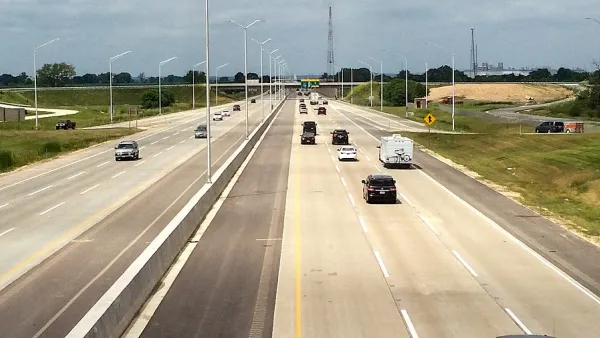
Sale of Illinois Tollway Considered to Pay Pension Debt
Gov. J.B. Pritzker has a $134 billion problem in unfunded pension liabilities. Along with several other measures, his administration is considering selling state assets, including the Illinois Tollway, to fill the hole.
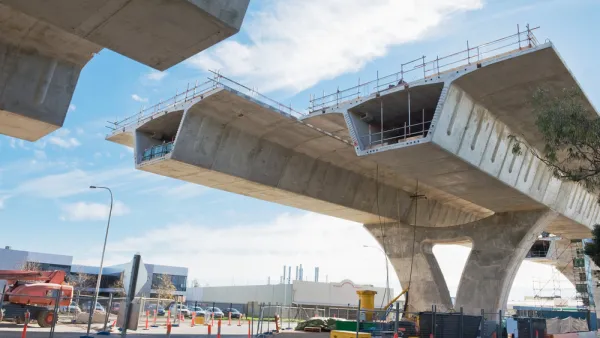
PIRG Releases Third Highway Boondoggles Report
A new report from the U.S. Public Interest Research Group and the Frontier Group indicates that highway boondoggles have been getting bigger, more costly, with the benefits more limited. Nine projects are analyzed in "Highway Boondoggles 3."
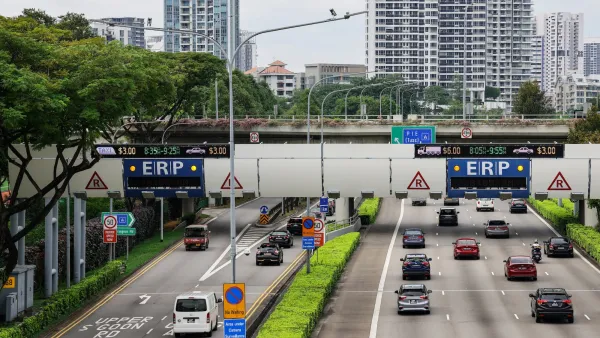
Singapore adopts in-vehicle GPS tech to manage road tolls
The city's latest update to its congestion pricing system could open the door to distance-based tolling.

Planetizen Federal Action Tracker
A weekly monitor of how Trump’s orders and actions are impacting planners and planning in America.

‘Going backwards:’ Baltimore mayor, students rally against state's transit funding plan
Maryland's proposed six-year plan provides no funding for Baltimore’s BMORE bus program and reduces its road maintenance funding.

Detroit to transform waterfront with $2.2 billion investment
Developers will convert about 18 acres of unused parking lot space into civic spaces.

U.S.-Iran war may have ‘devastating’ impact on cost to warm homes
Vermont and Maine residents may see a 76% increase in the cost of warming their homes this winter.

Senate bill would ‘overhaul’ environmental permitting laws
Under the proposed act, government agencies would also not be able to suspend or rescind permits after granting them.

Exemption applications for NYC’s pied-à-terre tax see 55% success rate
The city sent nearly 40% of its initial pied-à-terre tax warnings erroneously.

FREE Course: Walkable City 1: Why Walkability?
After describing his path towards focusing on walkability as the essence of good planning, Jeff Speck marches through his five principal reasons for making more walkable places.
Reinventing Malls: Planning Alchemy—Turning Gray Fields Into Gold
The course focuses on the opportunities and imperatives that shape reinvention of mall sites.

One Hundred Miles
County of Mendocino
planning NEXT
The Architects Foundation
University of Cincinnati Online
Montrose County
Northern Illinois Transit Authority (NITA)
The Pocatello Development Authority