In Los Angeles, months of agitation by pedestrian and bicycling advocates have finally paid off.


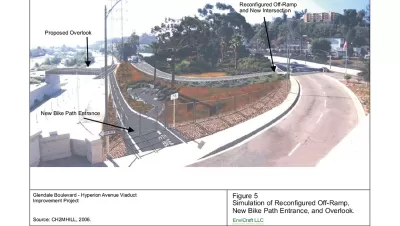
The furor started last fall, when the Los Angeles Department of Transportation (LADOT) unveiled designs to retrofit the Glendale-Hyperion Bridge. The proposal lacked accommodations for pedestrians and bicyclists, instead suggested expanding vehicular lanes, removing one sidewalk, and installing a central “crash barrier,” Damien Newton writes.
The Los Angeles County Bicycle Coalition, Enrich L.A., and other local organizations—together with plenty of individual walkers and cyclists—protested the move. As a result, the LADOT last week presented three new proposals, each of which include dedicated bike lanes and a road diet.
As the city considers its options, concerned Angelenos continue to put pressure on the LADOT to incorporate sidewalks on both sides of the bridge.
Read the full story: Bike Lanes on Hyperion a Near Certainty, Discussion Moves On to Sidewalks

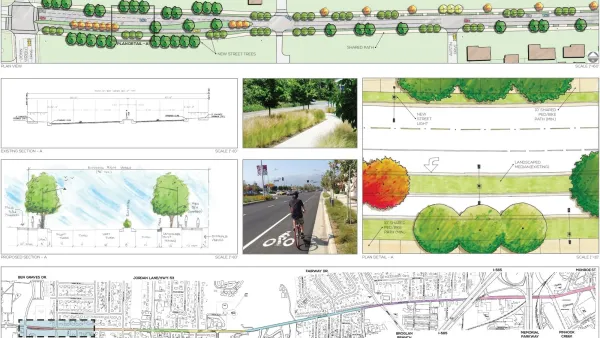
Huntsville, Alabama Launches $30M Complete Streets Project
A redesign of Holmes Avenue will bring new sidewalks, bike lanes, lighting, and street furniture to the corridor.

Idaho Bills Limit New Bike Lanes, Sidewalks
Cities in the county surrounding Boise will have to prove a “secondary benefit” before adding bike lanes or sidewalks to road projects.

Texas Bill Would Ban Road Diets, Congestion Pricing
A Texas state senator wants to prevent any discussion of congestion pricing and could suspend existing bike lane and sidewalk projects.

Planetizen Federal Action Tracker
A weekly monitor of how Trump’s orders and actions are impacting planners and planning in America.

Northwest rail fans eager for Sept. 30 debut of Amtrak’s Airo fleet
Get ready for that new train smell and more seats. But they won’t go faster or run more frequently on the Cascades route in Washington and Oregon.

Record-breaking wildlife overpass in Colorado brings 91% reduction in animal collisions
Prior to the overpass, vehicles were hitting one deer per day on Colorado’s Interstate 25.

Detroit to transform waterfront with $2.2 billion investment
Developers will convert about 18 acres of unused parking lot space into civic spaces.

‘Going backwards:’ Baltimore mayor, students rally against state's transit funding plan
Maryland's proposed six-year plan provides no funding for Baltimore’s BMORE bus program and reduces its road maintenance funding.

Trump wants to cancel nearly 98% of funding for HUD housing support program
Multiple housing groups are suing the administration in an effort to preserve the funding.

FREE Course: Walkable City 1: Why Walkability?
After describing his path towards focusing on walkability as the essence of good planning, Jeff Speck marches through his five principal reasons for making more walkable places.
Reinventing Malls: Planning Alchemy—Turning Gray Fields Into Gold
The course focuses on the opportunities and imperatives that shape reinvention of mall sites.

City of Thousand Oaks
City of Wisconsin Rapids
Harvard University Graduate School of Design
The Architects Foundation
University of Cincinnati Online
Northern Illinois Transit Authority (NITA)
The Pocatello Development Authority
The Urban Renewal Agency of the City of Pocatello