Walk Score has published its analysis of the quality of public transit in 50 of the biggest cities in the United States. The rankings may surprise you.


"Upon first glance, the rankings don't seem too surprising. New York City comes in first, as it always should. Boston is the second top-ranked Northeastern city. Washington D.C. is the top Southern city, and San Francisco is the top Western city," observes Ariel Schwartz. But she finds fault with the country's overall rankings.
"Somehow, San Francisco comes in second place after New York City. If that's actually the case, the U.S. transportation system is in big trouble. Because while San Francisco is served by many different transit types (subway, light rail, buses), it still can take hours to cross the seven mile by seven mile city using public transportation."
How was San Francisco able to claim a top spot? Walk Score explains its methodology thus: "To calculate a Transit Score, we assign a "usefulness" value to nearby transit routes based on the frequency, type of route (rail, bus, etc.), and distance to the nearest stop on the route. The "usefulness" of all nearby routes is summed and normalized to a score between 0 - 100."
Read the full story: The Cities With The Best Public Transportation In The U.S.
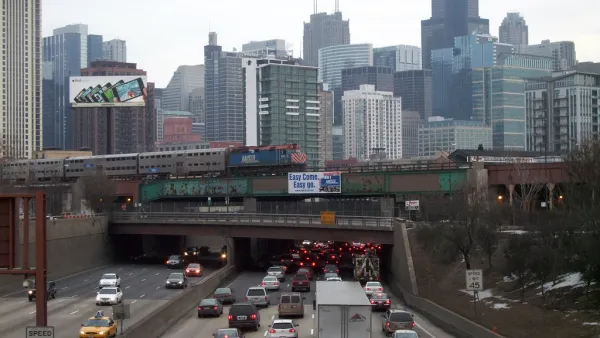
The Best Cities for Public Transit
Redfin released its updated transit scores for 2019 and, while there’s little change in the ranking, cities like D.C. and New York did see changes in their scores.
America's Top Ten Transit Meccas
Real estate's favorite tool for gauging neighborhood walkability now has a companion for transit, Kaid Benfield reports.

Novel study finds extreme state-by-state disparity in housing construction timelines
The first comprehensive working paper on U.S. construction timelines also found that the permitting process for multi-family projects has slowed nationwide.

Planetizen Federal Action Tracker
A weekly monitor of how Trump’s orders and actions are impacting planners and planning in America.

California plans to bury El Niño’s downpour
If the state plays its cards right, it may be able to store a billion acre-feet of El Niño’s water in aquifers.

Desperate measures: Advocates weigh draining Lake Powell to fill Colorado River
Draining the reservoir could reduce evaporation losses by a couple hundred thousand acre-feet.

Los Angeles just elected an urban planner as its mayor
Transportation analysts are optimistic that Raman will be more aggressive in addressing transit issues than Bass.

Mamdani’s pied-à-terre tax survives legal challenge
A panel of judges found that the plaintiffs failed to demonstrate injury as a result of New York City's implementation of the tax.

Eastern Nebraska is running out of electricity
Data centers and electrification are straining eastern Nebraska’s grid, throttling economic development.

FREE Course: Walkable City 1: Why Walkability?
After describing his path towards focusing on walkability as the essence of good planning, Jeff Speck marches through his five principal reasons for making more walkable places.
Reinventing Malls: Planning Alchemy—Turning Gray Fields Into Gold
The course focuses on the opportunities and imperatives that shape reinvention of mall sites.

City of Rosemead
Rutgers University, Edward J. Bloustein School of Planning and Public Policy
One Hundred Miles
University of Michigan School for Environment and Sustainability (SEAS)
Hunter College, City University of New York (CUNY)
The Architects Foundation
City of Cambridge
Montrose County
The Pocatello Development Authority