Like many cities built on the old economy of steel and automobile manufacturing, Baltimore is struggling to attract and retain citizens. Recent population growth bears examination.


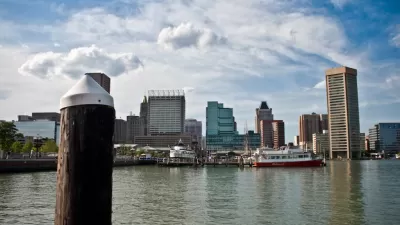
Baltimore's population grew in 2011 for the first time in 50 years. Jeff La Noue breaks down the data about the growth, finding demographic trends that break down along generational lines: “Baltimore is more popular for 19 to 33 year olds, with a sweet spot of 26, than at any point in the last half century. This age cohort is the one group that is coming to the city, while all other age groups are roughly leaving Baltimore just as they have for the last half century.”
The story goes on to address the challenge of retaining millennials in the city once they start having families and considering the options for schools in the city. La Noue also examines property taxes as a deterrent for young professionals looking to own homes in the city.
Read the full story: Millennials Lead Baltimore Forward


Are Cities Really Losing Millennials?
Despite headlines to the contrary, the nation's most urbanized places appear to have gained thirtysomethings in recent years.

The Urban Revival Is (Probably) Not Over
Critiquing Richard Florida's claim that "the urban revival is over."

Planetizen Federal Action Tracker
A weekly monitor of how Trump’s orders and actions are impacting planners and planning in America.

Amtrak, CN end decades-long dispute with eight-year agreement
The new operating agreement establishes an updated framework for the companies to work together, including processes to resolve disputes.

Judges permit Denver to divert 77,000 acre feet from the Colorado River for reservoir expansion
Overuse and climate change have caused the Colorado River’s water levels to plummet.

NYC plants over 18,000 trees, the most new foliage in a decade
Many of the trees were planted in communities vulnerable to extreme heat.

New bill requires California data center developers to create water scarcity plans
Gov. Gavin Newsom recently signed 7 bills intended to give California communities more information about the impact of proposed data centers.

San Diego may kill one-third of its bus routes as budget crisis looms
Under the city's proposed plan, 21% of Metropolitan Transit System riders would lose access to transit services.

FREE Course: Walkable City 1: Why Walkability?
After describing his path towards focusing on walkability as the essence of good planning, Jeff Speck marches through his five principal reasons for making more walkable places.
Reinventing Malls: Planning Alchemy—Turning Gray Fields Into Gold
The course focuses on the opportunities and imperatives that shape reinvention of mall sites.

City of Wisconsin Rapids
Harvard University Graduate School of Design
KFH Group Inc.
The Architects Foundation
University of Cincinnati Online
The Pocatello Development Authority
The Urban Renewal Agency of the City of Pocatello