In contrast to much of the United States, where home sizes are growing again following the recession, developers in Southern California are increasingly building attached homes - reversing the region's history of single-family sprawl.


"Faced with a dearth of developable land, home builders across Southern California are cramming more houses into less space," observes Conor Dougherty. "Many are dispensing with the single-family homes that have defined the region's development for half a century (Exhibit A: 'The Brady Bunch'). In their place they are building somewhat smaller structures in the form of townhouses or pairs of homes that share one wall."
"Rising home and land prices are driving the shift toward attached houses, but they aren't the only factors," he continues. "Many home buyers are willing to trade a smaller structure for a shorter commute to work."
Read the full story: Land Crunch Hits Builders in 'Brady Bunch' Country
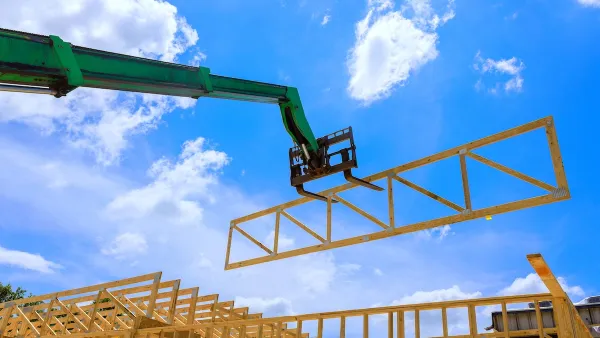
Permits for single-family homes have nosedived, along with investor confidence
Permits to build new single-family homes also hit a 3.5 year low in September.
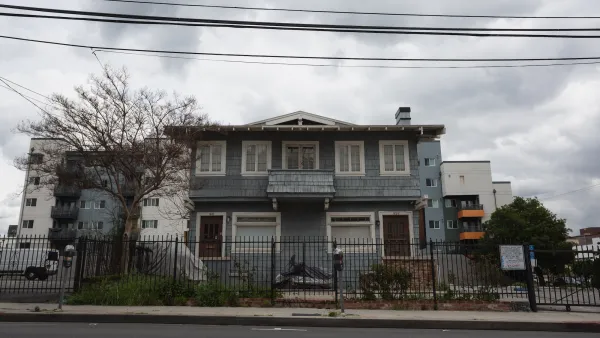
Study: Legalizing single-family home conversions could nearly double LA's new housing
Research shows that making it easier to turn single-family homes into multiple units could unlock tens of thousands of new units per year.
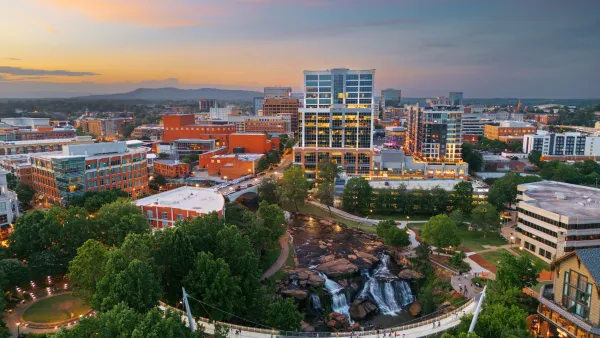
Greenville, SC pushes for missing middle housing
The city recently overhauled its zoning rules to permit more 'low-intensity' housing options.

Planetizen Federal Action Tracker
A weekly monitor of how Trump’s orders and actions are impacting planners and planning in America.

California plans to bury El Niño’s downpour
If the state plays its cards right, it may be able to store a billion acre-feet of El Niño’s water in aquifers.

Desperate measures: Advocates weigh draining Lake Powell to fill Colorado River
Draining the reservoir could reduce evaporation losses by a couple hundred thousand acre-feet.

Los Angeles just elected an urban planner as its mayor
Transportation analysts are optimistic that Raman will be more aggressive in addressing transit issues than Bass.

Mamdani’s pied-à-terre tax survives legal challenge
A panel of judges found that the plaintiffs failed to demonstrate injury as a result of New York City's implementation of the tax.

Eastern Nebraska is running out of electricity
Data centers and electrification are straining eastern Nebraska’s grid, throttling economic development.

FREE Course: Walkable City 1: Why Walkability?
After describing his path towards focusing on walkability as the essence of good planning, Jeff Speck marches through his five principal reasons for making more walkable places.
Reinventing Malls: Planning Alchemy—Turning Gray Fields Into Gold
The course focuses on the opportunities and imperatives that shape reinvention of mall sites.

City of Rosemead
Rutgers University, Edward J. Bloustein School of Planning and Public Policy
One Hundred Miles
University of Michigan School for Environment and Sustainability (SEAS)
Hunter College, City University of New York (CUNY)
The Architects Foundation
City of Cambridge
Montrose County
The Pocatello Development Authority