Completed about every 15 years, Madrid's General Urban Plan sets out a long-term vision for the city's development. The newest iteration replaces a "dud" from 1997 that has "dogged the city for years," reports Feargus O'Sullivan.


Madrid's prior General Urban Plan, which was based on overly-optimistic growth projections, and Spain's deep recession have left the city in a bind. "[T]he city fringes are marked by empty construction sites and avenues that go nowhere," notes O'Sullivan, and "by concentrating on homes, the city overlooked the need to build work premises, schools, and social facilities, making the new neighborhoods even less livable."
"Madrid now plans to stop the rot, in particular by slashing home building schemes," he adds. "A plan to construct a new 130,000-home neighborhood will be junked, with much of the allotted space to be taken over by parkland. Meanwhile, to help get other parts of the economy going, Madrid will radically simplify planning procedures."
In a move that O'Sullivan says is likely to cause dissent, the city will loosen historical protections to boost development. Other initiatives are focused on reducing car use and making streets more pedestrian-friendly.
Read the full story: Madrid's Big Plan to Swear Off Cars

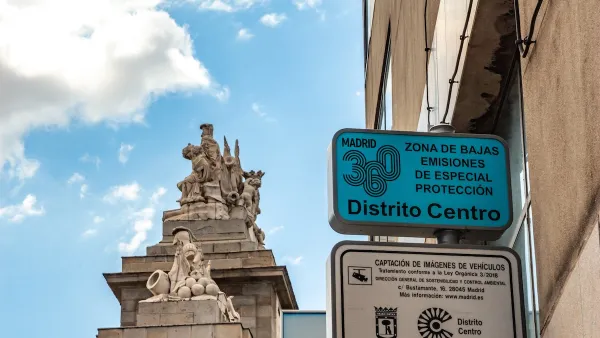
Madrid Uses Transit System for Parcel Delivery to Cut Emissions
A new pilot program uses trains to deliver packages at off-peak hours, lowering emissions from trucks.
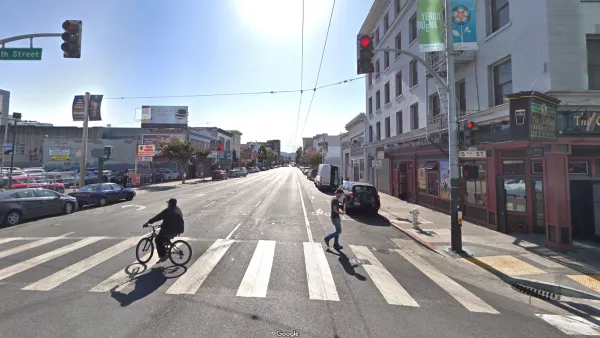
Madrid Has the Bike Infrastructure Model the U.S. Needs
A happy accident, Madrid may have stumbled onto a bike infrastructure program with great results. Only time will tell if "slow" lanes yield long-term positive results.
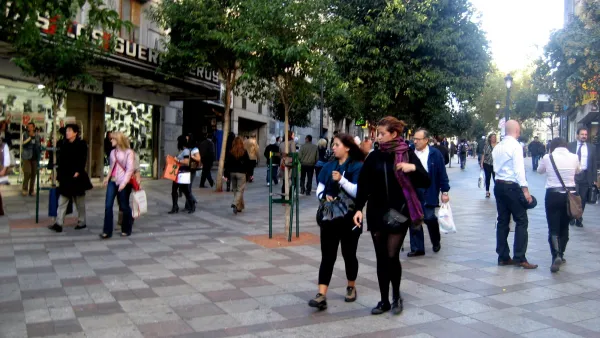
Driving Ban in Madrid Central Survives Despite Change of Leadership
In sharp contrast to France's yellow vest demonstrations against fuel tax hikes, Madrid residents took to the streets to keep them free of motor vehicles after new leaders were elected who vowed to rescind the driving ban enacted last November.

Amtrak, CN end decades-long dispute with eight-year agreement
The new operating agreement establishes an updated framework for the companies to work together, including processes to resolve disputes.

Judges permit Denver to divert 77,000 acre feet from the Colorado River for reservoir expansion
Overuse and climate change have caused the Colorado River’s water levels to plummet.
Nation's most wind-powered state turns to coal as data centers increase energy demand
For the first time in decades, Iowa has increased its generation of coal power.

Boston has spent millions making the Green Line more accessible — and there’s no end in sight
While the city has invested millions into expanding and adding platforms to the Green Line to make it more accessible, new train cars set to arrive next year will be too tall for disabled passengers to board without raising the current platforms.

Idaho may see an 18% drop in federal surface transit funding — the largest estimated cut in the US
Transit systems in rural communities are much more reliant on federal funding to provide their services.

How ‘post-disaster gentrification’ alters neighborhoods after natural calamities
After hurricanes, fires or other calamities, the original residents of a community are often replaced by younger, wealthier residents.

FREE Course: Walkable City 1: Why Walkability?
After describing his path towards focusing on walkability as the essence of good planning, Jeff Speck marches through his five principal reasons for making more walkable places.
Reinventing Malls: Planning Alchemy—Turning Gray Fields Into Gold
The course focuses on the opportunities and imperatives that shape reinvention of mall sites.

City of Wisconsin Rapids
Harvard University Graduate School of Design
KFH Group Inc.
The Architects Foundation
University of Cincinnati Online
The Pocatello Development Authority
The Urban Renewal Agency of the City of Pocatello