By exploring whether to turn I-375 into a surface street, the city that is the United States' foremost exemplar of suburban flight is considering a historic reversal that would demonstrate its optimism in its recovering downtown.



"For the first time in a half century, Detroit could follow a national trend and remove aging I-375, cutting off express downtown access for tens of thousands of motorists a day in favor of a pedestrian-friendly parkway connecting Lafayette Park and Eastern Market with the central business district," reports John Gallagher. The City of Detroit and the Michigan Department of Transportation are working with local stakeholders to study the concept, and "will choose a consultant next month who will oversee the process of coming up with a proposed plan by mid-next year."
"The coming debate over the future of I-375 could be integral in defining Detroit’s development priorities either as a destination for commuters and others doing business in downtown or as a place to do everything, including living, shopping, working, raising children and playing."
Read the full story: No more I-375? Detroit to study removing freeway in favor of walkable surface street

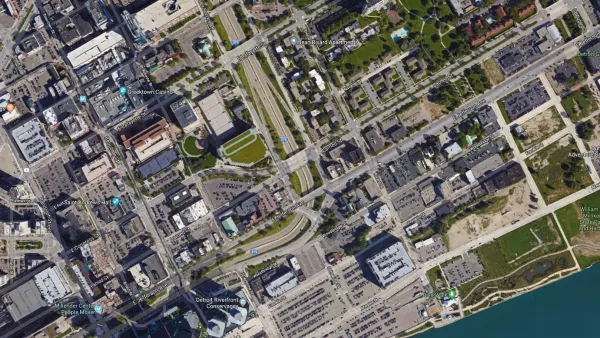
Downtown Expressway's Days Are Numbered in Detroit
Detroit will soon join the ranks of cities that have ripped out high-speed freeways from their urban core.
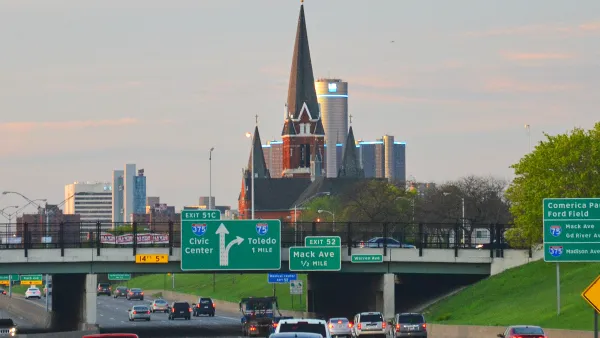
Detroit Freeway Removal Plan Awarded Federal Grant
A decade-old plan to elevate a below-grade segment of Interstate 375 and replace it with a lower-speed boulevard could begin two years ahead of schedule thanks to USDOT funding.
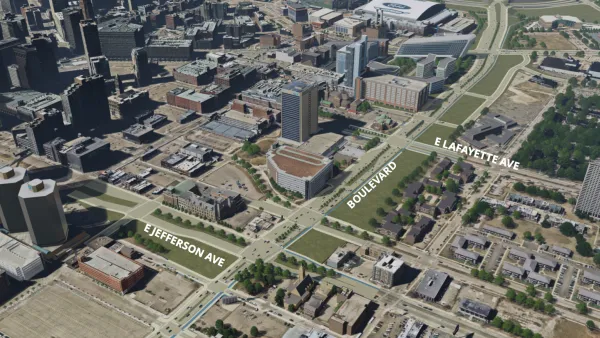
$1.5 Billion Awarded for Transportation Projects, Including $100 Million to Remove a Detroit Freeway
The latest round of federal infrastructure funding includes the largest contribution to emerge, so far, from the 2021 infrastructure bill for the removal of an urban freeway.

Planetizen Federal Action Tracker
A weekly monitor of how Trump’s orders and actions are impacting planners and planning in America.

Colorado’s Largest Data Center Could Rise Next to Homes — Without a Public Hearing
The proposed campus would consume 11 times the power of Denver International Airport; as it has across the country, opposition mounts.

US to reduce Colorado River water deliveries to Mexico
A new Colorado Treaty amendment reduces Mexico’s Colorado River water allocation by 250,000 acre feet.

Judges permit Denver to divert 77,000 acre feet from the Colorado River for reservoir expansion
Overuse and climate change have caused the Colorado River’s water levels to plummet.

Amtrak, CN end decades-long dispute with eight-year agreement
The new operating agreement establishes an updated framework for the companies to work together, including processes to resolve disputes.

Raised interest rates may kill financially vulnerable construction projects
The chief economist at ConstructConnect warns that if construction project owners are negatively impacted by the raised rates, it could result in delayed payments to contractors.

FREE Course: Walkable City 1: Why Walkability?
After describing his path towards focusing on walkability as the essence of good planning, Jeff Speck marches through his five principal reasons for making more walkable places.
Reinventing Malls: Planning Alchemy—Turning Gray Fields Into Gold
The course focuses on the opportunities and imperatives that shape reinvention of mall sites.

KFH Group Inc.
Greater Baltimore Committee
Eagle County Government
The Architects Foundation
University of Cincinnati Online
The Pocatello Development Authority
The Urban Renewal Agency of the City of Pocatello