Detroit will soon join the ranks of cities that have ripped out high-speed freeways from their urban core.


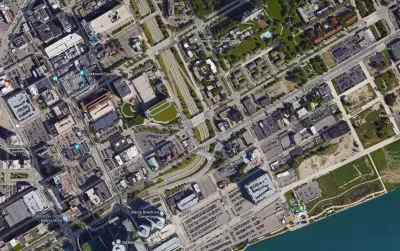
"After years of study and debate, the Michigan Department of Transportation is moving ahead with plans to rip out Detroit's I-375 expressway and restore a surface street there," reports John Gallagher.
"I-375 runs south from I-75 along the east side of downtown," adds Gallagher. "The creation of I-75 and I-375 a half-century ago destroyed the historic African-American neighborhood known as Black Bottom, an episode that remains a painful memory for many older black Detroiters."
The decision to remove I-375 began with discussions that began in 2013, also reported by John Gallagher and picked up by Planetizen at the time. MDOT is unlikely to start ripping pavement out until 2022, and the whole project is still dependent on funding and planning details. The article includes a rendering of the pedestrian sidewalks, bike lanes, and landscaped public space that will replace I-375 for a mile near the Detroit waterfront and some of its most iconic Downtown buildings.
Read the full story: MDOT moving ahead with plan to rip out I-375 freeway, restore surface street

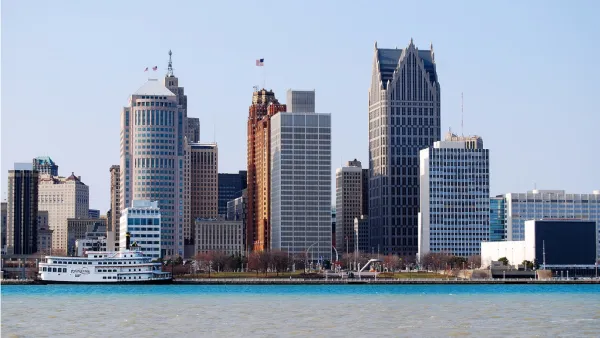
Can Detroit's Urban Revitalization Undo the Mistakes of Urban Renewal?
Some experts think the language used to describe a redevelopment project in Detroit might be overly ambitious.
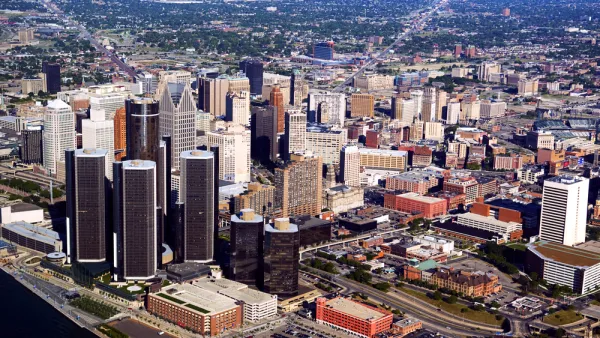
Detroit Considers Highway Removal to Help Its Downtown Revival
By exploring whether to turn I-375 into a surface street, the city that is the United States' foremost exemplar of suburban flight is considering a historic reversal that would demonstrate its optimism in its recovering downtown.
‘Reconnecting Communities’ Could Fund Highway Expansions
Applications to the program reveal a pattern of state agencies requesting funds for projects that perpetuate car-centric development with only nominal equity components.

Planetizen Federal Action Tracker
A weekly monitor of how Trump’s orders and actions are impacting planners and planning in America.

California plans to bury El Niño’s downpour
If the state plays its cards right, it may be able to store a billion acre-feet of El Niño’s water in aquifers.

Chicago breaks ground on $3 billion megadevelopment
The new neighborhood, titled Foundry Park, will one day host 3,700 residences.

California High-Speed Rail Authority CEO resigns after $600,000 scandal
Under Ian Choudri, the authority used taxpayer dollars to fund first class flights and trips to nightclubs.

Want to study the Missouri River? Soon, you may need unanimous approval from 10 states
Legislation would require 10 governors’ permission to study or build projects moving water outside the basin.

Desperate measures: Advocates weigh draining Lake Powell to fill Colorado River
Draining the reservoir could reduce evaporation losses by a couple hundred thousand acre-feet.

FREE Course: Walkable City 1: Why Walkability?
After describing his path towards focusing on walkability as the essence of good planning, Jeff Speck marches through his five principal reasons for making more walkable places.
Reinventing Malls: Planning Alchemy—Turning Gray Fields Into Gold
The course focuses on the opportunities and imperatives that shape reinvention of mall sites.

City of Rosemead
Rutgers University, Edward J. Bloustein School of Planning and Public Policy
One Hundred Miles
Hunter College, City University of New York (CUNY)
The Architects Foundation
University of Cincinnati Online
City of Cambridge
Montrose County
The Pocatello Development Authority