Writer Kaid Benfield used a recent trip the American Society of Landscape Architects annual meeting in Boston to reflect on what that city can teach us about designing urban parks.


With the ASLA’s Landscape Architect’s Guide to Boston in hand, Benfield traversed some of the 1,100 acres of green space known as the “Emerald Necklace.” A linear park that extends from the Boston Common through five additional parks and the Arnold Arboretum, much of the Emerald Necklace was designed by Frederick Law Olmsted.
Benfield believes in cities, but he also believes that cities need parks—of which the Emerald Necklace is an exemplar. He explains: “I sometimes write about what I call the paradox of smart growth—urban density reduces environmental impacts across a region, but can increase them locally, at the neighborhood scale. Parks and other forms of nature provide an antidote.”
Read the full story: Boston's Emerald Necklace sets the standard for linked city parks

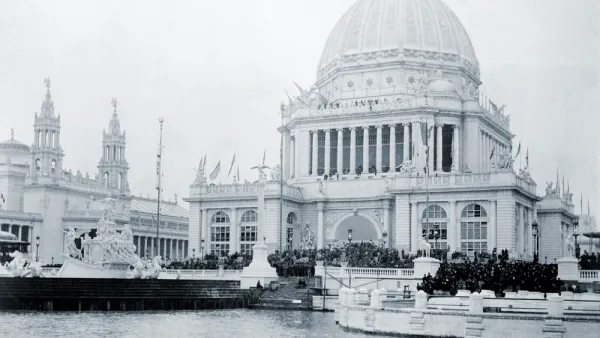
Exhibition Shows the Swagger and the Social Conscience of a Previous Era of Planning
It's rare for an entire exhibition to be devoted to the practice and history of planning. This is a big one.
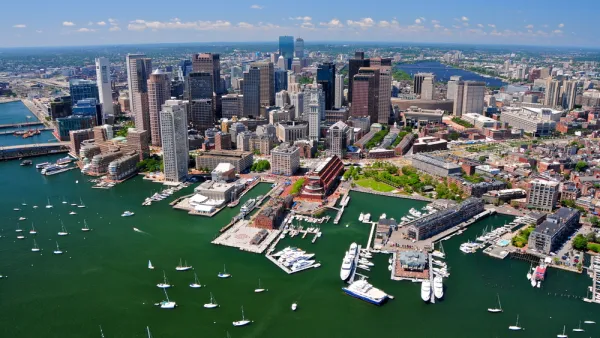
Boston Olympic Plan Includes 8,000 Units of Housing
As it vies to host the 2024 Summer Games, Boston's plan envisions two new permanent neighborhoods built with a mix of public and private investment. The final decision will take place in September.

A Sad Goodbye to Peter Lindsay Schaudt
The death of the Chicago landscape architect, Peter Schaudt, leaves an unfinished body of work and a deep void within the profession that adored him.

Planetizen Federal Action Tracker
A weekly monitor of how Trump’s orders and actions are impacting planners and planning in America.

California plans to bury El Niño’s downpour
If the state plays its cards right, it may be able to store a billion acre-feet of El Niño’s water in aquifers.

Chicago breaks ground on $3 billion megadevelopment
The new neighborhood, titled Foundry Park, will one day host 3,700 residences.

This road in NYC is infamously dangerous — and Mamdani can't fix it
New York City's Ocean Parkway is known for reckless driving, but the power to implement safety measures lies with the state rather than the city.

One of Denver’s busiest corridors to gain BRT
The project will span 18 miles and contain 74 bus rapid transit stations.

275,000 bus trips are at stake on Seattle's ballot
If passed, the Seattle Transit Measure would trigger a 0.3% sales tax and raise an average of $138 million per year to maintain and expand Seattle’s bus services.

FREE Course: Walkable City 1: Why Walkability?
After describing his path towards focusing on walkability as the essence of good planning, Jeff Speck marches through his five principal reasons for making more walkable places.
Reinventing Malls: Planning Alchemy—Turning Gray Fields Into Gold
The course focuses on the opportunities and imperatives that shape reinvention of mall sites.

City of Rosemead
Rutgers University, Edward J. Bloustein School of Planning and Public Policy
One Hundred Miles
Hunter College, City University of New York (CUNY)
The Architects Foundation
University of Cincinnati Online
City of Cambridge
Montrose County
The Pocatello Development Authority