As migration puts growth pressure on Denmark’s largest city, Copenhagen is promoting the conversion of under-utilized attics into apartments as a way to create new housing while maintaining the city's built form and character.


“Copenhagen is growing at a rate of 1,000 new residents each month, and all of those people need a place to live,” writes ‘RW’ for the Copenhagen Post.
“In order to promote the construction of penthouse flats in the attics of buildings in the older parts of the city, the City Council has changed building codes to allow the conversion of previously sloped roofs into vertical walls, according to Poul Nielsen, who heads up the council's construction department. This turns small attics into larger living spaces. An analysis from the Technical University of Denmark showed that attic penthouses could provide homes for 22,000 people.”
“The council and other local groups pointed out that the historical reasons that rooms were not originally included in the older buildings - such as leaking due to poor roofing materials and a long trip to the privy in the garden - no longer apply.”
Read the full story: Copenhagen expands upwards to house more attic dwellers
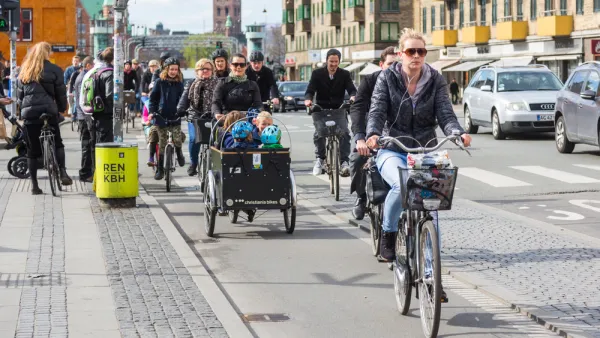
What's Behind Copenhagen's Success as a Cycling City?
Denmark's capital is a model city in terms of biking, but the reasons that bikes rule go beyond political leadership and robust infrastructure.
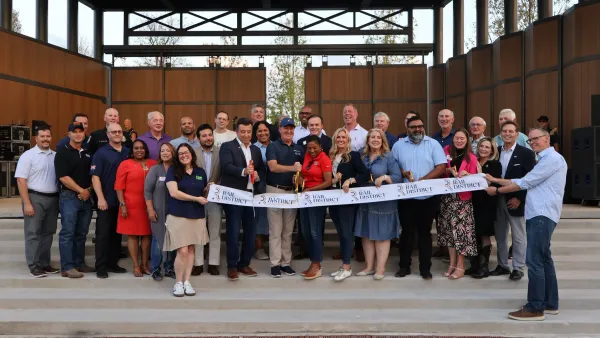
Dallas suburbs are turning their downtowns into small towns
Four Texas towns are embracing walkability and density in their downtowns.
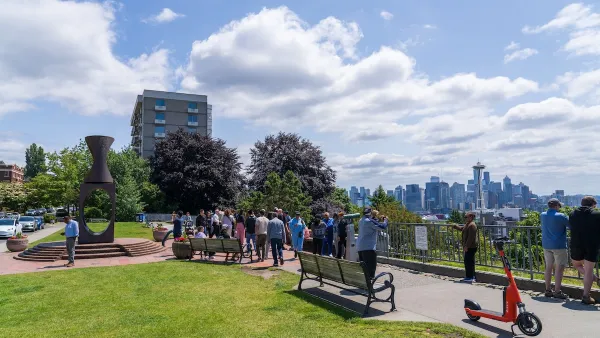
Yet again, Seattle’s density zoning update is hit with delays
The city must now examine the ‘maximum possible development’ under a future zoning scenario, rather than the ‘maximum likely development.’

Desperate measures: Advocates weigh draining Lake Powell to fill Colorado River
Draining the reservoir could reduce evaporation losses by a couple hundred thousand acre-feet.

Eastern Nebraska is running out of electricity
Data centers and electrification are straining eastern Nebraska’s grid, throttling economic development.

Move over, LA: St. Louis gears up for Olympics, invests millions in downtown redevelopment
The Missouri city will host the 2028 Olympic soccer group stage and knockout matches.

MTA sends Dem leaders a wish list to mend Trump’s damages
Requests include exempting new train and bus components from tariffs and increasing transit security funding.

Mass. votes against statewide minimum lot size for single-family homes
Over 2 million residents voted on Question 7; it was decided by just over 30,000 votes.

Maryland’s $15 billion bridge project gains key approval
The Maryland Transit Authority said the project will create over 60,000 jobs and add $23 billion to the local economy.

FREE Course: Walkable City 1: Why Walkability?
After describing his path towards focusing on walkability as the essence of good planning, Jeff Speck marches through his five principal reasons for making more walkable places.
Reinventing Malls: Planning Alchemy—Turning Gray Fields Into Gold
The course focuses on the opportunities and imperatives that shape reinvention of mall sites.

City of Rosemead
Rutgers University, Edward J. Bloustein School of Planning and Public Policy
One Hundred Miles
University of Michigan School for Environment and Sustainability (SEAS)
Hunter College, City University of New York (CUNY)
The Architects Foundation
City of Cambridge
The Pocatello Development Authority
The Urban Renewal Agency of the City of Pocatello