The recipe for a happy commute isn't just about length. Whether in a car or on mass transit, predictability and productivity are among the key attributes.


"How to create the perfect commute?" asks Sue Shellenbarger. "People can enjoy commutes as long as 45 minutes, studies show—and men are less frustrated by long commutes than women. But a happy commute is predictable. It is productive—often enlivened by mobile devices and satellite radio. And it offers clear rewards for the hassle. A person who commutes an hour each way has to make 40% more money to be as satisfied with life as a person who lives near the office, according to research co-authored by Alois Stutzer, an economics professor at the University of Basel in Switzerland."
Though extreme commutes of more than an hour are on the rise, more commuters are enjoying their daily trip, "regard[ing] it as 'a positive bridge' between work and home," says Alan Pisarski, a Falls Church, Va., transportation consultant and author of a series of national commuting studies.
Read the full story: Secrets of the Happiest Commuters

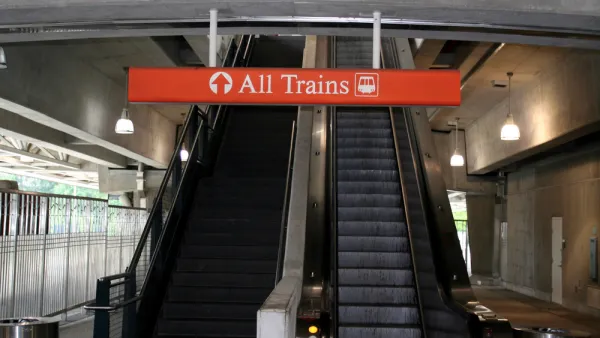
Urine Trouble: MARTA Station Elevators to Get Pee Alarms
To discourage users from peeing on elevators at Atlanta MARTA stations, new urine detection technology is being installed as part of rehab plans.

Ted Cruz Blames Safety Features for the Rising Cost of Cars; Senate Could Roll Back Regulations
A Senate committee will hear testimony by automakers in a hearing that could determine whether autonomous emergency braking and other safety features will be mandatory on new cars.

Trump Administration Proposes to Divert Billions from Mass Transit to Highways; Advocates Sound Alarm
Two proposals from the Trump DOT would eliminate a federal mass transit fund and make it harder for states to allocate funding to transit projects.

Planetizen Federal Action Tracker
A weekly monitor of how Trump’s orders and actions are impacting planners and planning in America.

Amtrak, CN end decades-long dispute with eight-year agreement
The new operating agreement establishes an updated framework for the companies to work together, including processes to resolve disputes.

Judges permit Denver to divert 77,000 acre feet from the Colorado River for reservoir expansion
Overuse and climate change have caused the Colorado River’s water levels to plummet.

NYC DOT wants faster, more permanent street upgrades
The city is examining ways to build more concrete infrastructure without getting entangled in 'decades-long' projects.

'Something we’ve never seen before:' rising utility rates could strain city finances nationwide
Data centers, climate change and other factors have caused utility rates in the United States to increase by 38% since 2020.

Trump to overrule local leaders, lease millions of acres of America’s Pacific Island territories’ seafloors to mining companies
International law says that the Indigenous people of America’s territories have a right to prior and informed consent regarding projects that impact their countries.

FREE Course: Walkable City 1: Why Walkability?
After describing his path towards focusing on walkability as the essence of good planning, Jeff Speck marches through his five principal reasons for making more walkable places.
Reinventing Malls: Planning Alchemy—Turning Gray Fields Into Gold
The course focuses on the opportunities and imperatives that shape reinvention of mall sites.

Harvard University Graduate School of Design
KFH Group Inc.
Greater Baltimore Committee
The Architects Foundation
University of Cincinnati Online
The Pocatello Development Authority
The Urban Renewal Agency of the City of Pocatello