After waiting more than five years, Elk Grove, one of the fastest growing cities in California and the country, will soon learn whether it can expand its planning area by another 8,000 acres to accommodate more residents.


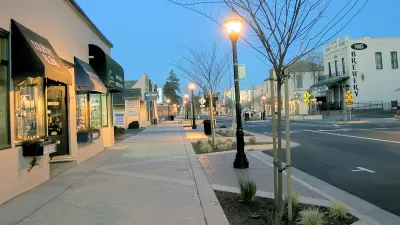
Within the last twelve years, Elk Grove's population has more than doubled to over 159,000 residents, and the city has spent the last five years waiting to be able to plan for even more residents in the future. Seeking to expand its sphere of influence (SOI) boundaries (or planning area) by 8,000 acres, Elk Grove wants to accommodate more residents, more businesses and maintain more open space within its city limits.
Before it can do that, the Sacramento County Local Agency Formation Commission (LAFCO) needs to approve the SOI plan and associated environmental documents. Some environmentalists object that the expansion may impact the nearby 45,000-acre Cosumnes River Preserve to the south and reduce available land for the proposed South Sacramento Habitat Conservation Plan, which is intended to protect local environmentally sensitive areas.
Though even if approved, the City would still need to comply with environmental review requirements with any land annexation plans, including separate petitions to LAFCO.
Read the full story: Elk Grove Wants to Expand its Boundaries by 8,000 Acres

A Different Approach to Public Engagement: Use Tech to Put Residents in Planners’ Shoes
Simulators can be a useful tool to help residents think differently about challenges like housing

Sacramento Approves ‘Safe Stay’ Parking for Unhoused Residents
Officials acknowledged the project is a short-term solution, but called it an interim step as the county adds more homeless services.

ADU Permits Spike in Sacramento County
Backyard cottages, known as accessory dwelling units, are touted as one solution to the rising cost of housing.

Planetizen Federal Action Tracker
A weekly monitor of how Trump’s orders and actions are impacting planners and planning in America.

California plans to bury El Niño’s downpour
If the state plays its cards right, it may be able to store a billion acre-feet of El Niño’s water in aquifers.

Desperate measures: Advocates weigh draining Lake Powell to fill Colorado River
Draining the reservoir could reduce evaporation losses by a couple hundred thousand acre-feet.

Mamdani’s pied-à-terre tax survives legal challenge
A panel of judges found that the plaintiffs failed to demonstrate injury as a result of New York City's implementation of the tax.

Eastern Nebraska is running out of electricity
Data centers and electrification are straining eastern Nebraska’s grid, throttling economic development.

Seattle passes record-breaking transit services expansion
Proposition 1 will double the city’s transit tax to add 95,000 more bus trips and preserve 180,000 bus trips annually.

FREE Course: Walkable City 1: Why Walkability?
After describing his path towards focusing on walkability as the essence of good planning, Jeff Speck marches through his five principal reasons for making more walkable places.
Reinventing Malls: Planning Alchemy—Turning Gray Fields Into Gold
The course focuses on the opportunities and imperatives that shape reinvention of mall sites.


City of Rosemead
Rutgers University, Edward J. Bloustein School of Planning and Public Policy
One Hundred Miles
University of Michigan School for Environment and Sustainability (SEAS)
Hunter College, City University of New York (CUNY)
The Architects Foundation
City of Cambridge
Montrose County
The Pocatello Development Authority