After a decade of livable street gains under Mayor Bloomberg, staff members at NYC's most respected alternative transportation advocacy group share their visions for what changes will take place over the next four years on the city's streets.


Under the leadership of Mayor Michael Bloomberg and his transportation and planning commissioners Janette Sadik-Khan and Amanda Burden, and with the help of advocates like Transportation Alternatives, New York City has made great strides in improving bicycle, pedestrian, and transit mobility. But as the Bloomberg reign come to a close, what can city residents expect on the horizon? Not to worry, say the editors of T.A.'s magazine Reclaim, the next mayor won't roll back the popular programs initiated over the last decade.
"Sure, there’ll be fights and disagreements and battles over specifics, but the new direction of New York City—the one where road space is slightly more rationally proportioned and speeding up car traffic isn’t the be-all and end-all justification for everything transportation-related—is here to stay."
From data-driven traffic enforcement to slower speed limits and a citywide goal of zero deaths and serious injuries in traffic, T.A.'s staff share their personal visions for what's next on New York City's streets.
Read the full story: What's Next?

The Battle for Bedford Avenue
For a myriad of personal and professional reasons I moved to New York City this fall. Part of the reason I uprooted myself from the pastel, sun soaked streets of Miami Beach to the chaos of New York is because Gotham has made such incredible strides in becoming one of America's most bicycle-friendly cities.
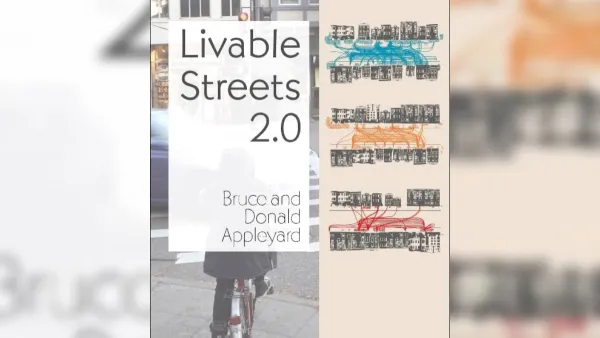
A Classic Revived, and More Important Than Ever
In “Livable Streets 2.0.” Donald Appleyard’s son, Bruce Appleyard, builds on his father’s seminal work and examines what it means today in an age of autonomous vehicles, modern policing technology, “20 is Plenty” and more.
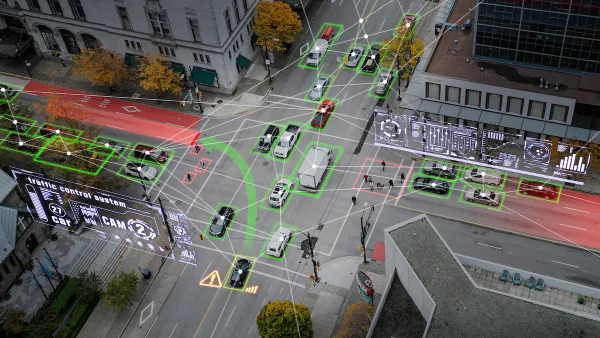
Maintaining Livability in the Age of Autonomous Cars
How do self-driving cars fit into ‘livable streets?’

Planetizen Federal Action Tracker
A weekly monitor of how Trump’s orders and actions are impacting planners and planning in America.

California plans to bury El Niño’s downpour
If the state plays its cards right, it may be able to store a billion acre-feet of El Niño’s water in aquifers.

Chicago breaks ground on $3 billion megadevelopment
The new neighborhood, titled Foundry Park, will one day host 3,700 residences.

California High-Speed Rail Authority CEO resigns after $600,000 scandal
Under Ian Choudri, the authority used taxpayer dollars to fund first class flights and trips to nightclubs.

Want to study the Missouri River? Soon, you may need unanimous approval from 10 states
Legislation would require 10 governors’ permission to study or build projects moving water outside the basin.

Desperate measures: Advocates weigh draining Lake Powell to fill Colorado River
Draining the reservoir could reduce evaporation losses by a couple hundred thousand acre-feet.

FREE Course: Walkable City 1: Why Walkability?
After describing his path towards focusing on walkability as the essence of good planning, Jeff Speck marches through his five principal reasons for making more walkable places.
Reinventing Malls: Planning Alchemy—Turning Gray Fields Into Gold
The course focuses on the opportunities and imperatives that shape reinvention of mall sites.

City of Rosemead
Rutgers University, Edward J. Bloustein School of Planning and Public Policy
One Hundred Miles
Hunter College, City University of New York (CUNY)
The Architects Foundation
University of Cincinnati Online
City of Cambridge
Montrose County
The Pocatello Development Authority