Bike-share users in Montreal, New York, Minneapolis, and D.C. all have one thing in common, they're sitting atop the same Bixi bike designed by Michel Dallaire. How each city brands their bikes is a potent statement and key piece of their success.


According to Bryn Smith, the popularity of the Bixi system of bikes and modular docks (there are 38,000 Bixis in more than 10 cities) is not just due to its functionality, but the "foresight of [product designer] Dallaire and his team to provide ample real estate for branding . . . ."
"The way a city brands its bike share can be telling," writes Smith. "New York City’s for-profit system, Citi Bike, is a traveling advertisement for Citigroup, who provided a large portion of the financial backing for the project. . . . Minneapolis and Chicago turned to local design firms to create graphics and names for their systems, Nice Ride (a play on the motto “Minnesota nice”) and Divvy (with the tagline “Divide and Share”), respectively, but the day-glo green and powder blue results are more trendy than classic. In Washington, D.C., the logo for Capital Bikeshare is a comically circuitous array of arrows, and could just as easily represent the state of politics on the Hill."
"Dallaire attributes the success of the Bixi to its aesthetics, and urban areas adopting his design continue to multiply," adds Smith. "Capitalizing on the cities as brands themselves and toning down expected visual tropes is a way to own the bike’s ubiquitous design, and make it a unique part of each city’s infrastructure."
Read the full story: Same Bike, Different City

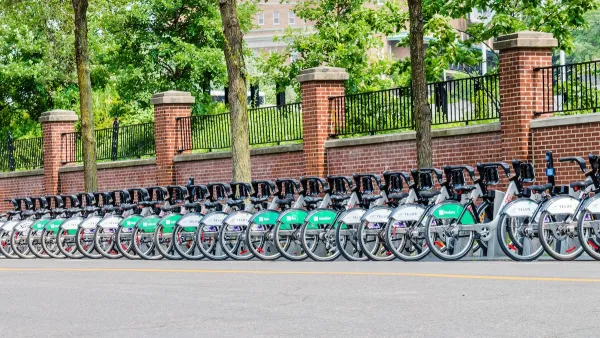
Montreal Bike Share Breaks Ridership Record With 13 Million Rides
The Bixi system introduced a winter pilot project last year, leading to a rise in winter cycling.

Montreal Shatters Stereotypes on Cold Weather Biking
A combination of infrastructure, connectivity, and quality equipment has made the Canadian city’s bike share system successful despite frigid winters and challenging geography.
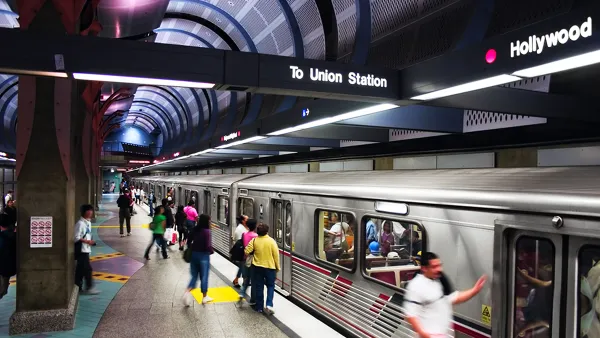
Making Metro Cool
Michael Lejeune is the creative director for the Los Angeles County Metropolitan Transportation Authority, and as such he's tasked with making transit cool in a city that long worshipped the automobile.

Planetizen Federal Action Tracker
A weekly monitor of how Trump’s orders and actions are impacting planners and planning in America.

Amtrak, CN end decades-long dispute with eight-year agreement
The new operating agreement establishes an updated framework for the companies to work together, including processes to resolve disputes.

Judges permit Denver to divert 77,000 acre feet from the Colorado River for reservoir expansion
Overuse and climate change have caused the Colorado River’s water levels to plummet.

NYC DOT wants faster, more permanent street upgrades
The city is examining ways to build more concrete infrastructure without getting entangled in 'decades-long' projects.

'Something we’ve never seen before:' rising utility rates could strain city finances nationwide
Data centers, climate change and other factors have caused utility rates in the United States to increase by 38% since 2020.

Trump to overrule local leaders, lease millions of acres of America’s Pacific Island territories’ seafloors to mining companies
International law says that the Indigenous people of America’s territories have a right to prior and informed consent regarding projects that impact their countries.

FREE Course: Walkable City 1: Why Walkability?
After describing his path towards focusing on walkability as the essence of good planning, Jeff Speck marches through his five principal reasons for making more walkable places.
Reinventing Malls: Planning Alchemy—Turning Gray Fields Into Gold
The course focuses on the opportunities and imperatives that shape reinvention of mall sites.

Harvard University Graduate School of Design
KFH Group Inc.
Greater Baltimore Committee
The Architects Foundation
University of Cincinnati Online
The Pocatello Development Authority
The Urban Renewal Agency of the City of Pocatello