With growth ten years ahead of estimates, Boston's Innovation District is in need of some fresh ideas to help stave of death by traffic asphyxiation. Local roads and mass transit are already stretched to capacity during the evening commute.


While meteoric growth and packed buses may sound like a problem any city would be happy to have, the unexpected popularity of Boston's Seaport District has planners playing catch-up to stave off development-killing gridlock.
“All this growth wasn’t supposed to happen until 2025,” said Mayor Thomas Menino. “It’s a wonderful success. Because of the success, we’re having a problem. It’s amazing to me.”
"Menino this week gathered a collection of transportation officials and Seaport leaders in the Eagle Room of City Hall to try to address the potential choke hold on the area’s meteoric growth," reports Shirley Leung. "The group plans to start implementing immediate fixes starting in September and spend up to a $1 million on a yearlong study to develop a comprehensive transportation plan by the end of the next year."
Read the full story: A snarl in Seaport District’s success story

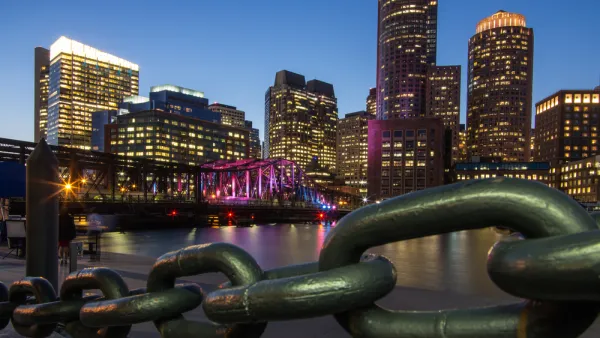
Boston's Seaport District Still Lacking Diversity
The glitzy new neighborhood doesn’t cater to all Boston residents, according to a new survey.
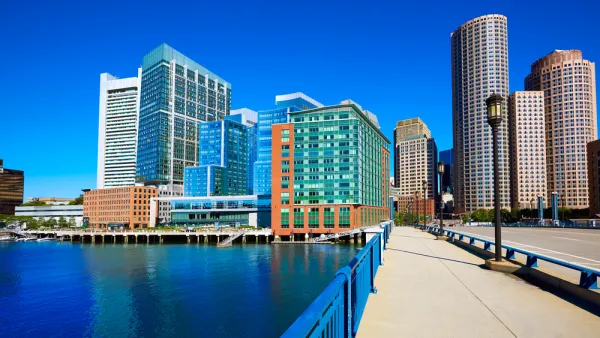
Boston’s Seaport District, Where Building Started Before Flood Preparation
The Boston waterfront has been booming, but the area is extremely vulnerable to climate change and rising sea levels. Measures to address those risks have come just recently.
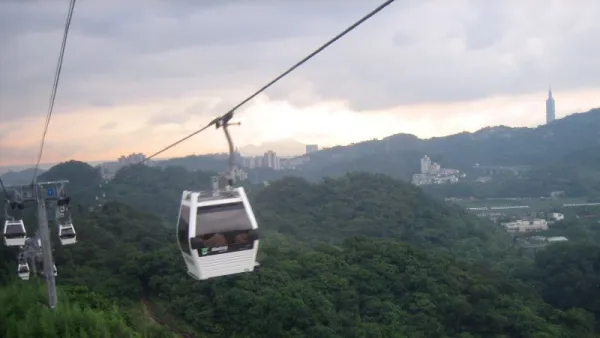
Gondolas Proposed for Boston's Seaport District
Boston's Seaport District has grown rapidly, and traffic is an ongoing concern. Developers have proposed an interesting solution: aerial trams.

Planetizen Federal Action Tracker
A weekly monitor of how Trump’s orders and actions are impacting planners and planning in America.

Amtrak, CN end decades-long dispute with eight-year agreement
The new operating agreement establishes an updated framework for the companies to work together, including processes to resolve disputes.

Judges permit Denver to divert 77,000 acre feet from the Colorado River for reservoir expansion
Overuse and climate change have caused the Colorado River’s water levels to plummet.

Atlanta City Council unanimously backs $3.5 billion Beltline light rail project
The resolution was drafted after Atlanta Mayor Andre Dickens pulled support for the Atlanta Streetcar extension last year.

SEPTA to bring nearby frequent transit to over 1 million new riders as part of decade-long plan
The agency's Accelerate plan will also bring frequent transit to twice the amount of jobs that are currently located near it.

NYC plants over 18,000 trees, the most new foliage in a decade
Many of the trees were planted in communities vulnerable to extreme heat.

FREE Course: Walkable City 1: Why Walkability?
After describing his path towards focusing on walkability as the essence of good planning, Jeff Speck marches through his five principal reasons for making more walkable places.
Reinventing Malls: Planning Alchemy—Turning Gray Fields Into Gold
The course focuses on the opportunities and imperatives that shape reinvention of mall sites.

City of Wisconsin Rapids
Harvard University Graduate School of Design
KFH Group Inc.
The Architects Foundation
University of Cincinnati Online
The Pocatello Development Authority
The Urban Renewal Agency of the City of Pocatello