The glitzy new neighborhood doesn’t cater to all Boston residents, according to a new survey.


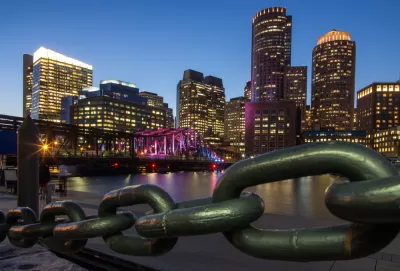
Adrian Walker reports on Boston’s Seaport District and the findings of a survey that suggest diversity continues to be an issue for the new waterfront development area.
"A newly completed survey that asked 953 Boston residents their attitudes about the neighborhood found that, overwhelmingly, black residents feel less comfortable in the Seaport than white people do. Specifically, 24 percent of black respondents said they find the place unwelcoming, compared with a mere 6 percent of whites," says Walker.
The neighborhood is overwhelmingly white, reflecting economic factors, notes Walker. The housing is high end and expensive, developers included little affordable housing, and public transportation access is limited.
Public funds are behind Seaport, and the neighborhood should be available to all Boston residents, argues Walker. "Housing is still being built, so there’s still an opportunity to force developers to make more of it affordable. The public areas can be more clearly delineated, with activities that will attract more diverse audiences. Its transportation woes have to be addressed, and better access from Roxbury, Dorchester, and Mattapan has to be part of that conversation."
FULL STORY: Will people of color ever feel that they belong in the Seaport?

Boston Plans to Put $26 Million Toward Affordable Housing Projects
A new initiative will fund 10 new developments as the city works to increase available affordable housing.
Boston Mayor's Proposal Would Allow More Increases in City Linkage Fees
Developers pay impact fees to fund affordable housing and job programs, but the mayor wants the city to have more discretion around changing the requirements.
In Boston, Protecting Communities from the Consequences of Foreclosure
A diverse Boston community alliance initially came together to maintain stability in neighborhoods affected by foreclosures. It has changed focus as its work has continued.

The state-sanctioned urbicide of Austin
People don’t kill cities. Freeways do.

US to reduce Colorado River water deliveries to Mexico
A new Colorado Treaty amendment reduces Mexico’s Colorado River water allocation by 250,000 acre feet.

New Jersey’s second-largest city bans standalone data centers
Jersey City will continue to allow co-location facilities, such as those meant for research institutions that store their own data.

Amtrak not solely to blame for New Jersey commuter rail's unreliability, report finds
A new study from the Garden State Initiative found that NJ Transit’s budget grew 20% across a 4 year period, but reliability declined significantly over the same period.

EPA erases limits on planet-warming pollution from power plants
Under Monday’s plan, power plants would still have some limits on how much mercury, arsenic and other contaminants they can emit.

Phoenix announces new on-demand transit service, more frequent RAPID buses
Both new services will launch in October, and are part of Phoenix's Project Effective Access Solutions for Easing Congestion.

FREE Course: Walkable City 1: Why Walkability?
After describing his path towards focusing on walkability as the essence of good planning, Jeff Speck marches through his five principal reasons for making more walkable places.
Reinventing Malls: Planning Alchemy—Turning Gray Fields Into Gold
The course focuses on the opportunities and imperatives that shape reinvention of mall sites.

Eagle County Government
Harvard University Graduate School of Design
Nashville Planning Department
The Architects Foundation
University of Cincinnati Online
The Pocatello Development Authority
The Urban Renewal Agency of the City of Pocatello
Journal of the American Planning Association