Andrew Romano explores the ironic fate of the modest mid-century home in the cradle of modernist residential design, where a hot housing market imperils their existence.


"The modern single-family dwelling may have been invented in Europe, at the Bauhaus and elsewhere, but many believe it was perfected in Southern California," writes Romano. "But a certain kind of modernist property—namely, a lesser-known house situated on a prime lot in an expensive neighborhood—is still at risk, and may be especially imperiled in Los Angeles’s current residential market, which has posted the nation’s largest increase in average sale price (20.7 percent) over the last year."
“An economic downturn is always a good thing for preservation,” says Regina O’Brien, chairperson of the Modern Committee of the Los Angeles Conservancy. “A lot fewer developers are making a lot less money, and therefore they have a lot less motivation to pursue these profit-oriented flips. But the problem is that the opposite is true when the market picks back up.”
"As aging owners realize their aging homes can now fetch top dollar, the buyers most inclined to preserve these modernist gems are outbid by those most inclined to replace them with gaudy Mediterranean super-villas."
Read the full story: Trading Modernist For McMansion
Saving Endangered Modern Homes
The trend toward bigger houses makes the efficient and cool styles of modernism look inadequate to many Americans. A new article by the Architectural Record studies the difficult work of preservation efforts all over the country.
LA Conservancy Makes Case for Landmarking City's Pioneering Modernist Homes
After nearly a decade of work, the Los Angeles Conservancy's Modern Committee has succeeded in getting 10 of the homes built under the aegis of Arts & Architecture magazine's Case Study House program onto the National Register of Historic Places.
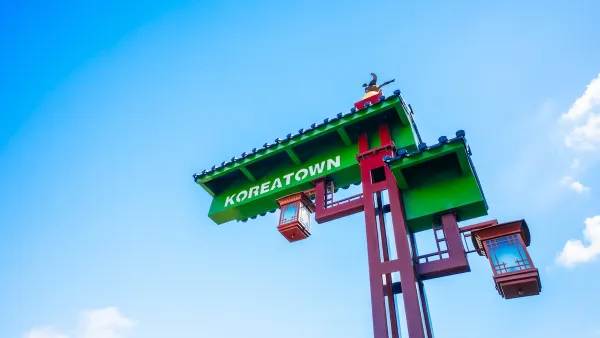
LA may place emergency ban on karaoke room permits
If Councilwoman Heather Hutt’s proposal passes, the moratorium would last between 45 days and one year.

Planetizen Federal Action Tracker
A weekly monitor of how Trump’s orders and actions are impacting planners and planning in America.

California plans to bury El Niño’s downpour
If the state plays its cards right, it may be able to store a billion acre-feet of El Niño’s water in aquifers.

Desperate measures: Advocates weigh draining Lake Powell to fill Colorado River
Draining the reservoir could reduce evaporation losses by a couple hundred thousand acre-feet.

In Texas, data centers are swallowing promised parkland
Residents who moved to Taylor, Texas for a rural community now have to contend with three data centers in their backyard.

How a Chicago-sized wind farm beat the odds and powered on
The project spanned five presidential administrations and a standoff with a U.S. military base.

MTA gives itself 30 days to transform pit into basketball court
The site has been under construction since 2022; the city originally estimated it would finish the court in 2024.

FREE Course: Walkable City 1: Why Walkability?
After describing his path towards focusing on walkability as the essence of good planning, Jeff Speck marches through his five principal reasons for making more walkable places.
Reinventing Malls: Planning Alchemy—Turning Gray Fields Into Gold
The course focuses on the opportunities and imperatives that shape reinvention of mall sites.

City of Rosemead
Rutgers University, Edward J. Bloustein School of Planning and Public Policy
One Hundred Miles
Hunter College, City University of New York (CUNY)
The Architects Foundation
University of Cincinnati Online
City of Cambridge
Montrose County
The Pocatello Development Authority