The latest 'digital gold rush' has been a boost for the Bay Area's high earners, but a blow to its diversity and affordability. Conspicuous transportation modes - fleets of private buses and black town cars - epitomize the area's growing divide.


"The private [Silicon Valley shuttle] system has become the most visible symbol of the digital gold rush sweeping [San Francisco], and of the sharpening division between those who are riding the high-tech industry's good fortunes and those who are not," writes Jessica Guynn. "Fueling the growing rift is a common belief that the vast wealth being amassed by the tech industry is not spilling over into the community."
"Instead, activists say, the high-tech invasion is driving up the cost of living to levels that more San Franciscans cannot afford," she adds. "In a region that lays claim to some of the world's wealthiest companies, food stamp participation has hit a 10-year high, and homelessness has increased 20% in the last two years, [a report from Joint Venture Silicon Valley] found."
"That has led to some pointed criticism — some of it coming from within technology's own ranks."
Read the full story: San Francisco split by Silicon Valley's wealth

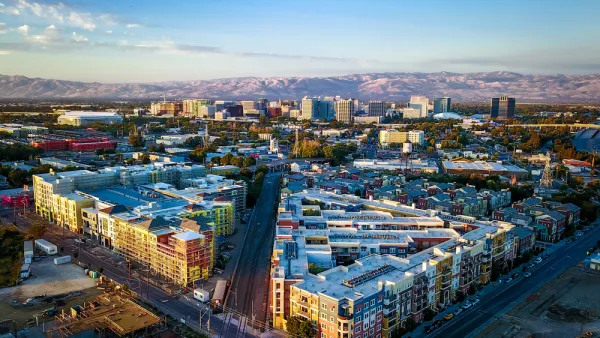
Bay Area Workers are Moving Back
Many of the tech employees who left Silicon Valley during the pandemic are making their way back to the Bay Area–and so are higher rents.
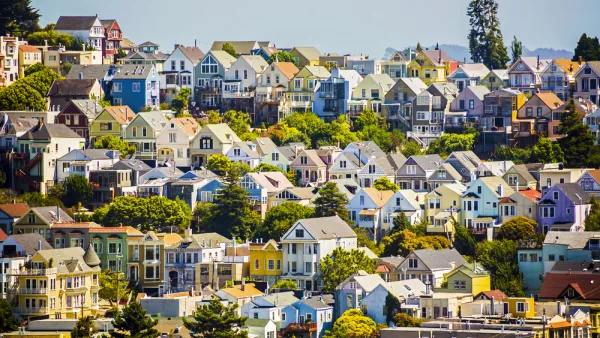
Op-Ed: Only Half of San Francisco is Changing
Using a mid 20th-century painting as his point of reference, Benjamin Schneider points out that the vast, disruptive changes we often associate with San Francisco are only affecting the city's eastern side.
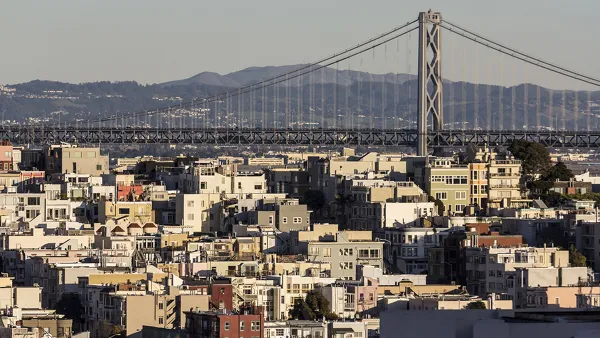
Bay Area Planners Acknowledge the Need for Regional Housing Solutions
While most Bay Area communities are pursuing housing solutions "individually," local planners acknowledge the need for strategies that address the regional as a unified whole.

Planetizen Federal Action Tracker
A weekly monitor of how Trump’s orders and actions are impacting planners and planning in America.

California plans to bury El Niño’s downpour
If the state plays its cards right, it may be able to store a billion acre-feet of El Niño’s water in aquifers.

Chicago breaks ground on $3 billion megadevelopment
The new neighborhood, titled Foundry Park, will one day host 3,700 residences.

Satanic place names
From streams and lakes to valleys and canyons, I mapped more than 1,000 places named after the Devil.

California High-Speed Rail Authority CEO resigns after $600,000 scandal
Under Ian Choudri, the authority used taxpayer dollars to fund first class flights and trips to nightclubs.

Want to study the Missouri River? Soon, you may need unanimous approval from 10 states
Legislation would require 10 governors’ permission to study or build projects moving water outside the basin.

FREE Course: Walkable City 1: Why Walkability?
After describing his path towards focusing on walkability as the essence of good planning, Jeff Speck marches through his five principal reasons for making more walkable places.
Reinventing Malls: Planning Alchemy—Turning Gray Fields Into Gold
The course focuses on the opportunities and imperatives that shape reinvention of mall sites.

City of Rosemead
Rutgers University, Edward J. Bloustein School of Planning and Public Policy
One Hundred Miles
Hunter College, City University of New York (CUNY)
The Architects Foundation
University of Cincinnati Online
City of Cambridge
Montrose County
The Pocatello Development Authority