A recent book explores the ways in which the world's ubiquitous construction toys - Lincoln Logs, Legos, Meccano, etc. - have impacted budding architects, and proposes a connection between building for play and building for pay.


"The toys we buy our children allow them to build worlds of their own, limited only by the often strange visual vocabulary of their construction sets – but do they influence the worlds we build ourselves in later life?" asks Edwin Heathcote. "How are architecture, engineering and design influenced by the toys we played with as children? And is the increasing ubiquity of digital (as opposed to physical) play going radically to alter the way we conceive and build in the future?"
"The questions are raised in a recent book, Architecture on the Carpet: The Curious Tale of Construction Toys and the Genesis of Modern Buildings (Thames & Hudson, to be published in the US next month) by Robert and Brenda Vale. Their thesis is that construction toys provide a mirror for the real world of architecture, reflecting subtle shifts in thinking and building. But more than that, they suggest that particular types of toys may have influenced the way individual architects build."
Read the full story: Toytown and the city
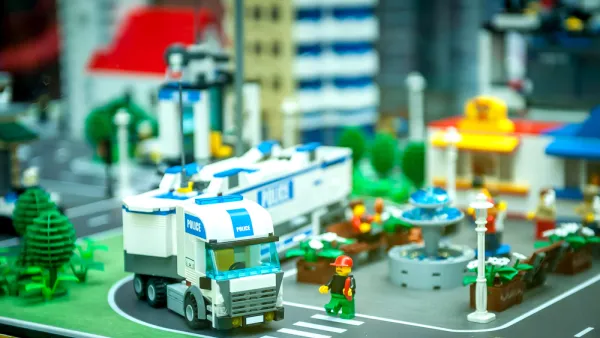
Lego Neglects Space for Bike Lanes
A Dutch advocate believes Lego's city sets should reflect streets that prioritize all users. Including bike lanes would be one way for the toy manufacturer to start accomplishing that goal.
Could Legos Alleviate Architecture's Gender Imbalance?
With women accounting for only 20% of registered architects in Britain and 8% of professional engineers, the incoming president of the Royal Academy of Engineering has a compelling idea to encourage more women to enter the fields: give girls legos.
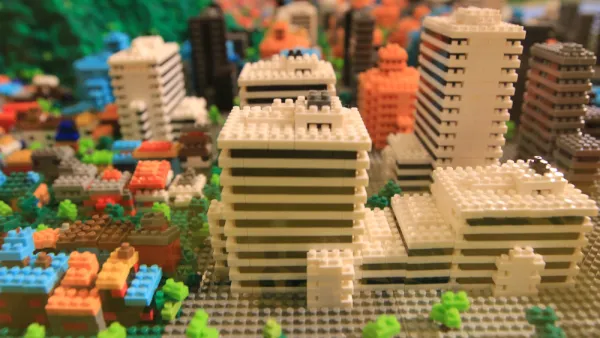
The 65th Birthday of the Lego Brick
The Lego brick is 65 years old this year. Learn more about its history and impacts on both children and adults.

Desperate measures: Advocates weigh draining Lake Powell to fill Colorado River
Draining the reservoir could reduce evaporation losses by a couple hundred thousand acre-feet.

Eastern Nebraska is running out of electricity
Data centers and electrification are straining eastern Nebraska’s grid, throttling economic development.

Malls are becoming the midtowns of the future
Mall and office park redevelopments are a generational opportunity to create new nodes of urbanity.

NYC breaks ground on anti-flooding infrastructure project
New York City's new system will reduce stormwater flows to local sewers by 90%.

One Kentucky town’s secret to affordable housing
The Smoketown Community Land Trust has already built seven affordable homes for community members.

Houston gains petal-shaped cooling infrastructure to make streets more ‘delightful’
The city has installed the pavilions along 15 blocks in Houston.

FREE Course: Walkable City 1: Why Walkability?
After describing his path towards focusing on walkability as the essence of good planning, Jeff Speck marches through his five principal reasons for making more walkable places.
Reinventing Malls: Planning Alchemy—Turning Gray Fields Into Gold
The course focuses on the opportunities and imperatives that shape reinvention of mall sites.

City of Rosemead
Rutgers University, Edward J. Bloustein School of Planning and Public Policy
One Hundred Miles
University of Michigan School for Environment and Sustainability (SEAS)
Hunter College, City University of New York (CUNY)
The Architects Foundation
City of Cambridge
Montrose County
The Pocatello Development Authority