The removal of a parklet that had been criticized as 'a haven for homelessness and illegal activity' reflects some of the growing pains experienced by San Francisco as it's sought to encourage the conversion of on-street parking into public spaces.


"On Haight Street, two new parking spaces where a parklet was recently removed highlight the growing pains of a popular open-space program and what The City can learn from the failure," reports Andrea Koskey. "In July, a parklet outside of Martin Macks bar in the Upper Haight was the first to be removed after nearly a year of controversy, and Planning Department officials running the program have learned from this incident and others that have cropped up around The City."
"As the number of applications increased — up to 55 this year — so did the oversight and guidelines, enough so that the design of the now-removed parklet in the Upper Haight would not be approved today, said Paul Chasan, parklet project manager with the Planning Department."
"Applicants now are asked to describe what the parklet will include before design drawings are submitted," explains Koskey. "The guidelines are compiled in a comprehensive packet released late last year by the Planning Department."
"We were kind of working it out as we go," Chasan said. "This is the first attempt to codify our policies."
Read the full story: S.F.'s parklets program learns from failure, moves ahead
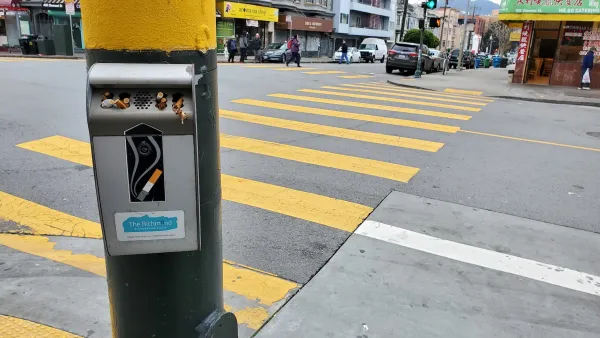
San Francisco weighs patio smoking ban
Business owners say the ban could force patrons onto sidewalks and disrupt long-standing bar culture, while proponents of the ordinance say second-hand smoke is a threat to patrons and workers.
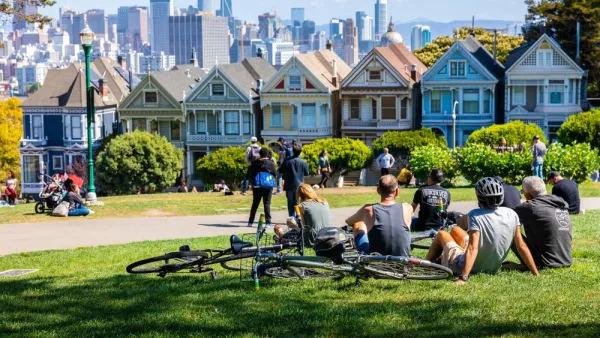
Predictions for San Francisco’s Public Spaces
In 2023, will the city’s public spaces be reclaimed by cars, or will pandemic-era interventions lead to permanent change?
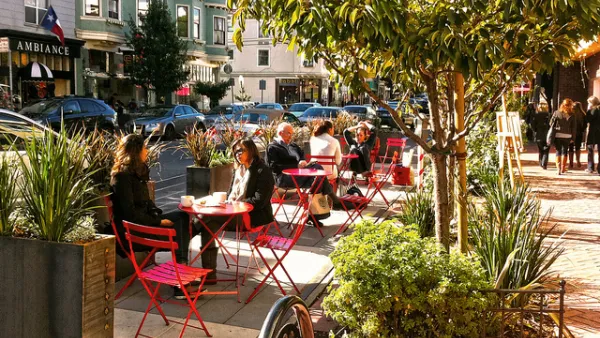
San Francisco Supervisors Vote to Keep Parklets, Close Them at Night
The pandemic-era outdoor seating arrangements can stay, but a last-minute amendment lets business owners close them overnight.

Planetizen Federal Action Tracker
A weekly monitor of how Trump’s orders and actions are impacting planners and planning in America.

California plans to bury El Niño’s downpour
If the state plays its cards right, it may be able to store a billion acre-feet of El Niño’s water in aquifers.

Desperate measures: Advocates weigh draining Lake Powell to fill Colorado River
Draining the reservoir could reduce evaporation losses by a couple hundred thousand acre-feet.

Los Angeles just elected an urban planner as its mayor
Transportation analysts are optimistic that Raman will be more aggressive in addressing transit issues than Bass.

Mamdani’s pied-à-terre tax survives legal challenge
A panel of judges found that the plaintiffs failed to demonstrate injury as a result of New York City's implementation of the tax.

Eastern Nebraska is running out of electricity
Data centers and electrification are straining eastern Nebraska’s grid, throttling economic development.

FREE Course: Walkable City 1: Why Walkability?
After describing his path towards focusing on walkability as the essence of good planning, Jeff Speck marches through his five principal reasons for making more walkable places.
Reinventing Malls: Planning Alchemy—Turning Gray Fields Into Gold
The course focuses on the opportunities and imperatives that shape reinvention of mall sites.

City of Rosemead
Rutgers University, Edward J. Bloustein School of Planning and Public Policy
One Hundred Miles
University of Michigan School for Environment and Sustainability (SEAS)
Hunter College, City University of New York (CUNY)
The Architects Foundation
City of Cambridge
Montrose County
The Pocatello Development Authority