Urban areas across the country have identified bikes as a fat-burning, congesting-decreasing, transit-supporting alternative to automobiles. And Birmingham – despite a need for all these benefits – has lagged tremendously behind.


"The endless calls for increased mass transit funding have blinded the city to other means of increasing connectivity. Even if Birmingham had the sufficient resources to fund a working transit system, the city still lacks the necessary commercial and residential density to make the investment worthwhile."
"Bike infrastructure and culture can roll in as a placemaking tool that also serves as a stepping stone to mass transit," writes Wesley Vaughn.
"Birmingham has excess automobile infrastructure that could be transferred to mass transit, but until we get there, let's convert it into bike infrastructure," he urges. "The city's needlessly wide one-way streets beg for bike-only lanes that could be turned into bus-rapid-transit lanes later on."
"Bikers are typically mass transit users, too, meaning that once the city has a serviceable transit system, they will be its major supporters. Those who cannot afford a car and those who do not want to own a car alternate between bike and transit use depending on their daily needs."
Read the full story: Biking can help support mass transit
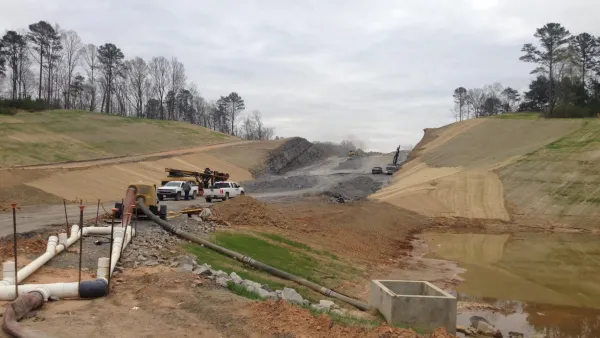
Alabama DOT wants to fill wetlands for interstate project
The Birmingham Northern Beltline would run roughly 52 miles through forests and wetlands that are home to multiple endangered species.
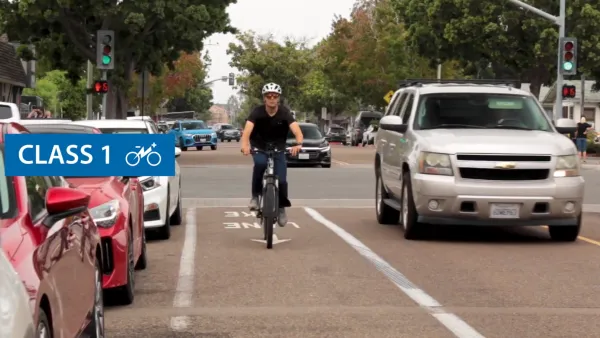
Carlsbad, California Could Set Age Limits for E-bikes
Some California jurisdictions say a minimum age limit is necessary for high-powered e-bikes due to the high number of injuries in recent years.
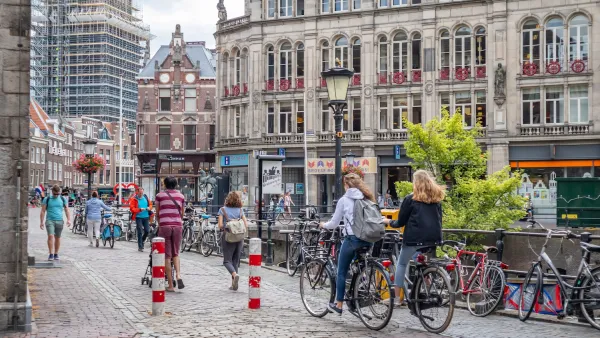
2025's 30 Most Bike-friendly Cities
Copenhagenize has released its list of top cities for cyclists. Spoiler alert: the United States doesn’t make the list.

Planetizen Federal Action Tracker
A weekly monitor of how Trump’s orders and actions are impacting planners and planning in America.

Eastern Nebraska is running out of electricity
Data centers and electrification are straining eastern Nebraska’s grid, throttling economic development.

Study reveals best places in the U.S. for cycling, walking
New research from Streetlight Data examines bicycle and pedestrian miles per capita in the 100 largest U.S. cities by population.

All sides of BRT debate unhappy with CDOT’s most recent move
The Colorado Department of Transportation is no longer considering center-running bus lanes for Colorado Boulevard.

Massachusetts bogs generate both power, and cranberries
Putting solar panels above farmland is one way Massachusetts is advancing toward its goal of net-zero carbon emissions by 2050.

What could the future of LA transit look like under Raman?
The mayor-elect views broken sidewalks and potholes as crises that can be fixed with better governance.

FREE Course: Walkable City 1: Why Walkability?
After describing his path towards focusing on walkability as the essence of good planning, Jeff Speck marches through his five principal reasons for making more walkable places.
Reinventing Malls: Planning Alchemy—Turning Gray Fields Into Gold
The course focuses on the opportunities and imperatives that shape reinvention of mall sites.

City of Rosemead
Rutgers University, Edward J. Bloustein School of Planning and Public Policy
One Hundred Miles
University of Michigan School for Environment and Sustainability (SEAS)
Hunter College, City University of New York (CUNY)
The Architects Foundation
City of Cambridge
The Pocatello Development Authority
The Urban Renewal Agency of the City of Pocatello