The derailment of an intercity train south of Paris last week is drawing attention to France's two-tiered rail system. While high-speed trains are celebrated and expanded, local lines suffer from underinvestment and neglect.


"While investigators search for the cause of France's worst train disaster in 25 years, the government has vowed to improve the maintenance of its ageing rail network," reports Angelique Chrisafis. "But the derailment of a packed intercity train – which last week killed six and injured more than 100 – has left the country soul-searching about what used to be a point of national pride: its world-famous, high-tech railway system, which once put its European neighbours to shame."
"The accident at Brétigny-sur-Orge, south of Paris, has served to highlight what for years has been the dark side of the French railway dream: behind the famous, high-speed Train á Grande Vitesse (TGV) France struggled with neglected, ageing, overcrowded local lines starved of funds as the fast lines soaked up state investment. While the TGV sparkled, the rest of the network crumbled."
Read the full story: Paris train disaster highlights dark side of French railway dream

France Pioneers Low-Cost High-Speed Rail
Taking a page out of the book of budget airlines such as Ryanair, France's SNCF is introducing OuiGo - a hyper low-cost high-speed rail option that aims to convert suburban drivers into train riders.
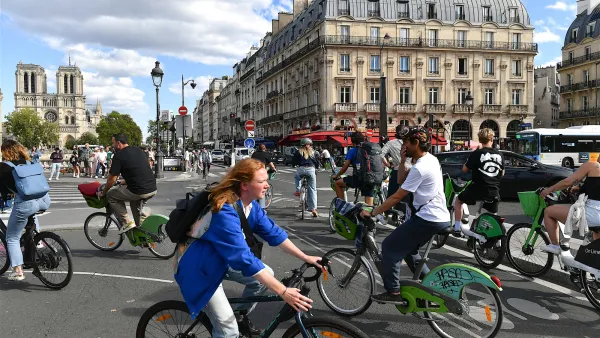
Biking in Paris grew by 240% in 5 years
The city saw a significant rise in bike use thanks to data-driven policy changes.
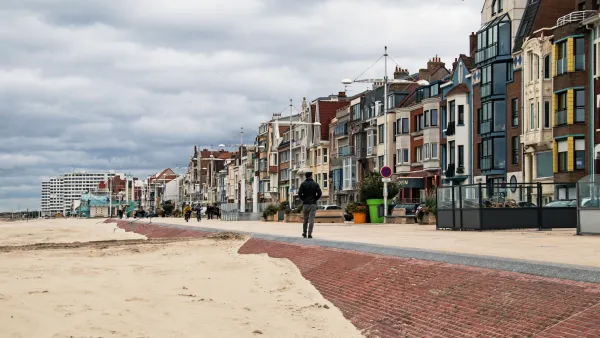
The City Where Free Buses Changed Everything
New York’s new mayor Zohran Mamdani has said he’ll make every bus free to ride. This French city did just that — and is reaping the rewards.

Planetizen Federal Action Tracker
A weekly monitor of how Trump’s orders and actions are impacting planners and planning in America.

Eastern Nebraska is running out of electricity
Data centers and electrification are straining eastern Nebraska’s grid, throttling economic development.

Study reveals best places in the U.S. for cycling, walking
New research from Streetlight Data examines bicycle and pedestrian miles per capita in the 100 largest U.S. cities by population.

All sides of BRT debate unhappy with CDOT’s most recent move
The Colorado Department of Transportation is no longer considering center-running bus lanes for Colorado Boulevard.

Massachusetts bogs generate both power, and cranberries
Putting solar panels above farmland is one way Massachusetts is advancing toward its goal of net-zero carbon emissions by 2050.

What could the future of LA transit look like under Raman?
The mayor-elect views broken sidewalks and potholes as crises that can be fixed with better governance.

FREE Course: Walkable City 1: Why Walkability?
After describing his path towards focusing on walkability as the essence of good planning, Jeff Speck marches through his five principal reasons for making more walkable places.
Reinventing Malls: Planning Alchemy—Turning Gray Fields Into Gold
The course focuses on the opportunities and imperatives that shape reinvention of mall sites.

City of Rosemead
Rutgers University, Edward J. Bloustein School of Planning and Public Policy
One Hundred Miles
University of Michigan School for Environment and Sustainability (SEAS)
Hunter College, City University of New York (CUNY)
The Architects Foundation
City of Cambridge
The Pocatello Development Authority
The Urban Renewal Agency of the City of Pocatello