The city saw a significant rise in bike use thanks to data-driven policy changes.


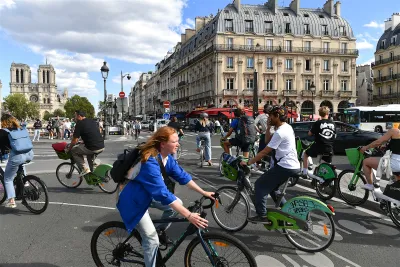
Bicycle traffic in Paris rose by 240% between 2018 and 2023, according to a new study, showing that the city's investments in new bike infrastructure have paid off.
As Ron Johnson explains in Momentum, "The research suggests the biggest gains come when cities make cycling both easier while making driving less convenient." The rise in bicycling was "the result of deliberate, data-driven policy" that included new bike lanes and bike parking, traffic calming initiatives and low-emission zones.
According to the researchers, "the most important driver wasn’t a single intervention, but rather the cumulative effect of consistent, coordinated policies." The city didn't just add bike lanes. It also discouraged car use and made streets safer and more welcoming for pedestrians. Under Mayor Anne Hidalgo's "Plan Vélo," Paris has built over 1,000 kilometers of new bike lanes and eliminated thousands of parking spaces.
For Johnson, "The lesson is clear: change is possible when policy, infrastructure, and public space all point in the same direction."
Read the full story: Paris Grew Cycling by 240% in Just Five Years: North American Cities Should Pay Attention


Paris Bike Boom Leads to Steep Drop in Air Pollution
The French city’s air quality has improved dramatically in the past 20 years, coinciding with a growth in cycling.
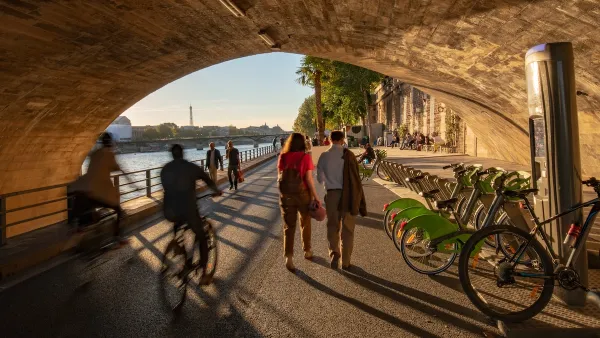
Cycling Doubles in Paris After Infrastructure Improvements
The city’s efforts to improve its bike infrastructure are paying off in spades.
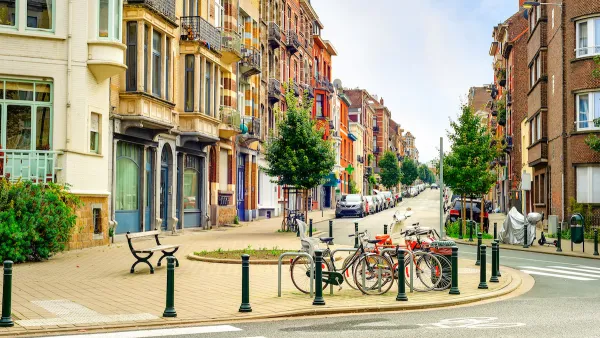
Paris Is Great, But Here's Where the Green Mobility Revolution Is Happening
A movement toward sustainable mobility is taking place across Europe, not just in the City of Lights.

Planetizen Federal Action Tracker
A weekly monitor of how Trump’s orders and actions are impacting planners and planning in America.

Data reveals that NYC’s bet on congestion pricing has paid off
After almost two years of the program, reports show positive impacts on traffic and air quality and no disruptions to parking.

Denver is solving homelessness. Why aren't the rest of us?
Since 2023, Denver's street homeless population has decreased by 64%, proving that effective tools exist to support those in need of housing.

Chicago breaks ground on $3 billion megadevelopment
The new neighborhood, titled Foundry Park, will one day host 3,700 residences.

SF weighs putting data center inside abandoned mall
An unnamed technology company may buy the entire building, and convert one-third of it into what development consultants are calling a “regenerative urban energy center.”

Michigan needs billions to save its water infrastructure. The state won't fund it
Michigan needs to invest $2.8 billion per year over the next 20 years to fix its water infrastructure. The FY 2027 budget allocates only $27.9 million.

FREE Course: Walkable City 1: Why Walkability?
After describing his path towards focusing on walkability as the essence of good planning, Jeff Speck marches through his five principal reasons for making more walkable places.
Reinventing Malls: Planning Alchemy—Turning Gray Fields Into Gold
The course focuses on the opportunities and imperatives that shape reinvention of mall sites.

City of Rosemead
Rutgers University, Edward J. Bloustein School of Planning and Public Policy
One Hundred Miles
The Architects Foundation
University of Cincinnati Online
Montrose County
Northern Illinois Transit Authority (NITA)
The Pocatello Development Authority