A new report from the International Energy Agency has some sobering news about the planet's record setting carbon emissions. But it also identifies four policy recommendations that could help stave off warming in excess of the dreaded 2°C mark.


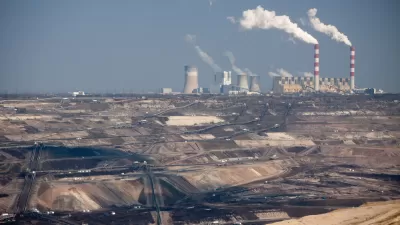
"For anyone who’s in favor of preventing the planet from heating up, there’s bad news and good news in the latest big report from the International Energy Agency," says Brad Plumer. "First, the somber stuff: Global carbon-dioxide emissions from energy reached a record high in 2012, after rising 1.4 percent over the past year."
However, the IEA "still thinks it’s technically possible for the world to cut emissions by 8 percent by 2020 and stay on track for its declared goal of keeping global warming below 2°C," adds Plumer. As Steven Mufson explains, the report urged global leaders to "implement aggressive energy-efficiency measures; limit the output of inefficient coal plants and mandate that all future coal plants be highly efficient supercritical ones; reduce the release of methane (a potent greenhouse gas) in oil and gas operations; and phase out fossil-fuel subsidies."
"The idea is that these four measures — which don’t require any newfangled or unproven technologies — would buy the world some time while leaders hashed out an international climate treaty and figured out how to make deeper emissions cuts in the future in order to stay under that 2°C mark," says Plumer.
Read the full story: The IEA thinks we can still avoid 2°C of global warming. Here’s how.

FTA Kills ‘Social Cost of Carbon’ in Transit Grant Criteria
The Capital Investments Grant program will no longer factor in the future impacts of carbon emissions.

Climate Change Concerns Rising Among Americans
More Americans than ever agree climate change is happening—but fewer agree on what to do about it.

Cool Planning for a Hotter Future
Global warming increases the importance of designing buildings and communities that are comfortable, efficient, and safe in hot conditions.

Planetizen Federal Action Tracker
A weekly monitor of how Trump’s orders and actions are impacting planners and planning in America.

Amtrak, CN end decades-long dispute with eight-year agreement
The new operating agreement establishes an updated framework for the companies to work together, including processes to resolve disputes.

Northwest rail fans eager for Sept. 30 debut of Amtrak’s Airo fleet
Get ready for that new train smell and more seats. But they won’t go faster or run more frequently on the Cascades route in Washington and Oregon.

St. Louis Metro to test if single-car trains can reduce operating costs, maintain rider satisfaction
The pilot program will run from October to spring 2027, and begin with one single-car train operating on Metrolink’s Red and Blue lines.

Pennsylvania is building data centers in abandoned mines
Housing data centers in mines provides an alternative to destroying local forests and may spare residents from data centers’ noise and air pollution.

If Corpus Christi can’t revive desalination plant project, it may owe Texas $235 million
Earlier this month, city officials declined to pursue developing the plant for the second time in a year.

FREE Course: Walkable City 1: Why Walkability?
After describing his path towards focusing on walkability as the essence of good planning, Jeff Speck marches through his five principal reasons for making more walkable places.
Reinventing Malls: Planning Alchemy—Turning Gray Fields Into Gold
The course focuses on the opportunities and imperatives that shape reinvention of mall sites.

City of Thousand Oaks
City of Wisconsin Rapids
Harvard University Graduate School of Design
The Architects Foundation
University of Cincinnati Online
The Pocatello Development Authority
The Urban Renewal Agency of the City of Pocatello