Across America, developers and municipalities are trying to adapt a relic of the sprawling post-war suburbs for a more urbane 21st century. Can office park makeovers revive these increasingly barren landscapes?


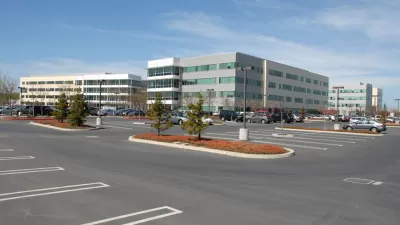
"Hoping to stave off suburban blight, local officials in more than a dozen communities have approved plans for developers to turn aging corporate parks into urban-style complexes with amenities including apartments, stores, movie theaters, bike paths and office space," reports Laura Kusisto.
"'It's easy to say these office buildings or office complexes may be obsolete, but we can't walk away from them,' said Michael Kerwin, president and chief executive of the Somerset County Business Partnership, a regional chamber of commerce [in New Jersey]."
"It remains to be seen if the new complexes will attract residents, retailers and companies," adds Kusisto. "Most office parks aren't connected to reliable public transportation, and even a makeover may not create the appeal that now draws more young people to live in city centers."
Read the full story: Office Parks Get a Makeover

Report: Office Parks Increasingly Obsolete
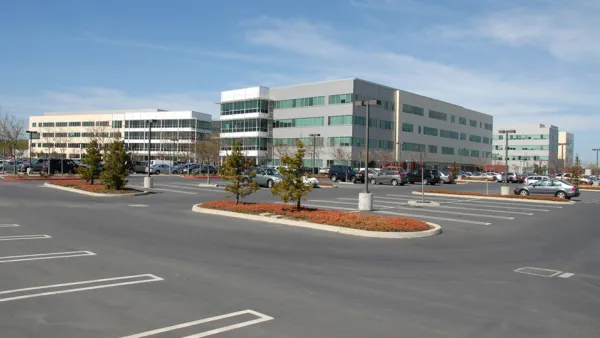
According to a report prepared by commercial real estate firm Newmark, Grubb, Knight and Frank (NGKF), the office park model has lost the competitive edge. That is, unless it provides access to transit and urban amenities as well as parking.
Google's Loss is LinkedIn's Gain in Silicon Valley
The city of Mountain View chose to allot most of the redevelopment rights in its much sought-after North Bayshore area not to the city's largest employer and taxpayer but to LinkedIn's more conventional proposal.
The 'Cinderella Treatment': An Alternative Approach to Saving the Suburban Office Park
As suburban office parks struggle to lure tenants not decamping for more urban environments, some are investing princely sums to renovate their buildings in the hope of capturing a slice of the shrinking pie.

Planetizen Federal Action Tracker
A weekly monitor of how Trump’s orders and actions are impacting planners and planning in America.

Northwest rail fans eager for Sept. 30 debut of Amtrak’s Airo fleet
Get ready for that new train smell and more seats. But they won’t go faster or run more frequently on the Cascades route in Washington and Oregon.

Trump is considering data centers on 6 states' public land — some state officials say they had no idea
If the administration approves the proposed projects, data center and data center-related developments will cover 17,600 acres of public land.

California may destroy its beaches trying to save homes from El Niño
Boulders and seawalls can protect homes from waves, but ultimately destroy sandy beaches.

California high-speed rail accomplishes only one legislative goal in 2026
The majority of the agency's failed pitches were never developed into written proposals.

Sharp cuts to federal passenger rail, public transit funding arrive today
The American Public Transportation Associations estimates the stopgap bill will result in an over 80% cut to federal passenger rail investment and 20% cut to public transit investment.

FREE Course: Walkable City 1: Why Walkability?
After describing his path towards focusing on walkability as the essence of good planning, Jeff Speck marches through his five principal reasons for making more walkable places.
Reinventing Malls: Planning Alchemy—Turning Gray Fields Into Gold
The course focuses on the opportunities and imperatives that shape reinvention of mall sites.

City of Thousand Oaks
City of Wisconsin Rapids
Harvard University Graduate School of Design
The Architects Foundation
University of Cincinnati Online
Northern Illinois Transit Authority (NITA)
The Pocatello Development Authority
The Urban Renewal Agency of the City of Pocatello