A study of three different development types in Nashville shows that mixed-use infill projects deliver an exponentially greater return on investment than traditional suburban, or even New Urbanist-style, greenfield development.


"A study out of Nashville by Smart Growth America (SGA) provides more evidence that building walkable development in existing communities is best for a city’s bottom line," reports Angie Schmitt. In comparing the costs of local services to the revenues produced by three different projects, SGA found that on a per unit basis, a mixed-use, compact housing and office development built on a brownfield site (The Gulch) far outperformed "a large-lot, traditional suburban-style development called Bradford Hills" and "a 'new urban'-style, mixed-use, walkable development" called Lennox Village.
"When you factor in density, the differences between the three models really crystallize," says Schmitt. "The Gulch, filled with condo towers, generated $115,720 in net revenue per acre annually. That’s an astounding 1,150 times greater than Bradford Hills, which generated a total of just $100 per acre. The downtown development also performed 148 times better for the local government’s bottom line than new urbanist development Lennox Village, which yielded $780 per acre."
Read the full story: Study: Walkable Infill Development a Goldmine for City Governments

To Stretch Strained Municipal Budgets, Build Smart
Utilizing 17 case studies, a new report from Smart Growth America examines the costs and benefits of competing development strategies. Any way you slice it, smart growth strategies are more financially prudent than building sprawl.
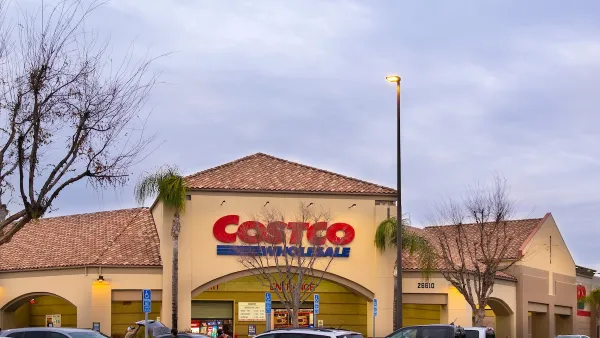
When Your Neighbor is a Big-Box Store
Taking advantage of state and local density bonuses and streamlining measures, beloved big-box retailer Costco is getting into the housing business

Bring Back the Corner Store
‘Accessory commercial units’ were once common across U.S. towns and cities. Now, zoning regulations make them illegal in many places.

Planetizen Federal Action Tracker
A weekly monitor of how Trump’s orders and actions are impacting planners and planning in America.

‘Going backwards:’ Baltimore mayor, students rally against state's transit funding plan
Maryland's proposed six-year plan provides no funding for Baltimore’s BMORE bus program and reduces its road maintenance funding.

Detroit to transform waterfront with $2.2 billion investment
Developers will convert about 18 acres of unused parking lot space into civic spaces.

U.S.-Iran war may have ‘devastating’ impact on cost to warm homes
Vermont and Maine residents may see a 76% increase in the cost of warming their homes this winter.

Senate bill would ‘overhaul’ environmental permitting laws
Under the proposed act, government agencies would also not be able to suspend or rescind permits after granting them.

Exemption applications for NYC’s pied-à-terre tax see 55% success rate
The city sent nearly 40% of its initial pied-à-terre tax warnings erroneously.

FREE Course: Walkable City 1: Why Walkability?
After describing his path towards focusing on walkability as the essence of good planning, Jeff Speck marches through his five principal reasons for making more walkable places.
Reinventing Malls: Planning Alchemy—Turning Gray Fields Into Gold
The course focuses on the opportunities and imperatives that shape reinvention of mall sites.

One Hundred Miles
County of Mendocino
planning NEXT
The Architects Foundation
University of Cincinnati Online
Montrose County
Northern Illinois Transit Authority (NITA)
The Pocatello Development Authority