After five rough years, architecture billings are on a sustained upswing. In Chicago, where the number of employed architects dropped 33 percent between 2008-2011, this means firms are staffing up to meet a growing number of commissions.


"Buoyed by the country's nascent economic recovery, Chicago architecture firms are ever-so-slowly emerging from their defensive crouch. The recovery is in its infancy, but partners say they're looking to hire and are jostling to compete for a growing number of commissions. Hot sectors include apartments, office interiors, health care and higher education."
"But as architecture firms maneuver to staff up, they still must contend with the aftermath of the Great Recession," adds Maidenberg. "The labor pool of seasoned building designers has been battered by years of layoffs, forcing many into early retirement or out of the industry. Meanwhile, though, more people are enrolling and graduating from the nation's architecture schools."
"Of course, the plodding pace of the recovery in Chicago and the Midwest, combined with the trauma of the industry's lean years, has firms adding employees slowly and carefully. And they're paying less, on average, for entry-level architects than they did before the market crash."
Read the full story: Is it finally a good time to be an architect?
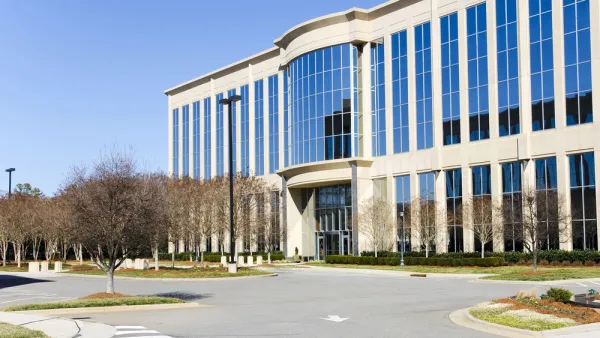
Large Companies Moving Back to Cities
The movement stems from demographic changes in the work force. For companies seeking younger hires, they need to go to where they prefer to live. Suburban campuses may be replaced by urban headquarters or the addition of satellite offices in cities.
Searching for a Sequel to the Plan of Chicago
Calling Chicago a "city on the brink", the editors of the Chicago Tribune issue an "RFP" for residents and civic groups to put forth a vision for Chicago that can address its chronic woes, ensure its survival, and inspire people to action.

Texas cities and counties forgo $1 billion in taxes to data centers in exchange for few job guarantees
The Tribune found 53 local tax agreements across 34 data centers guaranteed a total of 465 jobs. Roughly half of the agreements had no job stipulations.

Planetizen Federal Action Tracker
A weekly monitor of how Trump’s orders and actions are impacting planners and planning in America.

Washington state to charge fee to drivers with fuel-efficient cars
Revenue from the fee will go towards supporting the state’s highways.

Trump to blast ‘hydrocarbon highway’ through ‘world’s longest art gallery’
Environmental and historic preservation groups are suing to stop the project.

MBTA Green Line project moved to next phrase of CIG program
The modernization effort will cost $4.08 billion.

22-mile pedestrian and bike path to encircle Atlanta by 2030
The project will also support affordable housing.

Army detonates nearly 5 tons of lead in Iowa
The detonation comes after days of delays and public outcry.

FREE Course: Walkable City 1: Why Walkability?
After describing his path towards focusing on walkability as the essence of good planning, Jeff Speck marches through his five principal reasons for making more walkable places.
Reinventing Malls: Planning Alchemy—Turning Gray Fields Into Gold
The course focuses on the opportunities and imperatives that shape reinvention of mall sites.

City of Charlotte
City of Rosemead
Rutgers University, Edward J. Bloustein School of Planning and Public Policy
University of Michigan School for Environment and Sustainability (SEAS)
Hunter College, City University of New York (CUNY)
The Architects Foundation
University District Partnership