Calling Chicago a "city on the brink", the editors of the Chicago Tribune issue an "RFP" for residents and civic groups to put forth a vision for Chicago that can address its chronic woes, ensure its survival, and inspire people to action.


Despite its recent resurgence, Chicago is beset by a number of chronic, and existential, problems: violent crime, poor performing schools, lack of well-paying jobs, troubled finances, and a need for authority figures and role models.
In light of these challenges, the Chicago Tribune has begun "a new opinion leadership campaign to create a new Plan of Chicago, modeled in the spirit of Burnham's blueprint for the city's future."
"Our campaign is firmly rooted in our deep love of Chicago and the fervent belief that our city can — and must — improve," explains Editor Gerould Kern. "Over the next eight Sundays, the Tribune's Editorial Board, led by Editorial Page Editor Bruce Dold, will present a series of editorials defining the challenges that lie before us and the possible solutions available to the city."
"We also turn to you, the citizens of Chicago, with a simple question and a challenge: What would you do?"
Read the full story: We seek your help in forging a new Plan of Chicago
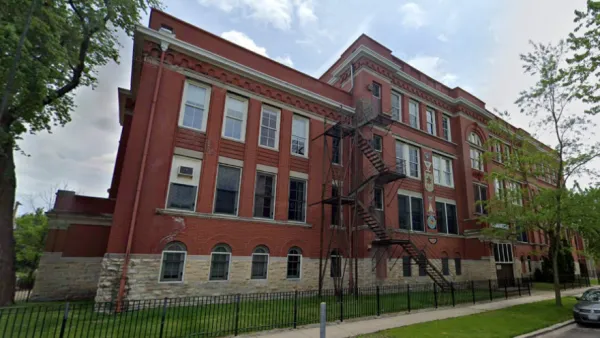
Historic Chicago School Building to Become Affordable Housing
The adaptive reuse project will create 50 income-restricted housing units and community amenities.
Keanu Reeves, Daniel Burnham Dream No Longer a Reality
Keanu Reeves will no longer portray Daniel Burnham in a film adaptation of The Devil in the White City.
Keanu Reeves Set to Play Daniel Burnham in ‘The Devil in the White City’
Planning is going to get a new level of star power as a limited series adaptation of The Devil in the White City gets ready for television screens in 2024.

Planetizen Federal Action Tracker
A weekly monitor of how Trump’s orders and actions are impacting planners and planning in America.

California plans to bury El Niño’s downpour
If the state plays its cards right, it may be able to store a billion acre-feet of El Niño’s water in aquifers.

Desperate measures: Advocates weigh draining Lake Powell to fill Colorado River
Draining the reservoir could reduce evaporation losses by a couple hundred thousand acre-feet.

Housing is the top priority of Seattle’s sole new councilmember
Jenks campaigned on building 1,000 new units of affordable housing.

New tax cuts may slash $1.5 billion in funding for Miami transit, public parks
Amendment 3 will save Miami-Dade homeowners $2,700 in 2028.

Arizona, Wisconsin, Pennsylvania hope to finally advance climate goals post-midterms
The three states have spent years under Republican or divided control.

FREE Course: Walkable City 1: Why Walkability?
After describing his path towards focusing on walkability as the essence of good planning, Jeff Speck marches through his five principal reasons for making more walkable places.
Reinventing Malls: Planning Alchemy—Turning Gray Fields Into Gold
The course focuses on the opportunities and imperatives that shape reinvention of mall sites.

City of Rosemead
Rutgers University, Edward J. Bloustein School of Planning and Public Policy
One Hundred Miles
University of Michigan School for Environment and Sustainability (SEAS)
Hunter College, City University of New York (CUNY)
The Architects Foundation
City of Cambridge
Montrose County
The Pocatello Development Authority