Violent Crime
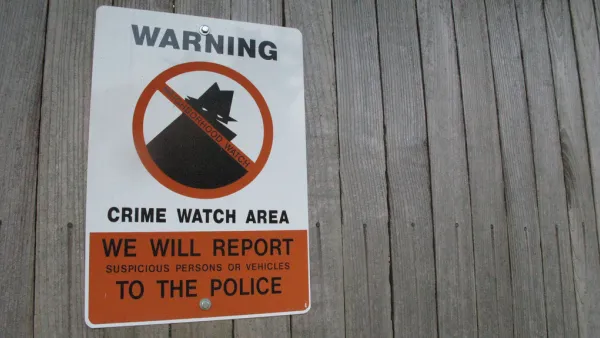
Study: Nonprofits, Ordinary Citizens Played Major Role in Crime Decline
As many wonder whether the nation's multi-decade crime decline will continue, research suggests that community groups and local nonprofits have played a larger role in that story than they're given credit for.

How Planning Can Reduce the Threat of Gender Violence
A piece from Anchorage, Alaska discusses problems that can arise when planners don't address gender-based safety. Walkable, populated, well-lit streets and transit are the best remedy.
New Study Tests Assumptions About Housing Vouchers and Crime
A new paper published in the Urban Studies journal finds a weak, negative relationship between vouchers and violent crime rates. There is no observable relationship between vouchers and violent crime rates in suburban areas.
Searching for a Sequel to the Plan of Chicago
Calling Chicago a "city on the brink", the editors of the Chicago Tribune issue an "RFP" for residents and civic groups to put forth a vision for Chicago that can address its chronic woes, ensure its survival, and inspire people to action.

FREE Course: Walkable City 1: Why Walkability?
After describing his path towards focusing on walkability as the essence of good planning, Jeff Speck marches through his five principal reasons for making more walkable places.
Reinventing Malls: Planning Alchemy—Turning Gray Fields Into Gold
The course focuses on the opportunities and imperatives that shape reinvention of mall sites.

City of Rosemead
Rutgers University, Edward J. Bloustein School of Planning and Public Policy
One Hundred Miles
University of Michigan School for Environment and Sustainability (SEAS)
Hunter College, City University of New York (CUNY)
The Architects Foundation
City of Cambridge
Montrose County
The Pocatello Development Authority









