Unbounded by budgetary concerns, lengthy approvals processes, or NIMBY neighbors, China is building 100 new airports over the next two years. Does their process offer any lessons for how to fix America's crumbling air infrastructure?


"Three years after it opened, Terminal 2 at Hongqiao International Airport in Shanghai stands as a testament to ’s economic ambitions, and to its unique approach to infrastructure development," writes David Barboza. "With extraordinary government support, Shanghai built a massive airport terminal in 32 months as part of a $9 billion transportation hub that connects the air terminal with the city’s buses, subway platforms and a new high-speed railway network.
“'They know how to build things and how to do it efficiently,' said Jeffrey N. Thomas, chief executive of Landrum & Brown, an American firm that helped design the new Shanghai terminal. 'That area went from plans on a piece of paper to a complex that has 14 million square feet in less than four years. That’s hard to do.'”
"At a time when many American airports are falling into disrepair, China is quickening its air travel development, with plans to build nearly 100 more airports by 2015, including some at high altitudes, where special landing gear is required. Many of those airports are expected to lose money, but that hasn’t deterred the government, which views the expansion of infrastructure as vital to economic development."
FULL STORY: Airports in China Hew to an Unswerving Flight Path

The Best and the Worst Airports to Access
If you want great access to an airport, go overseas—that's the main finding of a study by Golden Gateway Alliance, a Manhattan-based airport advocacy organization. Tied for dead-last in terms of access is Denver and a certain New York airport.
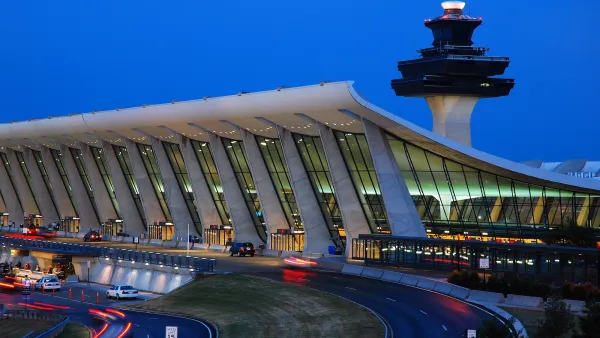
Trump wants to eliminate people movers, add 32,000-car garage to Dulles airport
The proposed renovations would cost roughly $22 billion.

Santa Monica residents argue historic airport is 'critical' for public safety
Some locals are asking the city to reconsider its planned closure of the airport in late 2028.

Planetizen Federal Action Tracker
A weekly monitor of how Trump’s orders and actions are impacting planners and planning in America.

The state-sanctioned urbicide of Austin
People don’t kill cities. Freeways do.

US to reduce Colorado River water deliveries to Mexico
A new Colorado Treaty amendment reduces Mexico’s Colorado River water allocation by 250,000 acre feet.

5 New England states march closer to 800 megawatt wind energy project
Securing federal approval for the project may be complicated under the Trump administration, which has historically been hostile towards domestic wind power.

Baltimore to break ground on $50 million Transit Priority Project
The project will bring faster bus trips, safer streets and better bike connections to Baltimore.

Airbnb launches $250 million 'last-dollar financing' housing accelerator, makes first investment in Austin
The company will put $6.4 million towards affordable housing development in Texas’ capital.

FREE Course: Walkable City 1: Why Walkability?
After describing his path towards focusing on walkability as the essence of good planning, Jeff Speck marches through his five principal reasons for making more walkable places.
Reinventing Malls: Planning Alchemy—Turning Gray Fields Into Gold
The course focuses on the opportunities and imperatives that shape reinvention of mall sites.

Eagle County Government
Harvard University Graduate School of Design
Nashville Planning Department
The Architects Foundation
University of Cincinnati Online
The Pocatello Development Authority
The Urban Renewal Agency of the City of Pocatello
Journal of the American Planning Association