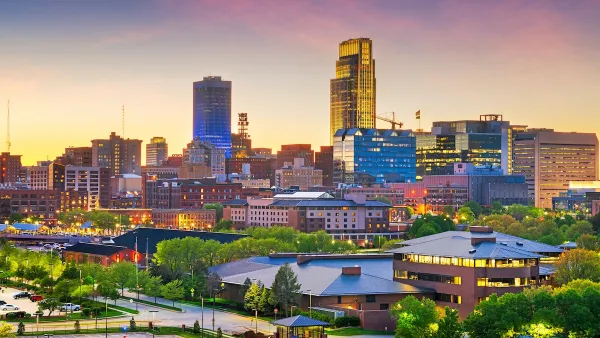
Using Omaha's Old Market neighborhood as an example, Nathaniel M. Hood calls for an end to the urban "Entertainment District" - the common revitalization tool that produces a "single-use monoculture" that alienates families and baby boomers.


"While originally having many diverse purposes, the Old Market neighborhood now is mainly articulated around one function: entertainment (and the odd antique shop)," bemoans Hood. "This would be tolerable if Omaha had other similar neighborhoods. They don’t – and neither do most American cities. That is precisely why we can’t be surrendering our best places over exclusively to entertainment."
For Hood, the problem with such "adult theme parks" is that they "[lack] one crucial element: people. Since entertainment is more or less modern code-speak for food and drink. [sic], it means that if it isn’t a weekend, these places are silent. For a place to be successful, it needs people. All types of people – not just 25 year old’s on a Friday or Saturday night out."
"This policy needs to shift from making cities places to visit, and concentrate on making them places to live. Entertainment districts, even the best ones, can fail at creating a lively mix of retail, residential, commercial and civic space," he argues. "In fact, show me an existing or proposed entertainment district and I’ll show you a struggling city. Yet, we still continuously encourage entertainment as a revitalization tool."
Read the full story: Let's End "Entertainment Districts"

Cincinnati upzoning plan paves way for revitalized waterfront district
The city hopes to kickstart new development on five vacant lots in the riverfront entertainment district.

Omaha's 400 shared e-bikes are now free to all residents
Before eliminating fares for locals, the Heartland system only recovered 10%-15% of its operating costs through fare revenue.
Omaha Mayor’s Proposal Would Build 1,900 New Housing Units Along Streetcar Line
Mayor Ewing introduced a new plan that would allow the city to begin distributing affordable housing financing as early as next year.

Planetizen Federal Action Tracker
A weekly monitor of how Trump’s orders and actions are impacting planners and planning in America.

California plans to bury El Niño’s downpour
If the state plays its cards right, it may be able to store a billion acre-feet of El Niño’s water in aquifers.

Desperate measures: Advocates weigh draining Lake Powell to fill Colorado River
Draining the reservoir could reduce evaporation losses by a couple hundred thousand acre-feet.

Housing is the top priority of Seattle’s sole new councilmember
Jenks campaigned on building 1,000 new units of affordable housing.

New tax cuts may slash $1.5 billion in funding for Miami transit, public parks
Amendment 3 will save Miami-Dade residents homeowners $2,700 in 2028.

Arizona, Wisconsin, Pennsylvania hope to finally advance climate goals post-midterms
The three states have spent years under Republican or divided control.

FREE Course: Walkable City 1: Why Walkability?
After describing his path towards focusing on walkability as the essence of good planning, Jeff Speck marches through his five principal reasons for making more walkable places.
Reinventing Malls: Planning Alchemy—Turning Gray Fields Into Gold
The course focuses on the opportunities and imperatives that shape reinvention of mall sites.

City of Rosemead
Rutgers University, Edward J. Bloustein School of Planning and Public Policy
One Hundred Miles
University of Michigan School for Environment and Sustainability (SEAS)
Hunter College, City University of New York (CUNY)
The Architects Foundation
City of Cambridge
Montrose County
The Pocatello Development Authority