Street Plans Collaborative, a New York-based urban planning and design firm, has begun an ambitious project to map the city's informal sidewalk seating culture. The project is asking the pubic to submit entries from their own observations.


Street Seats is the brainchild of Mike Lydon, a principal at Street Plans, who was inspired to document the DIY sidewalk seating culture that provides "one of the great joys, if not necessities of urban living."
As Sarah Goodyear explains, the project "pays tribute to the importance of such humble streetside accommodation by crowdsourcing and mapping places to sit around the city – the countless benches, chairs, and stools that are just part of the culture here."
"The Street Seats site is designed both to document this phenomenon and to serve as inspiration to other places," adds Goodyear. "Lydon says he is always moved when he sees the effort and expense put forward by small businesses and individuals to give passers-by a place to sit and enjoy the world going by. 'You see it everywhere,' he says. 'It’s like a gift to the street.'”
Read the full story: An Ode to New York's Glorious DIY Sidewalk Seating Culture
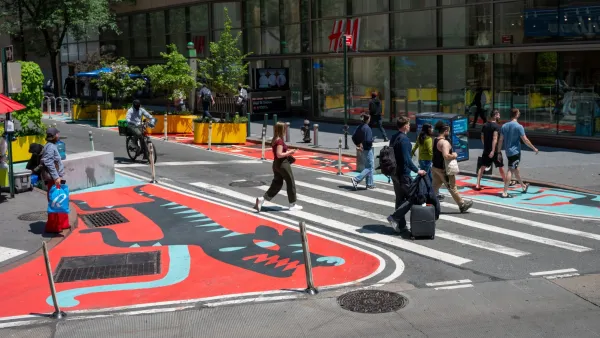
See Downtown Brooklyn’s Dramatic Complete Streets Transformation
A streetscape redesign spearheaded by the Downtown Brooklyn Partnership has quickly made many of Brooklyn’s streets unrecognizable.
Public Toilets Continue to Foil New York City’s Bureaucracy
In 2006, New York City signed contracts for private-public partnerships that would deliver a variety of street furniture throughout the city. To date, 3,355 bus shelters, 304 newsstands, and three (3) public toilets have been built.
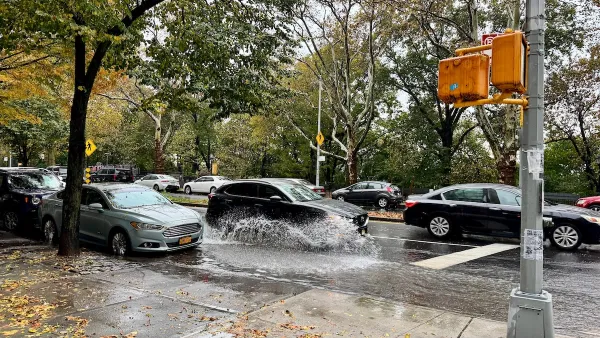
NYC breaks ground on anti-flooding infrastructure project
New York City's new system will reduce stormwater flows to local sewers by 90%.

Desperate measures: Advocates weigh draining Lake Powell to fill Colorado River
Draining the reservoir could reduce evaporation losses by a couple hundred thousand acre-feet.

Eastern Nebraska is running out of electricity
Data centers and electrification are straining eastern Nebraska’s grid, throttling economic development.

Malls are becoming the midtowns of the future
Mall and office park redevelopments are a generational opportunity to create new nodes of urbanity.

NYC breaks ground on anti-flooding infrastructure project
New York City's new system will reduce stormwater flows to local sewers by 90%.

One Kentucky town’s secret to affordable housing
The Smoketown Community Land Trust has already built seven affordable homes for community members.

Houston gains petal-shaped cooling infrastructure to make streets more ‘delightful’
The city has installed the pavilions along 15 blocks in Houston.

FREE Course: Walkable City 1: Why Walkability?
After describing his path towards focusing on walkability as the essence of good planning, Jeff Speck marches through his five principal reasons for making more walkable places.
Reinventing Malls: Planning Alchemy—Turning Gray Fields Into Gold
The course focuses on the opportunities and imperatives that shape reinvention of mall sites.

City of Rosemead
Rutgers University, Edward J. Bloustein School of Planning and Public Policy
One Hundred Miles
University of Michigan School for Environment and Sustainability (SEAS)
Hunter College, City University of New York (CUNY)
The Architects Foundation
City of Cambridge
Montrose County
The Pocatello Development Authority