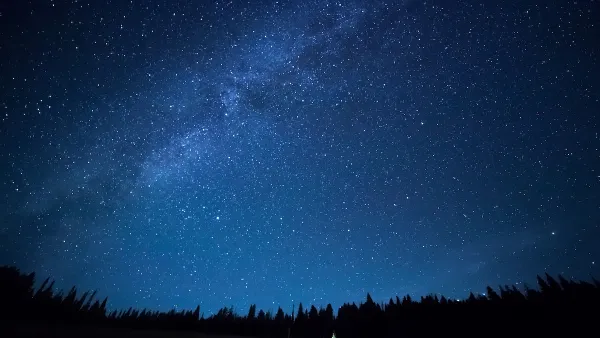
Unless a catastrophic natural disaster strikes your city (we're not hoping it does), the chances of being able to gaze upon the wonders of the cosmos from an urban perch are slim. Thierry Cohen provides a glimpse of the night sky without pollution.


"What would New York or Shanghai look like with a full sky of brilliant stars?" asks Julie Bosman. "Thierry Cohen, a French photographer, thinks he can show us by blending city scenes — shot and altered to eliminate lights and other distractions — and the night skies from less populated locations that fall on the same latitudes. The result is what city dwellers might see in the absence of light pollution."
"As Cohen, whose work will be exhibited at the Danziger Gallery in New York in March, sees it, the loss of the starry skies, accelerated by worldwide population growth in cities, has created an urbanite who 'forgets and no longer understands nature.' He adds, 'To show him stars is to help him dream again.'”
FULL STORY: Starry, Starry, Starry Night


Turning Out the Lights on Light Pollution
Limiting light pollution can have beneficial effects for humans, animals, and the local economy.
The Importance of Dark Skies
Why light pollution harms humans and the environment.

Preserving LA’s Dark Skies
Learn about the importance of dark skies for the health and enjoyment of individuals and wildlife, and how L.A. County's Rural Outdoor Lighting District is helping to reduce light pollution.

Planetizen Federal Action Tracker
A weekly monitor of how Trump’s orders and actions are impacting planners and planning in America.

The state-sanctioned urbicide of Austin
People don’t kill cities. Freeways do.

US to reduce Colorado River water deliveries to Mexico
A new Colorado Treaty amendment reduces Mexico’s Colorado River water allocation by 250,000 acre feet.

Mamdani overhauls NYC's Vision Zero plan with 100 new policy goals
The overhaul aims to reduce traffic deaths and make streets safer for pedestrians, cyclists and drivers through lower speed limits, new safety infrastructure and more.

Amtrak not solely to blame for New Jersey commuter rail's unreliability, report finds
A new study from the Garden State Initiative found that NJ Transit’s budget grew 20% across a 4 year period, but reliability declined significantly over the same period.

EPA erases limits on planet-warming pollution from power plants
Under Monday’s plan, power plants would still have some limits on how much mercury, arsenic and other contaminants they can emit.

FREE Course: Walkable City 1: Why Walkability?
After describing his path towards focusing on walkability as the essence of good planning, Jeff Speck marches through his five principal reasons for making more walkable places.
Reinventing Malls: Planning Alchemy—Turning Gray Fields Into Gold
The course focuses on the opportunities and imperatives that shape reinvention of mall sites.

Eagle County Government
Harvard University Graduate School of Design
Nashville Planning Department
The Architects Foundation
University of Cincinnati Online
The Pocatello Development Authority
The Urban Renewal Agency of the City of Pocatello
Journal of the American Planning Association