The Project for Public Spaces has released its "Rightsizing Streets Guide", which "aims to help planners and community members update their streets to make them ‘right’ for their context."


In recent years, communities across the country have pursued "road diet" projects to adapt streets that had primarily facilitated the fast movement of autmobiles into assets for all users. In response to this growing trend, PPS has assembled a "Rightsizing Streets Guide" to provide engineers, planners, and community members with techniques and best practices for adapting their streets.
"Our glossary of common rightsizing techniques and our best practices guide to street selection criteria and before and after measurements can help facilitate similar changes in your community," says PPS Senior Director Gary Toth. "The centerpiece of the guide is a set of ten rightsizing case studies that highlight impressive outcomes using before and after data on mobility, crashes, and other parameters. These are just a few of the projects that have been built and many more are being planned all over the country."
Read the full story: Welcome to the Rightsizing Streets Guide
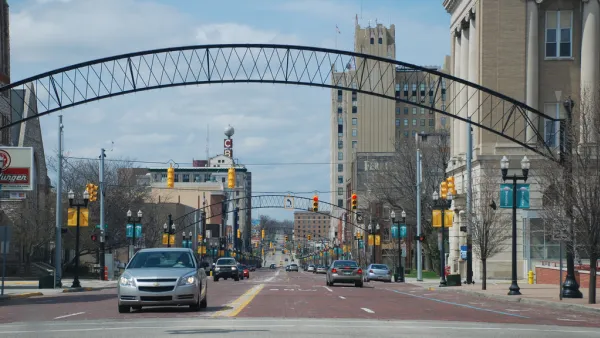
Shrinking Cities Seek to Shrink Streets
In Rust Belt cities like Flint, Michigan, a loss of population translates to less cars on oversized streets. Angie Schmitt examines how Flint, and other cities like it, are trying to right-size their transportation infrastructure.

Jacksonville Completes Park Street Road Diet
The half-mile corridor now features new bike lanes and sidewalks, as well as roundabouts and new landscaping.

Milwaukee Road to Get Complete Streets Upgrades
The city will reduce vehicle lanes and build a protected multi-use trail including bioswales and other water retention features on its ‘secret highway.’

Planetizen Federal Action Tracker
A weekly monitor of how Trump’s orders and actions are impacting planners and planning in America.

California plans to bury El Niño’s downpour
If the state plays its cards right, it may be able to store a billion acre-feet of El Niño’s water in aquifers.

Desperate measures: Advocates weigh draining Lake Powell to fill Colorado River
Draining the reservoir could reduce evaporation losses by a couple hundred thousand acre-feet.

Housing is the top priority of Seattle’s sole new councilmember
Jenks campaigned on building 1,000 new units of affordable housing.

New tax cuts may slash $1.5 billion in funding for Miami transit, public parks
Amendment 3 will save Miami-Dade homeowners $2,700 in 2028.

Arizona, Wisconsin, Pennsylvania hope to finally advance climate goals post-midterms
The three states have spent years under Republican or divided control.

FREE Course: Walkable City 1: Why Walkability?
After describing his path towards focusing on walkability as the essence of good planning, Jeff Speck marches through his five principal reasons for making more walkable places.
Reinventing Malls: Planning Alchemy—Turning Gray Fields Into Gold
The course focuses on the opportunities and imperatives that shape reinvention of mall sites.

City of Rosemead
Rutgers University, Edward J. Bloustein School of Planning and Public Policy
One Hundred Miles
University of Michigan School for Environment and Sustainability (SEAS)
Hunter College, City University of New York (CUNY)
The Architects Foundation
City of Cambridge
Montrose County
The Pocatello Development Authority